


Music Production Software article
Common Music Production Software Mistakes to Avoid
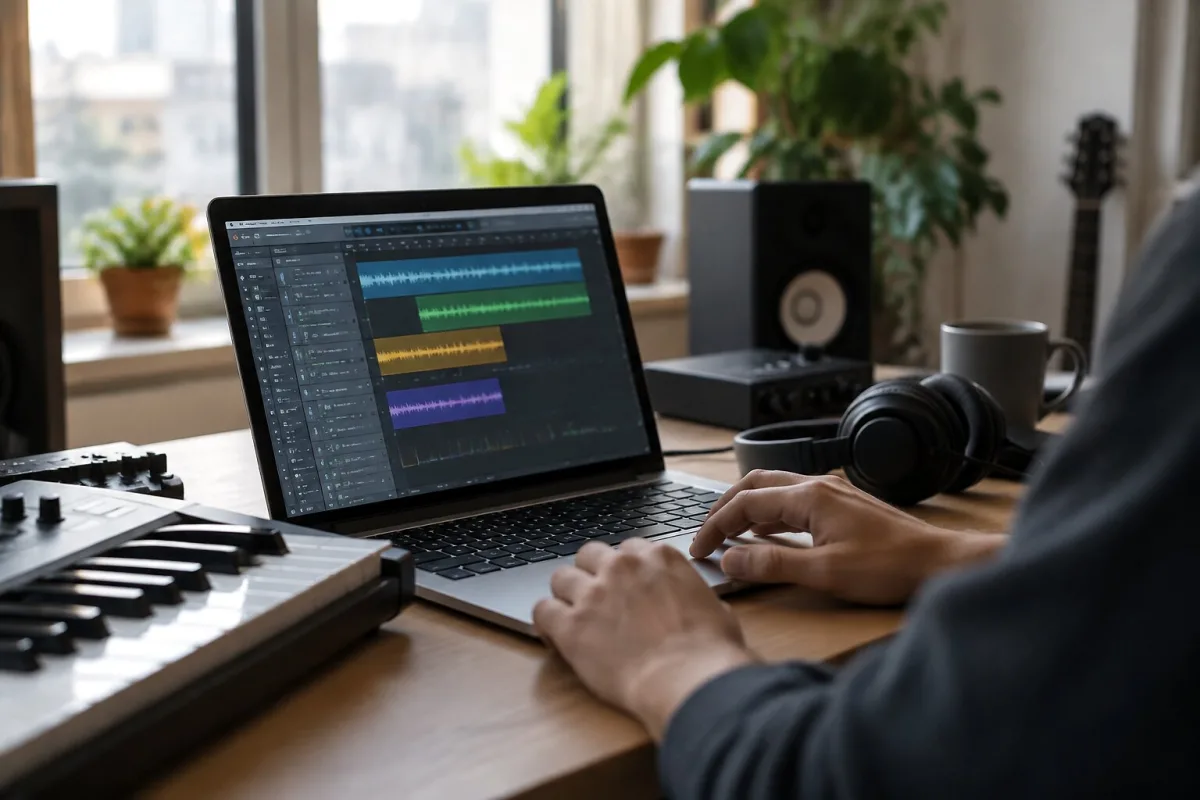
Every producer makes mistakes. You record something brilliant but forget to save. You spend four hours editing a drum part that was fine already. You turn the master volume up to 0dB and blow your speakers. You work on something for weeks and then realise the whole thing is out of time. These aren't failures; they're learning. But you can skip a lot of learning pain by knowing what others do wrong first.
Mistake 1: Not Saving Regularly
Your DAW has an autosave function. Use it. Set it to save every five minutes. Then save manually too, especially after you've done something you like. Nothing is worse than losing hours of work because your computer crashed or your DAW froze. And crashes happen, especially early on when you're overloading your system.
Pro tip: keep versions. Don't just save over the same file. Save "Song_v1", "Song_v2", "Song_v3". If you try an edit and hate it, you can go back. Many producers keep their best versions labelled so they can return to them months later.
Mistake 2: Recording at the Wrong Level
If you record something too quietly, you'll hear hiss and noise. If you record it too loudly, it'll clip and distort. You need to hit a sweet spot—typically somewhere that peaks around -6dB to -3dB on your input meter, leaving headroom.
The temptation is to record as loud as possible to get signal. Don't. A quieter recording that's clean is better than a loud recording that's distorted. You can always turn it up in the DAW; you can't remove distortion from a clipped recording.
Mistake 3: Working Too Loud
If you mix loud, your ears get fatigued and you make bad decisions. You end up with too much bass, too much low end, and when you listen on other speakers, it sounds wrong. Mix at a moderate level—something where you can hold a conversation over your speakers. Your mixes will be better and your ears will thank you.
And don't monitor through tiny speaker or earbuds if you can avoid it. Invest in decent headphones or studio monitors. You don't need expensive stuff (a £100 pair of headphones is fine for learning), but you need something that tells you the truth about what you're hearing.
Mistake 4: Using Too Many Plug-ins
A beginner's DAW project often has reverb on every track, compression on everything, EQ on every channel. This sounds muddy and CPU-heavy. The magic of good mixing is simplicity. If something doesn't need an effect, don't add it. Most tracks probably don't need reverb. Most drums don't need EQ until you're mixing, not recording.
Use effects intentionally. Reverb on vocals to make them sound bigger. Compression on the bass to make it glue. Saturation on the drums for character. One intentional effect is better than five pointless ones.
Mistake 5: Mixing Before You're Done Recording
A common workflow error: record one track, spend three hours perfecting its EQ and reverb, record a second track that clashes with it, spend another three hours fixing that. By the time you have four tracks, you're redoing your mixing constantly.
Better workflow: record all your tracks first with minimal effects. Get the arrangement and all the parts down. Then mix. You'll know what's clashing before you spend time perfecting a part that's going to change anyway.
Mistake 6: Getting Obsessed with Perfect Timing
MIDI quantization can fix timing. So can audio time-stretching. But perfect quantization often sounds robotic. A little human timing variation is what makes music feel alive. If everything is quantized to the millisecond, it sounds programmed. Quantize enough to fix major timing issues but leave some variation. Or don't quantize at all if the timing feels good.
The same applies to recording multiple takes. You don't need a perfect take. You need a good take with character. Imperfection is often better than perfection.
Mistake 7: Not Using Headroom in Your Master Track
Your master fader should peak around -3dB to -6dB, not 0dB. If you're hitting 0dB on your master, you've got no headroom for mastering or further processing. Leave space. It's not about volume when you export; it's about giving yourself room to work.
Mistake 8: Listening on Only One Speaker or Headphone Setup
Mix on one set of headphones and your music will sound wrong on someone else's headphones or speakers. Listen on multiple devices: headphones, monitor speakers, laptop speakers, even your phone if you can. If your mix sounds bad on all of them, you need to fix it. If it sounds bad on one, you need to accept that some people will hear it that way.
Mistake 9: Not Making Backups
Your computer's hard drive will fail eventually. It's not if; it's when. Back up your projects. Use cloud storage (Google Drive, Dropbox, OneDrive). Save external drives. If your hard drive dies and you've got no backup, years of work are gone. It's happened to everyone. Don't let it happen to you.
Mistake 10: Comparing Your Rough Mix to Professional Releases
Your rough mix sounds quiet and thin next to that record you love. That record was mixed and mastered by professionals over weeks. Your demo was mixed in an afternoon. This isn't a fair comparison and it'll make you second-guess everything. Compare your rough mix to other rough mixes you're making, not to released music. And get your finished mix mastered by someone else before you judge it final.
Mistake 11: Using Presets Without Understanding Them
DAWs and plug-ins come with presets. They're useful. But if you just apply a preset reverb to everything, you'll sound like everyone else using that preset. Tweak it. Make it yours. Understand what the controls do. A preset is a starting point, not a final destination.
Mistake 12: Not Learning Basic Music Theory
You don't need to read sheet music or play an instrument. But knowing that notes work in keys, that certain chord progressions sound good, that timing and rhythm matter—this helps immensely. Spend an hour learning basic music theory. It accelerates your learning in the DAW by months.
Conclusion
Most of these mistakes are about patience. Rushing mixing while you're still recording. Rushing mastering while your mix is still fresh. Trying to be perfect when you should just be finishing. Spend less time obsessing over one thing and more time finishing ideas. Most mistakes in DAW work come from impatience, not ignorance. The fix is simple: slow down, focus on finishing songs, and the rest will come.





Comments