


Multi Effects Pedal article
Multi Effects Pedal Explained: Features, Types and Tips
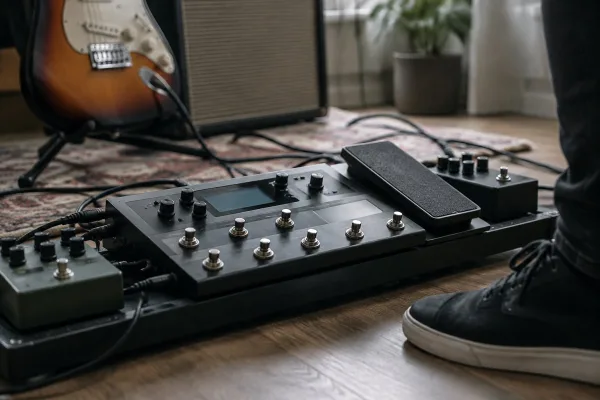
A multi-effects pedal is where the magic happens—one compact device combining everything that used to require a pedalboard the size of a small van. We're talking distortion, wah, modulation, delay, reverb, amp modelling and cabinet simulation all in one box, programmable to recall instantly during a set. Whether you're a metalhead chasing tight, responsive effects or a session guitarist needing repeatability gig after gig, a multi-FX unit gives you the tools without the cable chaos.
What's Actually Inside a Multi-Effects Pedal?
Think of a modern multi-effects unit as three systems working together. First, you've got the effect processor—compression, overdrive, distortion, chorus, flanger, phaser, tremolo, delay and reverb all digitally modelled and ready to go. Second is the amplifier and cabinet modeller, which simulates the exact sound of a real guitar amp pushing into a speaker cabinet, complete with microphone colouration. Third is the control and routing platform—the brains that determine how effects stack, how presets save and recall, how your footswitches behave and where the signal actually goes.
Contemporary units let you run several effects simultaneously in whatever order makes sense for your tone. Higher-end processors support parallel signal paths, meaning you can send your guitar down multiple chains at once, keeping some effects clear and dry while others layer on thickness and ambience. Some units even stack multiple amplifier models, perfect if you're chasing that impossible blend of clean headroom with massive distortion sustain.
Compact Pedals Versus Floor Monsters: Which Suits You?
Compact multi-effects units like the Line 6 HX Stomp sit on your pedalboard or beside your existing rig, designed to fill gaps or replace a small stack of pedals without taking over your entire setup. They're portable, affordable and powerful enough for most players who still rely on their amp's tone shaping.
Floor modellers like the Line 6 Helix, BOSS GT-1000 and Fractal Audio Axe-Fx are different beasts entirely—full-featured systems designed as complete live rigs. They offer touchscreen interfaces, extensive footswitch arrays, comprehensive effect and amp model libraries, and direct connection to a PA system or recording interface. If you're playing venues without guaranteed amplifier access or you're mixing front-of-house, a floorboard becomes indispensable.
Amp Modelling and Cabinet Simulation: The Game Changer
Amp modelling is why multi-effects pedals went from nice extras to essential touring rigs. Instead of lugging a Marshall stack across Europe, you can model that exact amplifier's response and push it through a direct box into the PA. Cabinet simulation—usually via impulse response loading—captures the measured acoustic character of a speaker and microphone setup, then applies that digitally to your signal.
An impulse response is basically a measurement of how a cabinet colours sound. It's not a complete amplifier model; it's the final layer that makes modelled tone believable. A Line 6 Helix or Axe-Fx without cab simulation sounds thin and hollow through headphones or studio monitors. Add the right IR and suddenly you're hearing what that amp would sound like through a real cabinet.
Signal Routing and Effects Order: Build It Right
A common signal chain starts with tuner, then compressor, wah and filter, then overdrive and distortion, hitting the amp's front end, then modulation, delay and reverb afterwards. That's a starting point, not gospel. Some players place modulation before gain for psychedelic textures. Others run delay into distortion for screaming feedback effects. The point is: you choose the order that makes your tone.
The four-cable method integrates a multi-effects unit with a traditional amplifier. Your guitar feeds the pedal's input. The pedal's output goes to the amp's front end. Then you patch the amplifier's effects-loop send back into the pedal and the pedal's post-loop output back into the effects-loop return. This setup lets compression and overdrive hit the amp's preamp while chorus, delay and reverb sit in the effects loop afterwards. Powerful setup.
Presets, Scenes and Snapshots: Managing Complexity
Modern multi-effects units store complete configurations as presets. But here's the clever bit: most now support scenes or snapshots—variations within a single preset that change multiple blocks without reloading an entirely different patch. Snap your footswitch and change from clean tone to crunch to lead without the abrupt gap. For live work, that responsiveness is everything.
Terminology varies between manufacturers. Line 6 calls them snapshots, BOSS calls them scenes, others use different names entirely. The function is consistent: stored variations that let you make multiple changes in one footswitch press. Test at performance volume though—switching behaviour varies by processor and you'll want to know how your rig behaves under actual gig conditions.
USB, Wireless and Computer Integration
Higher-end units include USB connectivity for editing presets on your computer, updating firmware, managing libraries and often direct audio recording. Some offer wireless editing via Bluetooth on a tablet or smartphone. These conveniences matter more than they sound—editing a complex 40-block preset on a two-inch screen gets tiresome quickly.
Multi-output options matter for live work. Stereo outputs let you send a nice wide delay or reverb to the PA whilst keeping drums crisp and front-centre. Some units offer balanced and unbalanced outputs simultaneously. Headphone outputs let you monitor while soundcheck happens. Direct-to-PA players want all these options.
Versatility, Portability and Preset Recall: Why They Matter
The main advantages of multi-effects pedals are obvious once you've used one. Versatility means one box handles genres, tempos and tone shades that would take a truckload of individual pedals. Portability means you're not hauling a flight-cased pedalboard across venues. Preset recall means hitting a button and your tone jumps exactly where it was at soundcheck—no twiddling knobs five minutes before your set.
Extensive routing means signal flow never limits your creativity. Run parallel chains, stack modellers, blend effects—the architecture supports it. For touring musicians or session players needing repeatability gig after gig, preset-based operation is non-negotiable.
The Trade-Offs: What You're Actually Giving Up
Menu complexity is real. A multi-effects pedal requires learning gain staging, understanding signal routing and configuring your output setup for different destinations—headphones, monitors, a real amplifier, a PA system. It's not as simple as plugging in a Boss ME-50 from 2002 and twisting knobs. Modern units are computers disguised as pedals.
You're also dependent on software and firmware. If a model updates break your favourite tone, you've got problems. Editing isn't always as fast as tweaking an individual pedal—sometimes menu-diving is slower than hands-on control. And though modern systems are remarkably reliable, you're trusting digital technology in an environment that's often loud, hot and physically demanding.
Conclusion: The Modern Multi-Effects Pedal Is a Complete Rig
A multi-effects pedal is no longer a compromise—it's a legitimate complete rig for touring, recording and live performance. Whether you're a metal guitarist needing punchy dynamics and thick distortion, a blues player chasing responsive modulation, or a worship musician controlling volume and tone from a single footswitch, a modern multi-FX unit delivers versatility and repeatability that individual pedals simply can't match. The technology has matured to the point where your tone is limited only by your ears and your creativity, not by the device itself.




Comments