


Multi Effects Pedal roundup
Multi Effects Pedal: A Complete Buyer's Guide
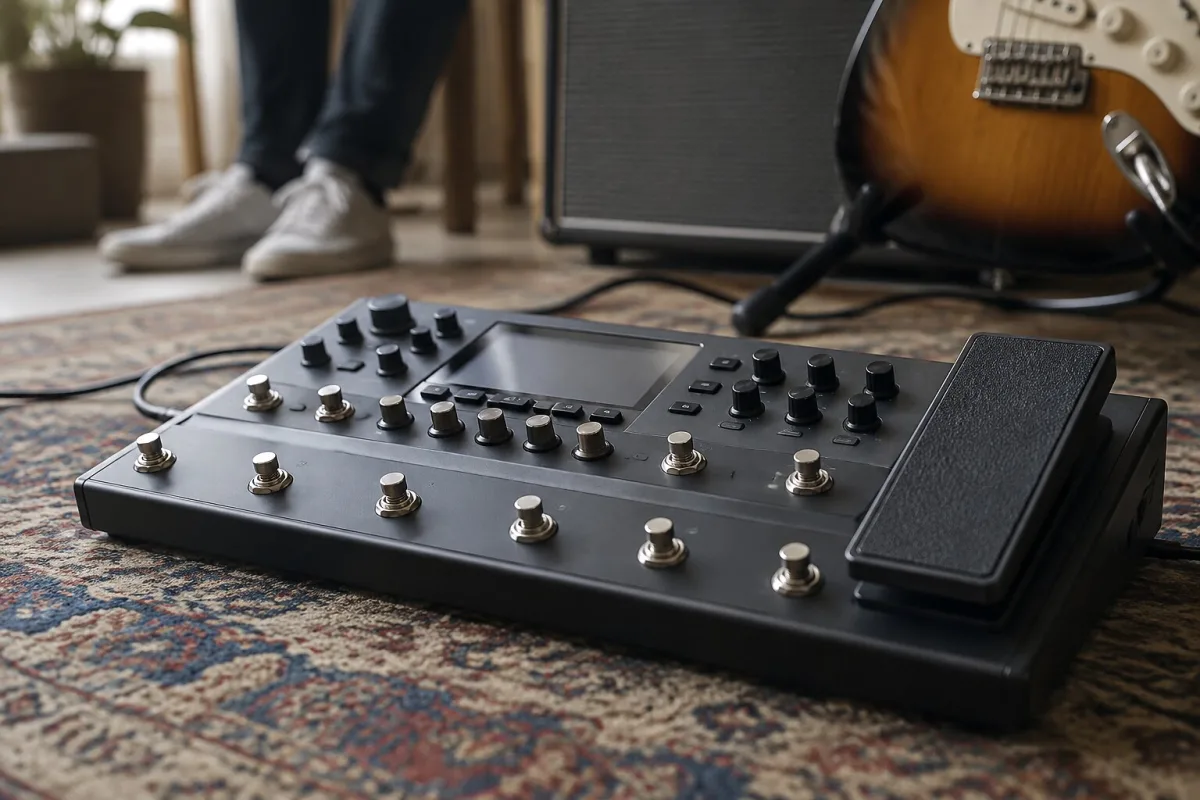
A multi-effects pedal is one of those gear purchases that looks simple until you start comparing specs and prices. You've got compact units the size of a shoebox and floorboards the size of a car battery, each with different strengths and trade-offs. This guide cuts through the marketing speak and helps you pick the right unit for your actual workflow—not what sounds impressive in a forum post.
Compact Pedals Versus Floorboards: Where They Fit
Compact multi-effects pedals like the Line 6 HX Stomp are built to fit alongside your existing rig. They're small, portable, powerful and usually cost between £300 and £600. Good for players who own a real amplifier and want to add effects, amp modelling or a second amplifier model without replacing their whole signal chain. They work brilliantly if you've already got tone sorted and just need tools to shape it.
Floorboards like the Line 6 Helix, BOSS GT-1000 and Fractal Audio Axe-Fx are designed as complete live rigs. They cost £1,200 to £2,500 and up, include extensive footswitch arrays, touchscreen editing, comprehensive amp and cabinet models and direct PA connectivity. Choose a floorboard if you're playing venues without guaranteed amplifier access or if you need preset recall and rapid song-to-song changes. Touring musicians and session players typically need floorboards.
Important Specs That Actually Matter
Number of simultaneous processing blocks tells you how many effects can run at once. Most modern units handle between 6 and 16 blocks depending on the model and complexity of the effects you load. Higher counts give more flexibility but also more menu navigation. For most players, 8 to 12 blocks is sufficient.
Available amp models and cabinet models matter if you're using the unit for direct recording or PA output. The Line 6 POD Go offers over 270 amp models. The BOSS GT-1000 has a slightly smaller library but still plenty. Count the models you genuinely care about, not the total. A thousand mediocre models matter less than 50 models you actually use.
Footswitch count and assignability are critical for live work. A compact pedal might have 3 footswitches; a floorboard has 8 to 12. Each footswitch can usually be assigned to switch presets, toggle individual effects, or control expression. More footswitches mean more control without bending down to tap buttons mid-song. For buskers and bedroom players, fewer footswitches work fine. For stage work, more is always better.
Effects-loop configuration tells you whether you can integrate the unit with a real amplifier using the four-cable method. Most units support this. Verify before buying if you're keeping your amp.
IR Loading and Cabinet Simulation: Do You Need It?
If you're playing live or recording, cabinet simulation via impulse response loading is worth the upgrade cost. It's what makes modelled amp tones believable. A modelled amp without cabinet simulation sounds like a modelled amp—thin, cold, not particularly inspiring. With the right impulse response, suddenly you're hearing warmth, sag and character that exists in real speaker cabinets.
Not all units offer IR loading. Some compact pedals skip this feature to keep costs down. If you're connecting directly to a PA system or recording interface, IR loading becomes essential. If you're connecting to your amp's effects loop, it's less critical—your real amplifier provides the cabinet character.
Expression Pedal, MIDI and USB: Ordering Extras
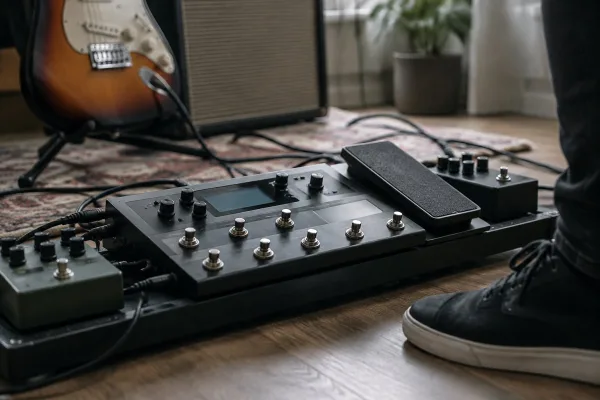
Most modern units include expression-pedal inputs. Some have built-in expression pedals; others require a separate footpedal connected via a TRS cable. Built-in is more convenient; separate expression pedals cost £30 to £100 and sit in front of your floorboard like a wah pedal. Test both before deciding what you need.
MIDI input and output lets you control the unit from an external sequencer or control other gear from your multi-effects pedal. For solo bedroom players, MIDI is nice but not necessary. For touring musicians and session players coordinating with other gear, MIDI is worth the extra cost.
USB audio capability lets you record directly into your DAW. Most modern processors support USB audio. Some older units don't. If home recording matters to you, verify USB audio is included.
Power, Portability and Physical Build Quality
Many high-end processors require more current than a standard 9-volt pedalboard supply. They often ship with a dedicated power adapter—some needing wall power only, others with optional battery options. Check the power requirements before you buy. If you're touring Europe, you need to know whether the unit runs on universal voltage or if you're bringing a step-down transformer.
Weight matters if you're carrying gear across venues. Compact pedals weigh 1 to 3 kilograms. Floorboards range from 4 to 8 kilograms. Neither is prohibitive, but a 6-kilogram unit packed into a flight case gets heavy over a day of hauling.
Physical durability is worth considering. Most modern units use metal chassis with rubber feet. Test the footswitches—do they feel solid or plasticky? Check the display—is it bright enough for dimly lit stages? These details matter gig after gig.
USB Editor Software and Firmware Updates: Long-Term Support
Higher-end units come with computer software for editing presets, managing libraries and updating firmware. This software matters. Is it user-friendly or clunky? Does the manufacturer update it regularly or let it stagnate? Poor editor software makes a powerful processor frustrating to use.
Firmware update policy varies. Line 6 releases regular free updates with new models and features. Some manufacturers charge for new models. Others rarely update. If future-proofing matters—and it should for a £1,500+ processor—check the manufacturer's track record.
Budget Guidance: What's Reasonable to Spend?
Entry-level multi-effects units cost £200 to £400. These deliver solid effects and basic amp modelling. Good for adding to an existing rig. Don't expect cutting-edge amp models or professional-grade build quality, but they work.
Mid-range compact processors like the HX Stomp run £400 to £600 and offer professional effects quality, solid amp models and reliable operation. This is where you get the best value for most players.
Professional floorboards start at £1,000 and climb to £2,500. These are investments. They're built for touring, recording and complete rig replacement. If you're generating income from music, the cost is deductible and justified. If you're playing bedroom gigs, a mid-range compact processor does everything you need.
Testing Before Buying: The Most Important Step
Never buy a multi-effects pedal without testing it. Visit a music shop, play through the unit for 20 minutes and see how it feels. Do the menus make sense? Is the screen readable? Do the footswitches respond intuitively? Do the amp models sound like anything you want to hear? These subjective factors matter as much as specs.
If your local shop doesn't stock what you want, many retailers offer 30-day return policies. Buy, test for two weeks, return if it's wrong. That's a reasonable investment in getting the right gear.
Conclusion: Pick the Right Unit for Your Actual Needs
A multi-effects pedal is a significant purchase, but a good one lasts years. Define whether you need a compact unit to augment your existing rig or a complete floorboard replacement. Check the specs that actually matter—simultaneous blocks, footswitch count, effects-loop configuration and whether cabinet simulation is included. Test the unit before buying if possible. Then commit to learning it properly instead of chasing the latest model every two years. The gear doesn't make the player, but the right gear stops getting in the way.




Comments