


Monitor Speaker Stand article
The Complete Guide to Monitor Speaker Stand
Quality monitor speaker stands isolate vibration and position speakers correctly for accurate sound. This guide covers isolation types, positioning and choosing the right stands.
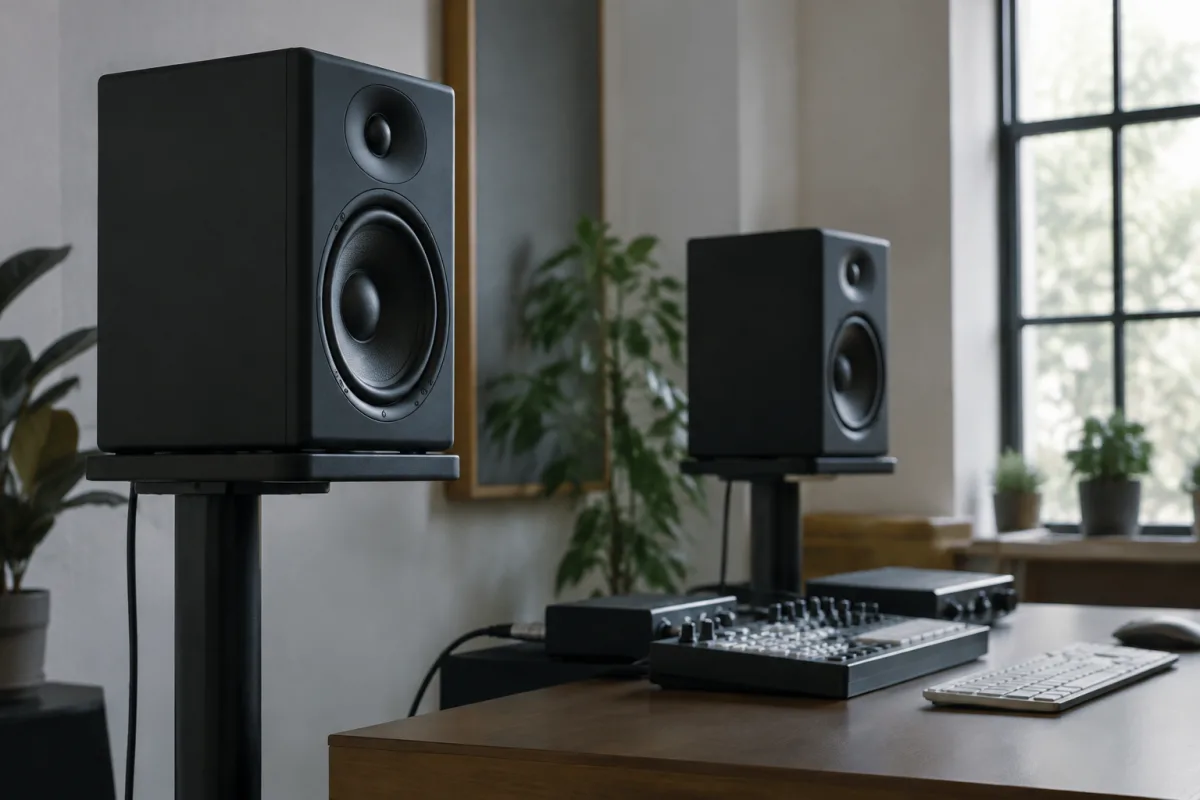
Monitor speaker stands are fundamental infrastructure for any serious recording studio, home listening space or professional mixing environment. These unassuming pieces of equipment serve a critical function—isolating loudspeakers from vibration, positioning them at ear level and anchoring them securely so they perform as their designers intended. Poor speaker placement or inadequate stands undermine even excellent monitors, whilst quality speaker stands transform acoustic clarity and imaging. Whether you're building a studio, upgrading a home theatre or optimising a professional broadcast facility, investing in proper monitor speaker stands is as essential as the monitors themselves. This guide explains what monitor speaker stands do, how to choose them and how to position your system correctly.
Why Monitor Speaker Stands Matter
Monitor speaker stands serve multiple critical functions. First, they isolate speakers from vibration sources—the floor, supporting furniture, building structure. Vibration coupling degrades clarity and muddies bass, creating acoustic problems that careful listening reveals. Isolation feet on quality stands dramatically improve transparency.
Second, stands position speakers at ear level when sitting, critical for accurate mixing and listening. Monitors placed on desks, shelves or floors create acoustic problems—ceiling reflections, floor boundary effects, off-axis frequency response. Proper positioning at ear height creates accurate stereo imaging and flat frequency response.
Third, stands prevent unwanted resonance. A speaker mounted directly on furniture can excite that furniture's resonances, colouring the sound. A properly-isolated stand on acoustic feet eliminates this problem.
Speaker Stand Types
Dedicated monitor speaker stands come in several designs. Isolation pads (relatively inexpensive rubber or elastomer pieces) sit under speakers, dampening vibration transfer. These work adequately for small speakers but may be insufficient for larger monitors or critical listening rooms.
Isolation stands feature specialised feet or support systems specifically engineered for vibration absorption—Isoacoustic pads, spikes, or magnetic isolation systems. These actively reduce vibration transmission, offering superior performance to passive rubber pads.
Structural stands—metal or wooden frames holding speakers at precise heights—combine isolation with positioning, eliminating the need for separate shelving. These suit studio and professional environments where clean layouts and precise positioning matter.
Positioning Your Monitors
Proper speaker placement creates accurate sound and correct imaging. Position monitors so tweeters are at ear level when seated—typically 1–1.5 metres above floor, angled slightly toward the listener. Angle the speaker itself (not just the stand) so high-frequency beams point toward ear level. Off-axis listening colours the sound significantly.
Maintain equal distance from each speaker to the listening position—the classic equilateral triangle with the listener at the apex. This creates proper stereo imaging and accurate panning perception. Asymmetrical placement creates phantom centre image problems.
Keep speakers away from walls. Placing monitors close to boundaries creates bass buildup and reflection issues. A general rule: position monitors at least 1 metre from nearby walls, more if possible.
Isolation Technology
Modern isolation technologies dramatically improve monitor speaker performance. Elastomer isolation feet (rubber dampening) work across all speaker sizes and suit most rooms. Spiked isolation feet appeal to some audiophiles, though professional opinions vary. Magnetic isolation systems offer ultra-low vibration but at premium prices.
For most studio and home listening applications, quality elastomer isolation feet provide excellent performance at reasonable cost. Professional broadcast facilities often specify magnetic isolation or other premium systems.
Speaker Stand Build and Materials
Monitor speaker stands are built from metal (steel or aluminium), wood, or combinations. Steel stands offer strength and stability for heavy speakers. Wooden stands blend aesthetics with functional support. Some premium stands incorporate both materials.
Material choice affects sonics minimally compared to isolation effectiveness, but aesthetics matter. Choose materials matching your room décor and equipment appearance. Stability is paramount—stands must remain absolutely motionless under speaker weight and acoustic pressure.
Choosing Monitor Speaker Stands
Match stand height to your mixing position. Stands should position tweeters at ear level for your typical seating position. Many stands are adjustable—verify they can achieve your needed height.
Speaker weight matters—ensure stands' weight rating exceeds your speakers' mass by a safety margin. Heavy nearfield monitors need sturdy stands; lightweight powered speakers work on lighter isolation stands.
Isolation effectiveness varies—read reviews and specifications. Resonant frequency of isolation systems is important; lower resonance provides better isolation across the audio spectrum.
Budget ranges from £100–1,000+ per pair depending on size, isolation technology and materials. Quality isolation stands represent reasonable investment relative to speaker cost—poor stands waste excellent monitors' potential.
Avoiding Common Mistakes
Never place large speakers directly on desks—this couples vibration into furniture, degrading clarity. Avoid positioning speakers in room corners, which create massive bass boosts. Don't angle speakers away from ear level just for aesthetics—angling toward ears matters acoustically.
Avoid cheap stands with poor isolation—they undermine speaker performance. Invest properly in isolation; the acoustic improvement justifies cost.
Conclusion
Monitor speaker stands are essential infrastructure, not optional accessories. Quality stands isolate vibration, position speakers at ear level and preserve acoustic clarity that excellent monitors provide. Whether you're a professional engineer optimising an expensive control room or an enthusiast setting up a home listening space, proper monitor speaker stands pay dividends through years of accurate, enjoyable listening and professional mixing.


Comments