


Roland Audio Interface article
Everything You Need to Know About Roland Edirol Audio Interface
A Roland audio interface converts sound into digital data for home recording. Understand latency, I/O options, driver stability, and how to choose the right model.
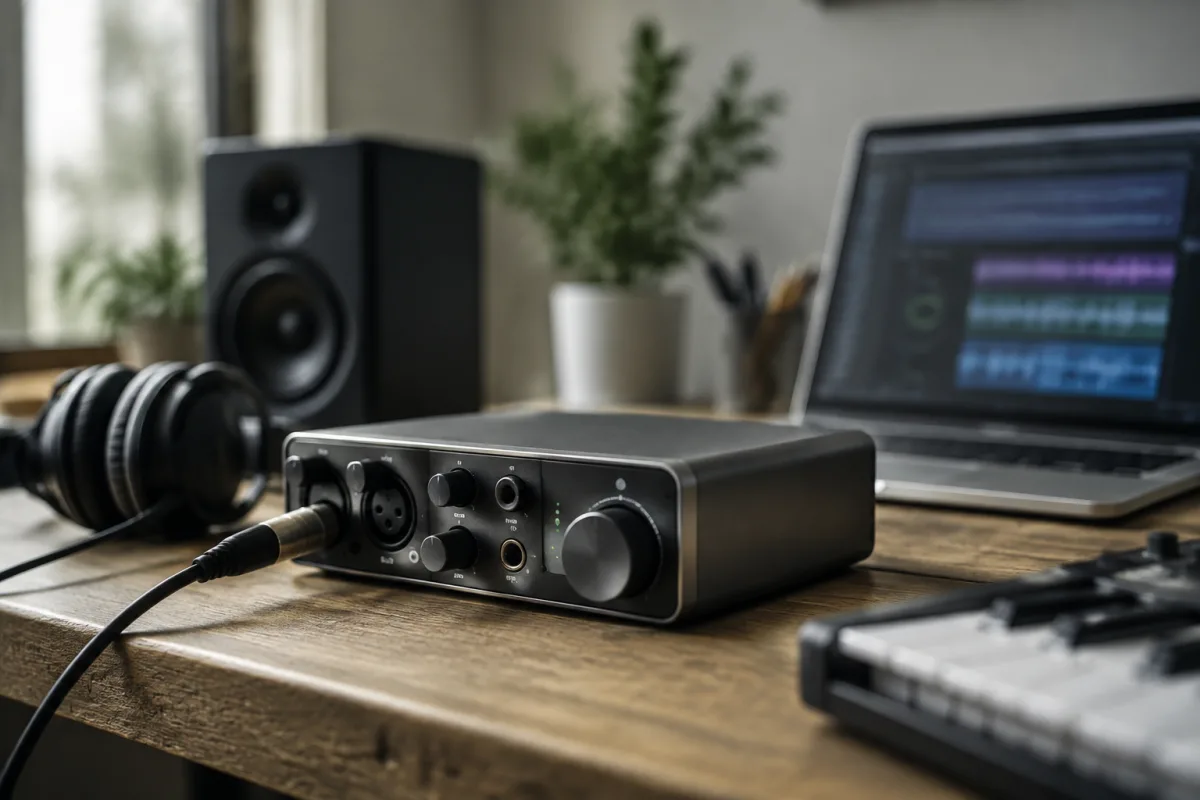
Recording guitars, vocals, or drums at home requires an audio interface—a device that converts analogue sound into digital data your computer can process. Roland has been making interfaces for decades, and their reputation for reliable, straightforward gear makes them a sensible choice for home recording. Whether you're a bedroom producer or a semi-professional musician, understanding what a Roland audio interface offers helps you pick the right model for your needs.
What Makes a Roland Audio Interface Different?
Roland built their reputation on music gear that works reliably without unnecessary complexity. A Roland audio interface embodies this philosophy: solid converters, low latency, and straightforward operation. They don't chase cutting-edge specs; instead, they deliver practical tools that musicians actually use.
Roland audio interfaces typically feature their own drivers—optimised software that handles communication between your interface and your DAW. These drivers tend to be stable and widely compatible. A Roland audio interface doesn't require fiddling with complex settings to work; you plug it in, install drivers if needed, and it functions reliably.
Key Features Across the Range
Entry-level models like the Rubix22 offer two inputs and two outputs—adequate for basic home recording. You can record vocals and one instrument simultaneously, or overdub one track at a time. These interfaces cost £150–300 and represent excellent value.
Mid-range models add more I/O: four inputs and four outputs, maybe eight I/O. This lets you record drums through multiple microphones, guitar and vocals simultaneously, or even a small band. The Rubix44, for example, gives you genuine flexibility without excessive complexity. Expect to spend £300–600.
Professional models offer 8+ I/O, ADAT expansion, and premium converters. These suit studios doing serious work with multiple simultaneous inputs. A top-tier Roland audio interface can cost £1,000–2,500, but few musicians need this capability for home use.
Latency and Real-Time Monitoring
Latency—the delay between playing an instrument and hearing it through your speakers—matters profoundly in recording. A Roland audio interface typically achieves low latency (2–5ms at typical buffer settings), which feels responsive and natural. Compare this to cheap interfaces where latency reaches 20ms or more; at that point, playing becomes uncomfortable and recording feels disconnected.
Many Roland models include onboard monitoring and mixing capabilities—direct outputs from inputs that bypass your DAW. This is crucial: you want to monitor your guitar or vocals in real time without your DAW's processing delay. Some engineers run instruments through the interface's direct outputs to headphones and use the main outputs for monitoring processed DAW tracks. A Roland audio interface's built-in monitoring capability makes this workflow seamless.
Driver Stability and Compatibility
Nothing's more frustrating than an unstable audio interface that crashes your DAW or occasionally drops audio. Roland audio interfaces rarely exhibit these problems. Their drivers are well-tested across Windows and Mac, and they update them consistently when new OS versions appear. This reliability justifies choosing Roland even if specifications look identical to cheaper competitors.
Compatibility extends to software. A Roland audio interface works with every major DAW—Ableton Live, Pro Tools, Reaper, Logic Pro, Cubase. None of the drama you sometimes encounter with obscure manufacturers or cutting-edge hardware.
Converting Audio Quality
Converters—the circuits that transform analogue sound into digital data—define audio interface sound quality. A Roland audio interface uses decent converters; they won't embarrass professional work, though they're not at the level of premium interfaces like RME or Apogee. For home recording and bedroom production, Roland converters are more than adequate.
At this price point, the difference between interfaces is marginal. Spending £2,000 on converters instead of £400 doesn't double your recording quality; diminishing returns kick in quickly. A Roland audio interface offers exceptional value because it puts decent converters in an affordable, reliable package.
Phantom Power and XLR Connections
Most Roland audio interfaces include phantom power (+48V)—essential if you're recording with condenser microphones. Phantom power pins the circuitry that condenser mics require; without it, condensers simply don't work. This feature is standard on Roland interfaces but not on all budget competitors.
Mid-range and higher Roland models use XLR connectors for audio inputs and outputs. XLR is the professional standard—balanced, reliable, and virtually indestructible. Budget interfaces sometimes use 3.5mm or unbalanced 1/4" connections; these work but are less robust and more susceptible to interference.
Choosing Your Roland Audio Interface
If you're recording one source at a time—vocals or a single guitar—an entry-level Roland audio interface suffices. The Rubix22 or similar two-input models work perfectly for overdubbing and layer-based recording.
If you occasionally record multiple sources simultaneously—drums through multiple mics, or guitar plus vocals together—step up to a mid-range model with four inputs. This gives you flexibility without spending excessively.
Professional studios or producers working with bands should consider higher-end Roland models or interfaces from specialist manufacturers. But for the vast majority of musicians making recordings at home, a quality mid-range Roland audio interface is genuinely adequate.
Conclusion
A Roland audio interface delivers what it promises: reliable conversion, low latency, stable drivers, and straightforward operation. They're not fancy or cutting-edge, but that's precisely why professionals trust them. Choose the model matching your I/O needs, ensure it has phantom power, and you have a tool that serves your recording work reliably for years. That's the Roland philosophy—practical gear that works.



Comments