


3 Inch Studio Monitors article
The Ultimate Guide to 3 Inch Studio Monitors
3 inch studio monitors provide professional-grade monitoring in compact form, ideal for home studios and spaces with acoustic constraints.
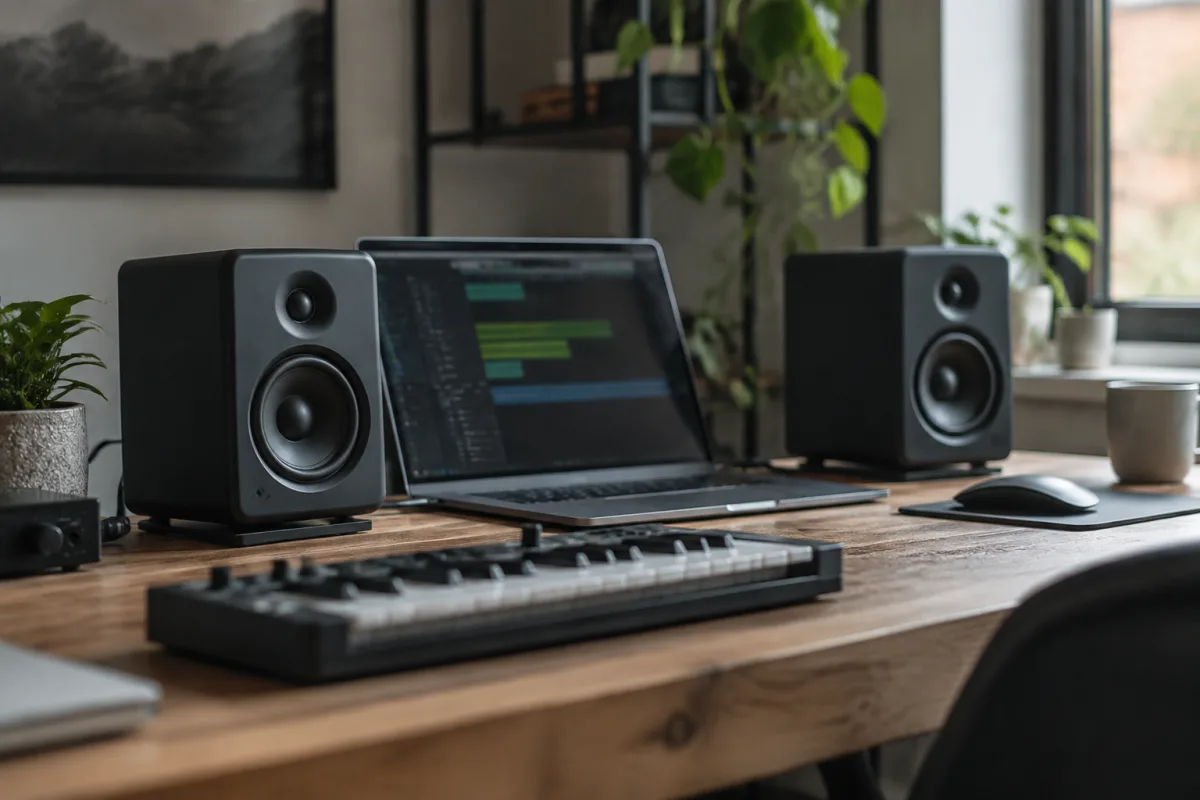
Three-inch studio monitors represent a pragmatic choice for home studios, project studios, and professional spaces with acoustic constraints. These compact speakers deliver surprising clarity and midrange detail despite their small footprint. For monitoring vocals, acoustic instruments, and detailed mixing work, 3-inch studio monitors offer genuine utility without demanding enormous space or creating bass-heavy acoustic problems.
Understanding 3-Inch Monitor Advantages
A 3-inch woofer occupies a sweet spot between full-sized studio monitors and earfield speakers. This size provides extended bass response compared to smaller alternatives, yet avoids the room-interaction issues that plague larger woofers. Three-inch studio monitors work particularly well in untreated rooms where bass modes can muddy the monitoring experience.
The compact physical size matters practically. 3-inch studio monitors fit comfortably on studio desks, allowing positioned placement at ear level without consuming valuable workspace. They're ideal for portable setups, bedroom studios, or rooms where installation space is limited. This portability doesn't mean compromise; careful design ensures 3-inch studio monitors deliver professional-grade monitoring.
Frequency Response Characteristics
Well-designed 3-inch studio monitors typically reach down to around 80-100Hz comfortably, with some models extending slightly lower. The midrange and upper frequencies remain clean and detailed, making these speakers excellent for mixing work that prioritises vocal clarity and instrument definition. The reduced bass extension actually benefits many mixing scenarios, preventing excessive bass energy from dominating the mix.
Treble response remains crisp, helping engineers catch detail in vocals, cymbals, and high-frequency instruments. This treble clarity means mixes created on 3-inch studio monitors often translate well to other playback systems. The balanced tonal character neither masks problems nor exaggerates flaws in the upper spectrum.
Driver Configuration and Design
Most 3-inch studio monitors employ a single 3-inch woofer paired with a tweeter for high-frequency extension. Some designs integrate a midrange driver between woofer and tweeter for enhanced midrange resolution. The specific configuration affects tonal character; comparing different 3-inch studio monitor models reveals noticeable personality differences.
Cabinet design is crucial. Sealed enclosures provide tighter bass response suited to small rooms. Ported designs extend bass response but demand more careful room placement. Quality 3-inch studio monitors often feature rear ports with adjustable baffles, allowing engineers to tailor the bass response to their specific room acoustic characteristics.
Amplification and Power Handling
Three-inch studio monitors typically incorporate powered amplification, eliminating the need for external amplifiers. Power ratings usually range from 20-50 watts per channel, plenty sufficient for near-field monitoring in typical rooms. The compact size and lower power requirements mean minimal heat generation and straightforward setup.
Positioning and Room Acoustics
Unlike large studio monitors, 3-inch studio monitors can be positioned flexibly without dominating room acoustics. Placing them slightly elevated (eye level or slightly above) provides optimal frequency response at the listening position. The small size allows for angled placement that's impractical with larger speakers.
In untreated rooms, these speakers reveal acoustic problems more honestly than larger monitors would mask. This transparency actually helps home studio operators understand their room's acoustic characteristics. Using 3-inch studio monitors in a marginally treated space often produces more reliable mixes than using full-sized monitors in an untreated room.
Ideal Applications
3-inch studio monitors excel for vocal mixing, acoustic recording monitoring, and detailed mixing work. They're particularly useful for mastering purposes, where extended bass response can cloud judgment. Many professional engineers maintain 3-inch studio monitors alongside larger speakers as a reference system precisely because their honest midrange and compact size serve specific purposes better than full-sized alternatives.
Home recording engineers, podcasters, and music producers working in limited space find 3-inch studio monitors ideal. They deliver professional-grade monitoring without the acoustic impact of larger systems. Musicians creating content or mixing their own recordings benefit from the compact form factor and cost-effective pricing.
Quality Considerations
Price varies significantly across the 3-inch studio monitor market. Budget models sometimes compromise with cheap drivers or poor amplification. Mid-range 3-inch studio monitors offer solid build quality and honest monitoring, typically costing £150-£400 per pair. Premium offerings deliver refined tonal characteristics and exceptional build quality at higher prices.
A quality pair of 3-inch studio monitors represents better value than full-sized monitors for small-space studios. The cost savings can be redirected towards room treatment, which improves monitoring accuracy more substantially than upgrading to larger speakers in an untreated room.
Comparison to Larger Alternatives
Full-sized studio monitors deliver extended bass and greater output capability, essential for larger rooms and critical low-frequency work. However, 3-inch studio monitors actually provide superior results for many mixing tasks, particularly in smaller spaces. The choice depends on your room size, acoustic treatment, and the specific work you do.
Conclusion
Three-inch studio monitors deliver professional-grade monitoring in a compact, space-efficient package. They provide the transparency and midrange clarity essential to serious mixing work, with sizing that suits home studios and confined spaces. For engineers and producers working in limited space or requiring portable monitoring solutions, 3-inch studio monitors represent an intelligent choice combining performance, practicality, and value.



Comments