


Large Diaphragm Condenser Mic article
The Complete Guide to Large Diaphragm Condenser Mic
Large diaphragm condenser mics are the industry standard for professional vocal and acoustic recording. Learn what makes them ideal for studio use.
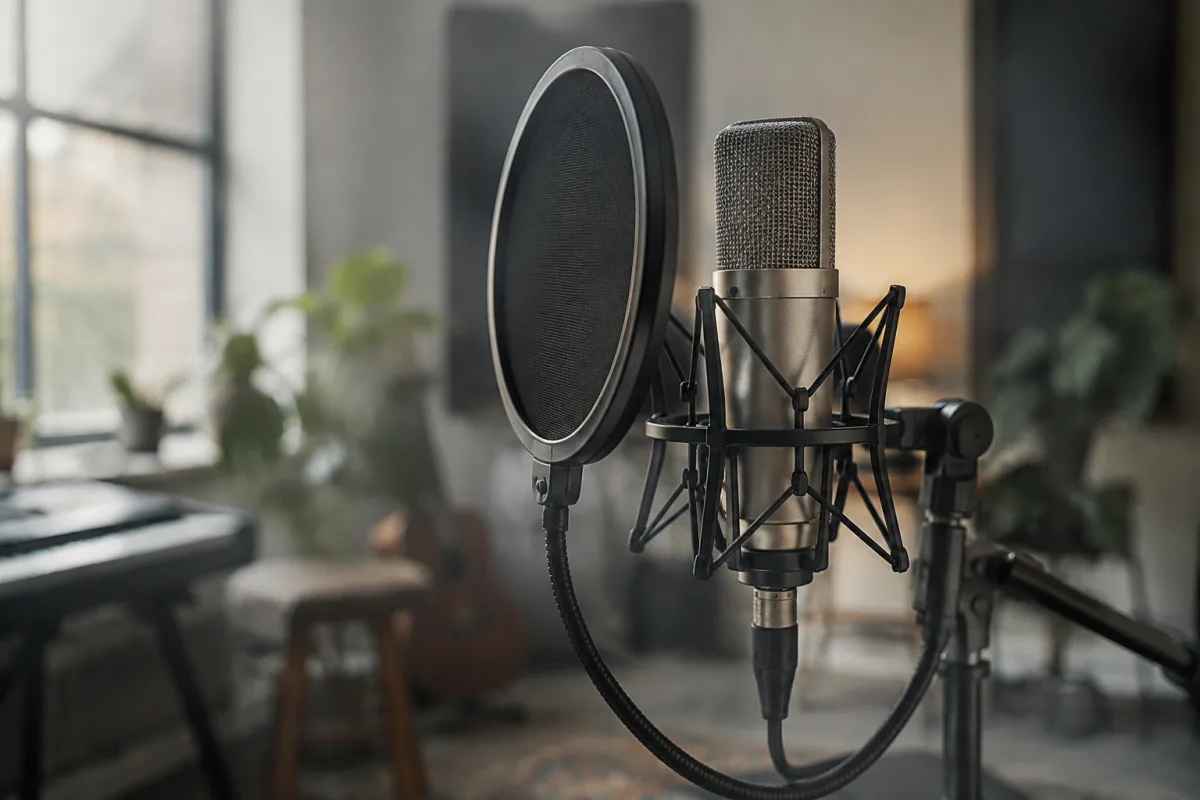
A large diaphragm condenser mic remains the standard for professional vocal and acoustic recording. The large diaphragm condenser mic's combination of sensitivity, proximity effect and presence peak makes it ideal for capturing intimate vocal performances and detailed acoustic instruments. Understanding large diaphragm condenser mic design and applications helps recording engineers and home producers choose the right microphone for their needs.
How a Large Diaphragm Condenser Mic Works
A large diaphragm condenser mic uses a thin metal diaphragm suspended near a backplate to create a capacitor. When sound waves strike the diaphragm, it vibrates, changing the capacitance between diaphragm and backplate. This capacitance change is converted to audio signal through a preamp circuit inside the microphone. The large diaphragm condenser mic's name reflects its large diaphragm — typically 1 inch (25 mm) or larger — compared to smaller condensers.
The large diaphragm condenser mic requires phantom power — typically 48V DC supplied through the microphone cable from an audio interface or mixer. This phantom power energises the preamp circuit and maintains the capacitor voltage. Most professional equipment provides phantom power; affordable home recording interfaces typically include it as standard.
Sensitivity and Proximity Effect
A large diaphragm condenser mic is exceptionally sensitive, capturing subtle details of vocal performances and acoustic instruments. This sensitivity allows recording at relatively low levels, reducing noise floor. The large diaphragm condenser mic's responsiveness to quiet sounds makes it ideal for intimate vocal recording where nuance matters.
The large diaphragm condenser mic exhibits strong proximity effect — bass boost near the microphone due to the pressure gradient between diaphragm and backplate. This effect is desirable for vocal recording: close proximity creates warmth and presence. Singers working with a large diaphragm condenser mic understand they can increase low-end fullness by working closer to the microphone.
Presence Peak and Vocal Recording
Most large diaphragm condenser mics include a presence peak — a frequency boost, typically in the 2–10 kHz range — that adds clarity and punch to vocals. This presence peak is why large diaphragm condenser mics sound so good for singing; the peak makes vocal detail jump out of a mix without sounding harsh.
Different large diaphragm condenser mic models vary in their presence peak characteristics. Some offer gentle presence peaks suitable for sensitive vocals; others have aggressive peaks for rock and speaking applications. Choosing a large diaphragm condenser mic with appropriate presence peak characteristics for your vocal style is important.
Applications for Large Diaphragm Condenser Mics
- Lead vocals — The primary application for large diaphragm condenser mics. The proximity effect and presence peak complement vocal tone beautifully.
- Acoustic guitar — A large diaphragm condenser mic captures the nuance of acoustic guitar playing, particularly finger-picking and complex strumming patterns.
- Piano — Placed above the piano strings, a large diaphragm condenser mic records the full harmonic complexity of piano sound.
- Spoken word and podcasting — The presence peak makes speech clear and intelligible. Proximity effect adds intimacy to narration and dialogue.
- Overhead drum recording — Some engineers favour large diaphragm condenser mics as drum overheads for their detailed response and presence.
- String instruments — Violin, cello and other strings benefit from the large diaphragm condenser mic's sensitivity to bow texture and harmonic richness.
Common Large Diaphragm Condenser Mic Types
Large diaphragm condenser mics vary significantly in design philosophy. Some aim for neutrality and transparency; others colour the sound deliberately. Understanding these differences helps match large diaphragm condenser mics to recording applications.
Cardioid large diaphragm condenser mics offer directional pickup, reducing off-axis sound. Most large diaphragm condenser mics used for vocals are cardioid.
Omnidirectional large diaphragm condenser mics pick up equally from all directions, capturing room ambience along with the source. Some acoustic recording engineers prefer omnidirectional large diaphragm condenser mics.
Figure-eight large diaphragm condenser mics pick up from front and back while rejecting sides. Useful for stereo recording and specific duet or interview applications.
Entry-Level to Professional Large Diaphragm Condenser Mics
Quality large diaphragm condenser mics range from budget-friendly home recording options to professional-grade instruments used in world-class studios. Entry-level large diaphragm condenser mics often deliver surprising quality, making professional recording accessible to home producers.
Mid-range large diaphragm condenser mics add refinement: smoother frequency response, lower self-noise, and design details that improve durability and consistency. Professional-grade large diaphragm condenser mics represent the peak of microphone engineering: hand-assembled, selected components, and sonic character refined over decades.
Care and Longevity
A large diaphragm condenser mic requires proper care. Never expose it to extreme humidity, condensation or physical shock. Store it in a protective case when not in use. Avoid blowing hard into the microphone to clear dust; use gentle brush cleaning instead. With basic care, a quality large diaphragm condenser mic remains reliable for decades of studio use.
Choosing a Large Diaphragm Condenser Mic
Budget matters, but not as much as sound match. Listen to multiple large diaphragm condenser mics with your voice or instrument before purchasing. What sounds best on one vocalist may not suit another. Some large diaphragm condenser mics excel at rock vocals; others suit jazz or classical applications better.
For home recording starting out, a budget large diaphragm condenser mic delivers legitimate professional results. As your recording skills develop and your requirements become more specific, investing in a mid-range or professional large diaphragm condenser mic pays dividends in recording quality and consistency.


Comments