


Flute Lessons article
The Ultimate Guide to Flute Lessons
Flute lessons provide structured guidance that accelerates your progress, prevents bad habits and keeps you motivated on the journey from beginner to accomplished musician.
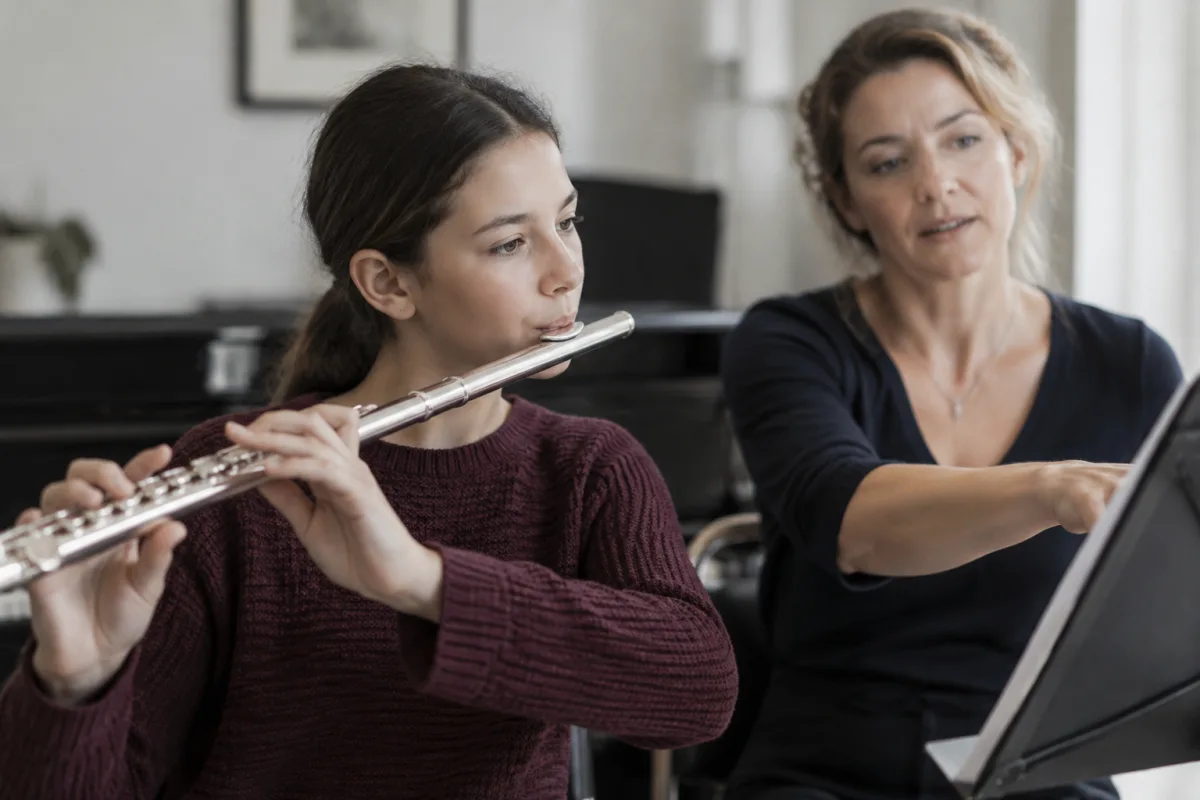
Learning the flute opens up a world of musical possibility — from classical and jazz to folk and contemporary music. Whether you're drawn to the flute's bright, soaring sound or simply curious about picking up an instrument, flute lessons provide the structured guidance you need to develop proper technique, build confidence and progress steadily. Flute lessons can transform you from a curious beginner into a competent musician, and they're never too late to start.
Why Take Flute Lessons?
Flute lessons offer several advantages over learning alone. A qualified teacher can correct your posture and embouchure — the way you shape your mouth around the mouthpiece — right from the start, preventing bad habits that would take years to unlearn. They'll guide you through the fundamentals of breath control, help you develop consistent tone quality and teach you to read music properly. Most importantly, a good teacher keeps you motivated when practice gets difficult and celebrates your breakthroughs along the way.
Self-taught flute players often struggle with intonation and tone production because these require immediate feedback and correction. Lessons eliminate guesswork and accelerate your progress dramatically.
What to Expect in Your First Lesson
Your first flute lesson typically begins with an introduction to the instrument itself — the parts of the flute, how to hold it properly and how to produce your first sound. Your teacher will assess your current knowledge, discuss your musical goals and explain what the learning journey looks like. Most teachers will give you specific practice assignments — usually starting with 15–30 minutes daily — and a structured progression through beginner materials.
You'll learn to read music notation, develop basic fingering skills and start playing simple melodies within a few lessons. The pace depends on your age, musical background and commitment to practice between lessons.
Finding the Right Flute Teacher
A good flute teacher should:
- Have formal training and performance experience — ideally a music degree or equivalent professional qualification
- Teach a variety of styles — classical, jazz, world music or contemporary as you prefer
- Explain things clearly — technique works better when you understand the "why" behind it
- Be encouraging but honest — constructive feedback helps you improve without feeling discouraged
- Have flexible scheduling — regular lessons work better than sporadic sessions
- Use structured curriculum — a lesson plan keeps you progressing systematically
- Adapt to your learning style — visual, auditory or kinaesthetic learners need different approaches
Look for teachers through local music schools, community centres, university music programmes or online platforms. Ask for references, listen to sample teaching videos if available and try a trial lesson before committing to a course.
Flute Lessons for Different Ages
Children typically start flute lessons around age 7–8 when their hand size and coordination are sufficient. At this age, lessons work best with a playful, encouraging approach and short practice sessions. Teenagers and adults can progress quickly because they have stronger attention spans and can understand the theory behind technique.
Adult learners often progress faster than younger students in some respects — they grasp music theory quickly and understand the need for disciplined practice. The main difference is physical — hands and lips take longer to develop the muscle memory and strength needed for advanced techniques.
Essential Skills You'll Learn
Flute lessons systematically build your capabilities in these areas:
- Breath control — managing your airflow for dynamics, sustain and consistent tone
- Embouchure formation — positioning your lips to produce clear, centred notes
- Fingering technique — smooth, rapid finger work for faster passages
- Tone production — developing a warm, focused sound across the entire range
- Intonation — playing in tune with consistent pitch accuracy
- Music reading — fluency with staff notation and rhythm
- Phrasing and musicality — interpreting written music expressively and musically
These skills build progressively — you won't master everything in your first month, but a structured approach to lessons ensures steady improvement.
Online vs In-Person Flute Lessons
In-person lessons offer immediate feedback on your embouchure and hand position — critical for flute technique — and allow your teacher to hear your tone quality directly. Online lessons work well for revisiting technique, learning music theory and practising pieces you've already started, but they're less ideal for fundamental technique work where the teacher needs to see and hear exactly what you're doing.
Many teachers now offer hybrid approaches: in-person lessons for foundation work and technique, with occasional online sessions for convenience. This combines the best of both.
How Often Should You Take Lessons?
Most teachers recommend a weekly 30 or 45-minute lesson for beginners and intermediate players. Weekly consistency helps your brain consolidate new skills more effectively than sporadic lessons. If budget is tight, fortnightly lessons combined with disciplined home practice can work, but weekly is ideal for steady progress.
Lesson length varies: beginners often start with 30 minutes, intermediate players take 45 minutes, and advanced students may take hour-long lessons. Your teacher will recommend the right frequency and duration based on your level and goals.
The Importance of Practice Between Lessons
Your lesson is only the beginning — what matters is how you practise between lessons. Regular, focused practice (ideally 20–30 minutes daily for beginners) consolidates what you've learned and prevents you from backsliding. Most teachers give specific practice assignments: technical exercises, scales or etudes to work through, and pieces to refine for the next lesson.
Many flute students find that keeping a practice log helps. Write down what you worked on each day and what difficulties you encountered. Bring this to your lesson so your teacher can address specific challenges.
Costs of Flute Lessons
Flute lesson prices vary widely depending on your teacher's experience and location. A beginner lesson with a student teacher or community teacher might cost £15–£25, whilst a professional musician charges £30–£60+ per lesson. Some music schools offer package discounts for term-long commitments.
A decent flute for beginners costs £200–£600 new, or £100–£300 used. Some teachers rent flutes for students, though owning your own instrument lets you practise freely without worrying about rental schedules.
Progressing Beyond Beginner Lessons
After 6–12 months of consistent lessons, you'll likely be playing simple pieces by composers like Mozart or Haydn. After a couple of years, intermediate players tackle more challenging repertoire, explore different styles and often branch into chamber music — playing with other musicians. Some students pursue advanced jazz techniques, whereas others focus on classical performance or folk music.
Many flute players eventually join community orchestras, bands or chamber ensembles where they can play alongside other musicians — one of the great rewards of learning an instrument.
Flute lessons are an investment in a skill you'll enjoy your whole life. Whether you aspire to play in an orchestra, jam with friends at the pub or simply entertain yourself in quiet moments, structured flute lessons accelerate your learning and help you develop a genuine love for the instrument. Find a patient, knowledgeable teacher, commit to regular practice and discover the joy of making beautiful music.




Comments