


Flute Lessons article
Flute Lessons for Beginners: A Complete Guide
Taking up the flute as an adult or beginner can feel daunting. With the right approach and encouragement, you'll find that flute lessons are not only achievable but genuinely enjoyable.
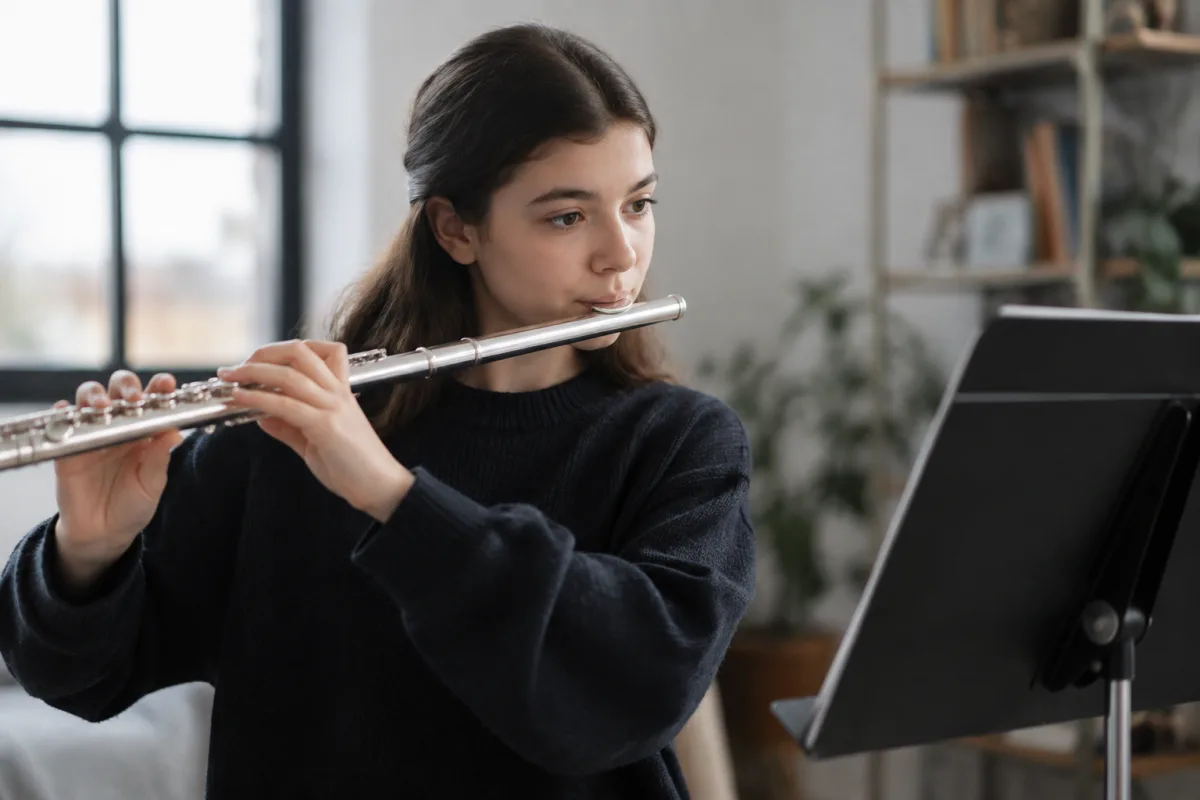
Taking up the flute as an adult or beginner can feel daunting—you might worry that you're starting too late, that you lack musical talent, or that you won't progress quickly enough. Rest assured, these fears are entirely normal, and thousands of people successfully learn the flute at any age. With the right approach and encouragement, you'll find that flute lessons are not only achievable but genuinely enjoyable. This guide will walk you through your first steps in a way that builds confidence alongside skill.
Your First Day of Flute Lessons: What to Expect
Walking into your first lesson can trigger some nervousness. Most flute teachers understand this completely and structure initial lessons to be welcoming rather than challenging. You won't immediately produce a beautiful melody—that's not how learning works. Instead, your teacher will show you the parts of the flute, explain how to hold it comfortably, and help you produce your very first sound. That first squeak or wobbly tone? That's a victory worth celebrating, because it means you've successfully engaged the instrument.
Expect your first lesson to last 30-45 minutes. Your teacher will assess your current musical knowledge (or lack thereof), understand your goals, and establish a practice routine that works for your lifestyle. A beginner-friendly teacher will never make you feel rushed or judged about starting from scratch.
The First Two Weeks: Building Comfort
Your initial weeks focus entirely on comfort and basic technique. You'll learn proper posture—sitting with good back support, keeping shoulders relaxed, and holding the flute at a comfortable angle. You'll practise the embouchure, which is the mouth shape used to produce sound. This takes time to develop; don't expect perfection immediately.
Most beginners struggle with inconsistent air pressure, which creates squeaky or airy tones. This is completely normal. Your teacher will give you specific exercises to develop steady airflow. These might feel tedious—blowing through the flute without the head joint, or playing single notes repeatedly—but they're building the muscle memory you need.
During these early weeks, limit practice to 15-20 minutes daily rather than cramming practice into occasional long sessions. Your embouchure muscles are new to this work and will tire quickly. Short, consistent practice builds strength and muscle memory far more effectively than weekend marathon sessions.
Common Beginner Mistakes to Avoid Right Away
Knowing about these pitfalls will help you sidestep them from the start:
- Clenching your embouchure: Tension is the enemy of good flute playing. Your teacher will repeatedly remind you to relax your lips and jaw. Notice tension building during practice? Stop, shake out your hands and face, and begin again with relaxed muscles.
- Holding the flute too high or too low: This creates neck strain and inconsistent airflow. The flute should sit comfortably under your chin, parallel to the floor, never tilted dramatically up or down.
- Using your throat instead of your diaphragm: Beginner flutists often take shallow breaths and push air from their throat, creating a thin, squeaky sound. Your teacher will help you engage your diaphragm—the muscle below your ribs—for fuller, more controlled sound.
- Expecting progress to be linear: Some weeks you'll feel like you're moving forward; others you'll hit a plateau or even feel like you've regressed. This is absolutely normal. Progress happens in steps, not steady slopes.
- Skipping practice between lessons: Lesson time is for learning technique; practice time is for building skill. Missing practice means returning to your next lesson feeling rusty, which can be disheartening.
What You Need to Get Started
Your first investment should be modest. A student-level flute costs £150-400 and works perfectly for beginning lessons. Avoid ultra-cheap instruments (under £100), as they're often difficult to play and can discourage new players. Don't buy the most expensive model either—save that for when you're confident you'll continue studying.
You'll also need a cleaning swab (a cloth rod that removes moisture from inside the flute), a soft cloth for wiping the exterior, and a basic music stand. Your teacher may have recommendations based on your specific needs. If you're hiring a flute initially rather than buying, that's a sensible approach to test your commitment before spending more.
Setting Realistic Expectations for Progress
Honest timeline: after one month of weekly lessons and daily practice, you'll play simple two-note patterns and perhaps recognise a familiar melody. After three months, you'll handle basic rhythms and produce a reasonably consistent tone. After six months, you'll play simple folk songs and feel like a proper musician. This is genuinely exciting progress, but it requires patience with yourself.
Many beginners quit after four to six weeks because progress feels slow. This is the exact moment when consistent practice becomes crucial. Push through this phase, and the payoff is remarkable—suddenly, passages you struggled with click into place, and playing becomes genuinely fun rather than frustrating.
Building Confidence as You Learn
Celebrate every small victory. Your first clean note? Worth celebrating. Playing a five-note scale? That's genuine achievement. Completing a full piece, however simple? That deserves recognition. Beginners often focus on what they can't yet do rather than acknowledging what they've already accomplished. Actively notice your improvements, no matter how modest they seem.
Find a practice buddy or join a beginner flute group if possible. Knowing you're not alone in your struggle, and seeing others face similar challenges, is enormously reassuring. Many communities offer low-cost group classes for adult beginners specifically because social support drives continuation.
Choosing the Right Teacher for Your Journey
Your teacher's personality matters as much as their technical skill. You want someone patient, encouraging, and willing to explain concepts multiple ways until they click for you. A great beginner teacher celebrates progress, normalises mistakes, and genuinely enjoys working with absolute beginners. Look for teachers with reviews mentioning patience and encouragement, not just technical excellence.
Don't hesitate to try a different teacher if your first lesson doesn't feel right. The fit between student and teacher dramatically affects motivation and progress.
Beyond Your First Lessons
For more comprehensive information about flute study and the broader journey of learning music, see our complete guide to flute lessons.
Your journey as a flute player is beginning. The nerves you feel now will transform into excitement as you hear yourself play recognisable tunes. Every musician started exactly where you are now, uncertain but willing to try. That willingness is already your greatest asset.


Comments