


Flute Lessons Buying guide
Flute Lessons: A Complete Buyer's Guide
Choosing flute lessons requires understanding teaching approaches, qualifications, and your learning style. This guide helps you find lessons that accelerate progress.
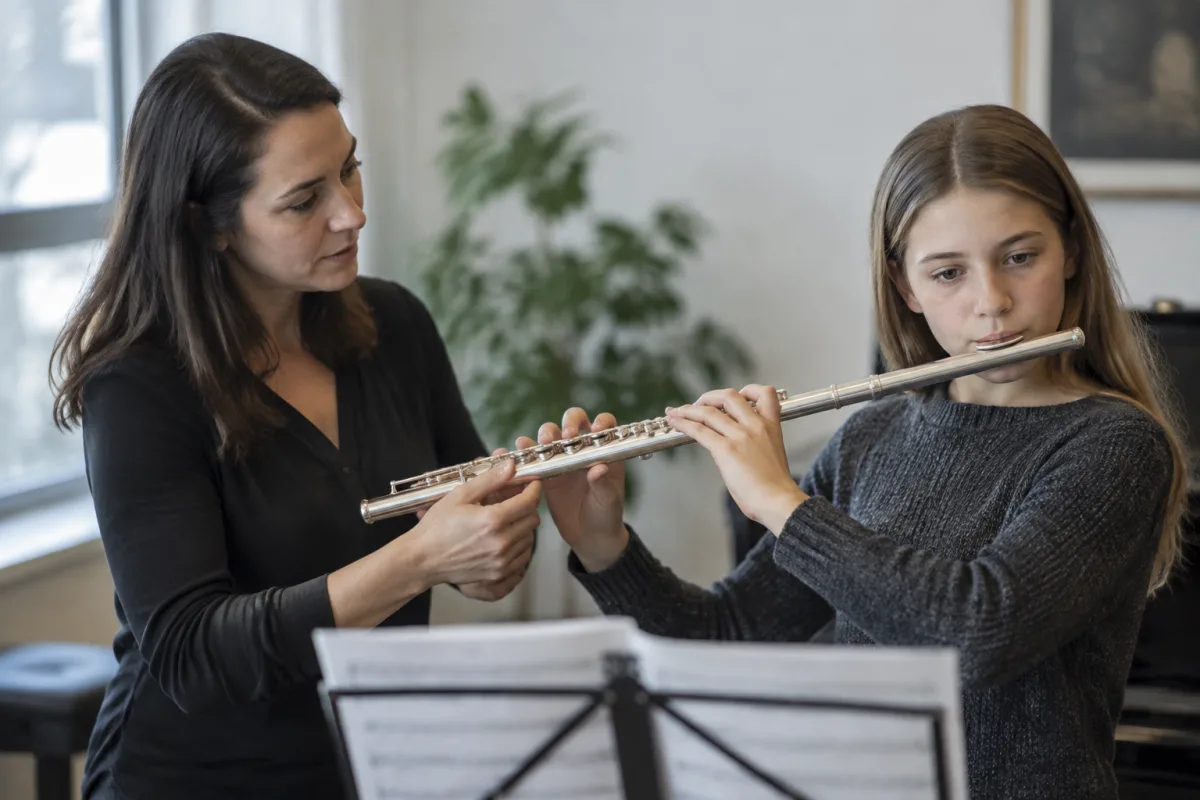
Finding the right flute lessons can feel overwhelming with so many options—private teachers, group classes, online courses, and apps all claiming to teach flute. The wrong choice wastes money and discourages learning; the right choice accelerates progress and keeps practice enjoyable. This guide walks you through what actually matters when selecting flute lessons, which teaching methods work best, and how to spot quality instruction at every price point.
Key Factors When Choosing Flute Lessons
Flute lesson quality depends more on the instructor's approach and your learning style than on any single factor. Understanding what actually matters prevents expensive mistakes.
Teacher Qualification and Experience. Not all flute teachers are equal. Look for teachers with formal flute training (grade 5+, diploma, or professional performance experience). A teacher should play competently and understand flute technique deeply. Check their credentials: do they have lessons from other qualified teachers? Have they performed professionally? Do they understand different flute styles (classical, folk, contemporary)? Credentials indicate foundational knowledge.
Teaching Experience vs. Playing Ability. A brilliant flute player doesn't automatically teach well. Some virtuosos are impatient with beginners; others are remarkably good at breaking down technique into manageable steps. Before committing to lessons, ask about teaching experience. A teacher with 5+ years teaching beginners has refined their approach and understands common mistakes. A teacher with minimal teaching experience might be brilliant but unpredictable.
Lesson Format: Private vs. Group vs. Online. Each format has distinct advantages and costs. Private lessons offer personalised attention but cost more (£20–50 per hour). Group classes provide peer support and lower costs (£10–20 per person) but less individual feedback. Online lessons fit busy schedules and cost less (£15–40 per session) but lack hands-on correction of posture and hand position. Choose based on your learning style and schedule, not just cost.
Structured Curriculum vs. Ad-Hoc Lessons. Some teachers follow a defined curriculum (like Trinity or ABRSM grade scales); others tailor lessons to your interests. Structured curricula provide clear progression and measurable milestones; ad-hoc lessons feel more flexible but lack a defined path. For beginners, structure helps; for players exploring specific styles (jazz, folk), flexibility matters more.
Lesson Frequency and Duration. Most beginner teachers recommend 30–60 minute lessons weekly. Twice-weekly lessons accelerate progress; monthly lessons are insufficient for meaningful progression. Lesson length matters too: 30 minutes suits absolute beginners; 45–60 minutes allows technique building and repertoire development. Ask what's recommended for your level before committing.
Flute Lesson Types Comparison Table
| Type | Typical Cost | Format | Personalisation | Best For |
|---|---|---|---|---|
| Private Lessons (Local Teacher) | £25–50/hour | One-to-one, in-person | Highest | Serious learners, detailed technique feedback |
| Online Private Lessons | £15–40/session | One-to-one, video call | High | Busy schedules, remote locations |
| Group Classes (Local Studio) | £10–20/person | Small group, in-person | Medium | Beginners, social learners, budget-conscious |
| Online Structured Courses | £50–200/month | Video modules, self-paced | Low | Self-motivated learners, specific topics |
| Flute Apps and Software | £5–15/month | Interactive games, practice tools | None | Supplementary practice, not primary learning |
What to Check Before Committing to Lessons
Request a Trial Lesson or Consultation. Any reputable flute teacher offers a trial lesson (often at reduced cost or free). Use this to assess whether their teaching style matches your learning style. Do they explain clearly? Do they demonstrate technique well? Do you feel comfortable asking questions? This single session reveals far more than any credentials.
Verify Teaching Philosophy. Ask the teacher directly: "How do you approach teaching beginners? What's your philosophy on practice? Do you focus on reading music or playing by ear?" Their answers reveal how structured and demanding their lessons are. Some teachers prioritise pure technical development; others blend technique with fun repertoire. Identify which approach suits you.
Check References or Reviews. Ask for testimonials from current or former students. Online platforms (Google, Facebook, local directories) often include reviews. Look for patterns: do students progress quickly? Do they find the teacher encouraging or harsh? Are lessons well-structured or chaotic? Consistent praise indicates a good teacher; mixed reviews suggest inconsistency.
Confirm Cancellation and Rescheduling Policies. Life happens. Clarify in advance: can you reschedule lessons if you're ill? What's the cancellation policy? Are you charged for cancelled lessons? What if the teacher cancels? These details prevent misunderstandings later.
Assess Communication and Support. Will the teacher give you written feedback or practice notes between lessons? Can you contact them with questions? Do they send practice assignments? Good teachers support students beyond the lesson itself. A teacher who only interacts during scheduled lessons provides less value than one who offers guidance between sessions.
Evaluate Long-Term Viability. Is the teacher available year-round or just during term time? Do they take holidays at inconvenient times? For long-term learning, consistency matters. A teacher unavailable for months at a time disrupts progress.
Common Mistakes When Choosing Flute Lessons
Mistake 1: Choosing Based on Price Alone. The cheapest lessons are often poor value. A £10 group class with an undertrained teacher who provides minimal feedback wastes your time and discourages learning. Spend £25–35 for private lessons with a qualified teacher; the results are worth the investment.
Mistake 2: Expecting Instant Results. Learning flute takes time—months to hear your own improvement, years to develop genuine musicianship. Impatient learners switch teachers frequently or quit after a few months. Commit to at least three months with a good teacher before judging progress. Real development isn't visible week to week; it's visible month to month.
Mistake 3: Assuming Online Lessons Are Inferior. A qualified online flute teacher via video call is nearly as effective as in-person lessons. The only limitation is posture correction (harder to assess on camera). For technique and musicianship, online lessons work excellently. Don't dismiss online options based on format alone.
Mistake 4: Skipping the Trial Lesson. Teachers offering trial lessons provide a genuine opportunity to assess fit. If a teacher won't offer a trial, find another. Trial lessons cost little money and reveal essential information about teaching style.
Mistake 5: Choosing Friends or Acquaintances Over Qualified Teachers. "My cousin plays flute—he can teach me" often fails because friends lack teaching experience. Teaching requires specific skills beyond playing well. Unless that friend has formal teaching background, invest in a proper teacher. Friendship isn't a credential.
Price Tiers Explained
Budget (£10–15/session): Group classes or inexperienced online teachers. Suitable for absolute beginners exploring whether flute is for them. Personalised feedback is minimal; progress is slower. Accept trade-offs for lower cost, but don't expect breakthrough technique development.
Mid-Range (£20–35/session): Qualified private teachers, online instructors with professional background, established group classes. The sweet spot for learners serious about progress. You get personalised attention, structured feedback, and a genuine learning relationship. Most dedicated amateur learners invest at this level.
Premium (£40–60/session): Highly experienced teachers, professional performers offering instruction, specialised styles (jazz, folk, contemporary). Justifiable for advanced learners wanting mastery or specific musical goals. For beginners, premium teachers are overkill.
Specialist Coaching (£60+/session): Elite teachers, preparation for professional auditions, advanced technique refinement. Reserved for serious musicians with specific goals. Entirely unnecessary for casual learning.
Choosing Flute Lessons: Practical Checklist
Before committing to lessons, address these questions:
- What's your realistic practice commitment? Can you practise 20+ minutes daily? (Lessons require this to progress.)
- Do you prefer private or group lessons? Do you learn better alone or with peers?
- Do you want structure (grade curricula) or flexibility (varied repertoire)?
- Can you attend consistent weekly lessons, or does your schedule fluctuate?
- Is local in-person teaching important, or are you open to online lessons?
- Can you afford £20–35 per lesson long-term, or is lower cost essential?
- What's your actual goal? (Playing for pleasure, grade exams, specific styles, group performance?)
For a comprehensive overview of flute learning resources, different teaching approaches, and long-term development, see our complete guide to flute lessons. That resource covers lesson types, practice strategies, and how to maximise learning across your entire flute journey.
The right flute lessons accelerate progress and keep learning enjoyable. Invest time in finding a qualified teacher whose approach matches your style. That choice determines whether flute becomes a lifelong pleasure or a frustrating experiment.


Comments