


Synthesizer Keys article
The Complete Guide to Synthesizer Keys
Synthesizer keys are the creative interface between you and sound. Discover different weighting types, features and how to select the right keyboard.
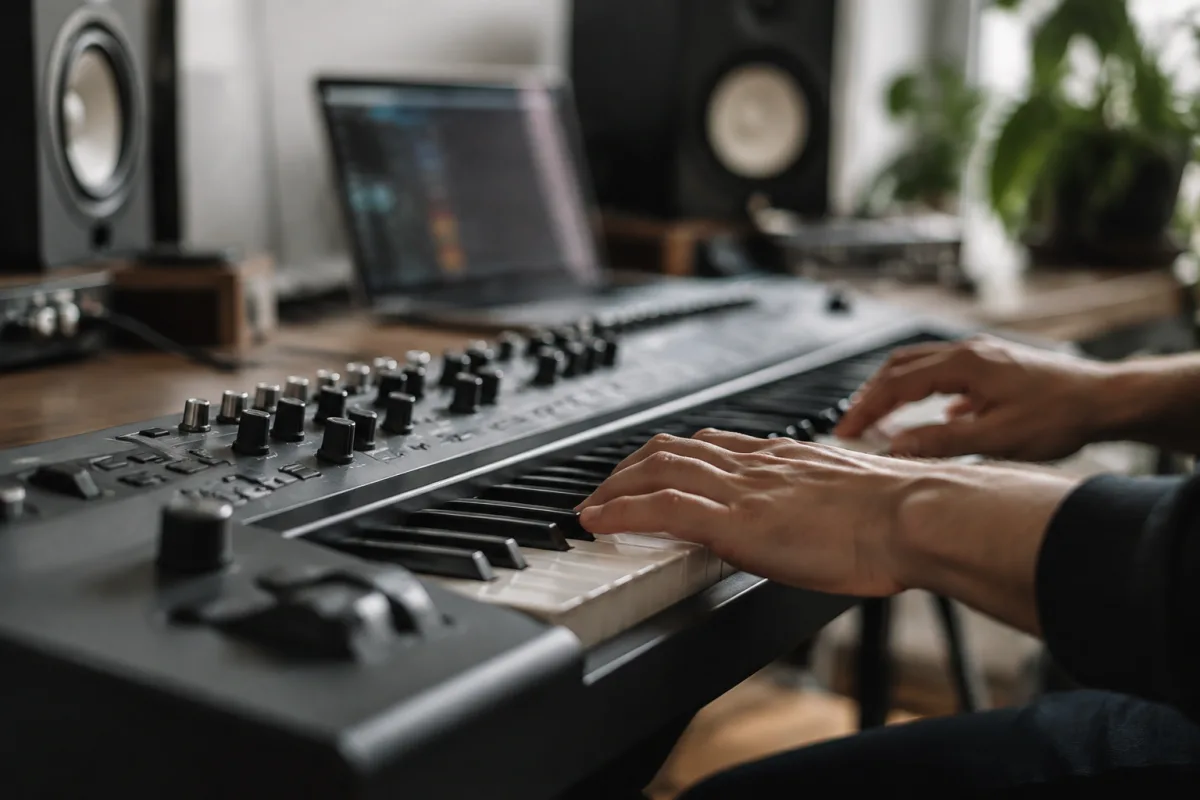
Synthesizer keys are the interface between artist and sound creation, determining how expressively you can manipulate synthesizer parameters and sculpt the tones that define electronic music. The quality, responsiveness and design of synthesizer keys dramatically affect playability, workflow and creative satisfaction. Understanding different synthesizer keys types helps you select instruments matching your playing style and musical vision.
What Are Synthesizer Keys?
Synthesizer keys are weighted or unweighted keyboards that trigger synthesizer algorithms and send MIDI data to control sound parameters. Unlike acoustic pianos, synthesizer keys don't require striking strings—they register velocity (how hard you press) and respond to modulation wheels, aftertouch and other controllers. Quality synthesizer keys provide tactile feedback and expressive control essential for nuanced performance.
Key Weighting Types
Unweighted Synthesizer Keys
Most synthesizer keys are unweighted, with light spring action optimised for rapid playing, finger drumming and synthesizer-specific techniques. Unweighted synthesizer keys suit studio production, beat-making and electronic performance. They're lighter to transport and don't demand the hand strength required for weighted keys.
Semi-Weighted Synthesizer Keys
Some synthesizer keys offer light resistance that simulates partial hammer action. Semi-weighted synthesizer keys balance expressiveness with rapid control, appealing to players transitioning from acoustic pianos. They provide more nuance than fully unweighted designs without full piano weighting.
Weighted Synthesizer Keys
Professional synthesizer keys increasingly feature weighted hammer actions matching acoustic pianos. These synthesizer keys demand proper technique and finger strength, rewarding expressive playing with dynamic control. Weighted synthesizer keys appeal to classically trained musicians and serious performance artists.
Key Technology and Sensors
Velocity Sensitivity
Synthesizer keys measure how quickly you press them, generating velocity data (0–127) that controls volume, brightness and other parameters. Quality synthesizer keys respond linearly across the full range, whilst budget models feel inconsistent. Professional synthesizer keys allow velocity curve customisation.
Aftertouch
Premium synthesizer keys support aftertouch, detecting continued finger pressure after note onset. This expressive control modulates vibrato, filter cutoff or other parameters in real time. Channel aftertouch (one value for entire synthesizer keys) is common; polyphonic aftertouch (individual per-key sensitivity) appears on pro models.
Common Synthesizer Keys Sizes
25-Key Compact Models
Portable synthesizer keys (25 notes) suit bedroom producers, gigging musicians and space-limited studios. They sacrifice range for portability and affordability. Controllers designed as synthesizer keys typically offer this size.
49 and 61-Key Models
Standard synthesizer keys sizes (49–61 keys) cover most playing needs without excessive bulk. These synthesizer keys balance performance range, portability and price. They're ideal for beginners and intermediate players.
88-Key Professional Synthesizer Keys
Full 88-key synthesizer keys match acoustic piano range, essential for pianists performing classical-influenced electronic music. Professional weighted synthesizer keys at this size command premium prices but offer incomparable expressiveness and versatility.
Workflow Features
Consider what synthesizer keys features matter for your music: onboard editing, assignable knobs and faders, MIDI learn capability, and integration with DAW software. Some synthesizer keys include step sequencers, arpeggiators and other performance tools built-in. Others serve purely as controllers, with synthesis happening in software.
Conclusion
Choosing synthesizer keys means balancing size, weighting, price and workflow needs. Whether you select lightweight portable synthesizer keys for gigging or professional weighted models for studio expression, prioritise instruments matching how you actually make music. Quality synthesizer keys unlock creative possibilities that transform your electronic music from functional to inspired.


Comments