


MIDI Pad Controller article
Midi Pad Controller for Beginners: A Complete Guide
A MIDI pad controller removes the learning curve from music production. Make satisfying sounds on day one without music theory knowledge. This guide covers your first session and how to build confidence through creation.
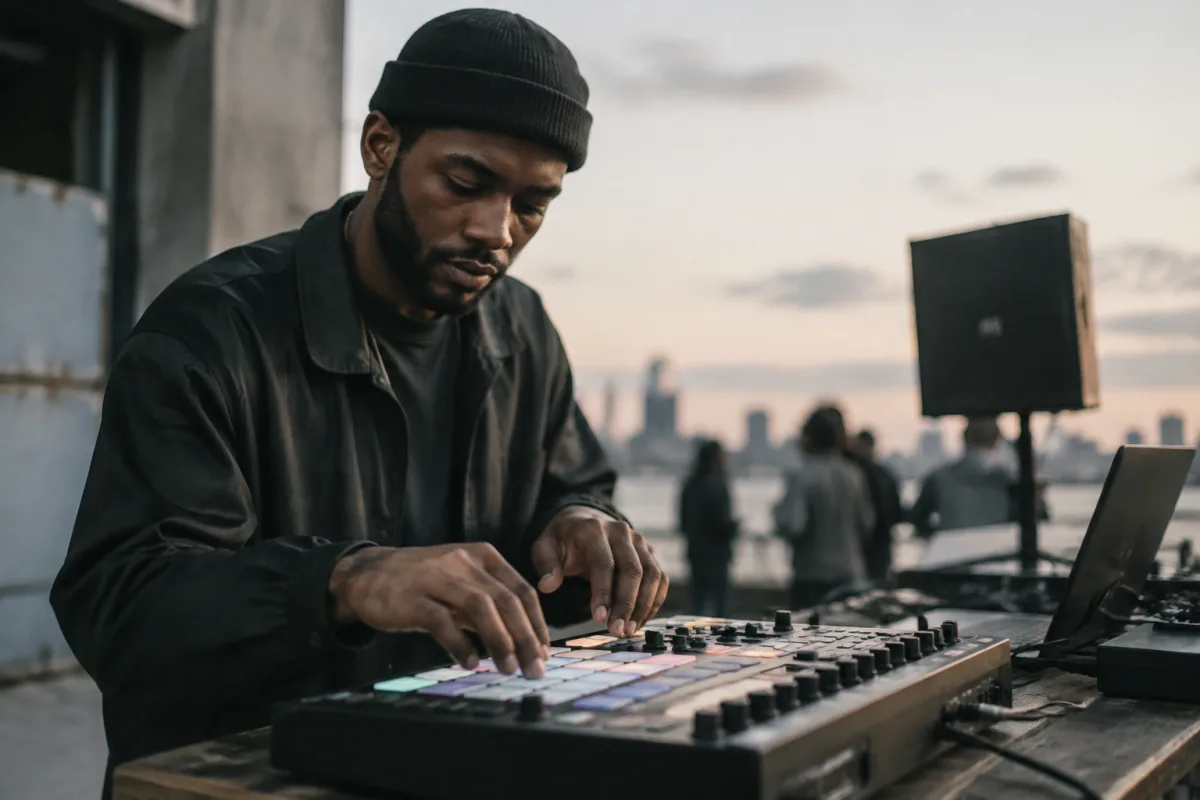
A MIDI pad controller might sound intimidating if you're new to music production—all those buttons, unclear purpose, confusing terminology. But here's the reality: a MIDI pad controller is genuinely welcoming for beginners. It's immediate, intuitive, and forgiving. You can make satisfying music on day one without understanding anything about music theory. This guide demystifies what a MIDI pad controller is, how to get started, and why these instruments deserve serious consideration as your entry point into production.
What a MIDI Pad Controller Actually Is
A MIDI pad controller is simply a grid of buttons (pads) that triggers sounds. Press a pad, hear a sound. No strings, no keys to learn, no complex technique required. Each pad can be mapped to different sounds—drums, bass, leads, whatever you want. Your MIDI pad controller is essentially a blank canvas waiting for you to assign sounds and create patterns. That flexibility is the entire appeal for beginners.
Don't overthink it. A MIDI pad controller does one thing: it connects to your computer and tells software which sounds to play. That's genuinely all that's happening underneath the jargon.
Why Beginners Should Consider MIDI Pad Controllers
You need zero musical experience to make satisfying sounds on a MIDI pad controller. A keyboard requires learning hand position and reading music. A MIDI pad controller just asks you to press buttons. The barrier to entry is incredibly low. This psychological advantage matters enormously—many people get discouraged learning traditional instruments before ever experiencing success. A MIDI pad controller lets you experience creation immediately.
The workflow on a MIDI pad controller is inherently creative. You're not learning exercises; you're making actual music from day one. This keeps motivation high and learning sustainable.
Your First Session With a MIDI Pad Controller
Plug your MIDI pad controller into your computer and open a digital audio workstation (DAW). Popular free options include GarageBand (Mac) or Reaper's trial. Download a drum kit or sound pack—free options abound online. Assign different sounds to different pads on your MIDI pad controller. Start pressing. You're already making beats.
That first session will feel magical. You'll realize you're actually creating music. This experience builds confidence and motivation in ways tutorials can't replicate.
Basic Workflow: Patterns and Sequences
Most beginners use their MIDI pad controller to create step sequences—programming patterns into the DAW rather than playing live. This approach removes the pressure of real-time performance. You place sounds on a grid, listen, adjust, repeat. Your MIDI pad controller works perfectly for this because pads are large and satisfying to trigger during playback.
Don't worry about complex arrangements initially. Simple four-bar drum loops are genuinely satisfying. Once you've made one loop work, you understand the fundamentals. Everything else builds naturally from that foundation.
Learning Sounds and Mapping
Every pad on your MIDI pad controller can trigger different sounds. Mapping (assigning sounds to pads) is usually drag-and-drop in most DAWs. Spend time exploring your DAW's sounds and assigning ones you love to your controller. Don't rush—this experimentation is how you learn what sounds exist and what your preferences are.
Many beginners make the mistake of trying to create finished productions immediately. Instead, spend the first month just exploring sounds and making short patterns. Enjoy the process of discovery.
Avoiding Overwhelm
A MIDI pad controller has many buttons, and your DAW has infinite options. This apparent complexity intimidates beginners. Ignore 90% of it initially. Focus on one drum kit, one synth sound, one simple pattern. Master making simple sounds work together before exploring advanced features. Depth will come naturally once you understand fundamentals.
Your MIDI pad controller isn't going anywhere. Every button and feature will still be there after you've spent weeks mastering basics. Resist the urge to learn everything immediately.
Building Confidence Through Sharing
Create something on your MIDI pad controller—even a 30-second loop. Play it for a friend. Their reaction will build your confidence more than any tutorial. You've created music. That matters, regardless of sophistication level. This positive feedback loop sustains motivation when learning feels slow.
Understanding MIDI: The Technical Bit
MIDI (Musical Instrument Digital Interface) is just a messaging standard. Your MIDI pad controller sends messages (this pad was pressed at this time) to your DAW, which interprets them and triggers sounds. That's genuinely all MIDI is—a language for musical devices to communicate. Understanding this eliminates most of the mystique.
You don't need to understand MIDI to use a MIDI pad controller effectively. The connection works automatically once it's configured. Plug in, and it works.
Expanding Your Skills
After your first month making patterns, explore recording longer sequences. Learn to adjust sounds (changing parameters like filters, delay, reverb). Discover effects and how they transform basic sounds into interesting textures. Each small discovery builds your understanding and capability naturally.
The Path Forward
Your initial MIDI pad controller experience opens doors. Maybe you'll pursue production seriously. Maybe you'll enjoy casual music-making without ever going deeper. Either path is valid. Your MIDI pad controller gave you immediate access to creation without a steep learning curve. You've already succeeded in the most important way: you made music that you enjoyed. Everything else builds from that foundation.


Comments