


MIDI Pad Controller Buying guide
Midi Pad Controller: A Complete Buyer's Guide
Choosing the right MIDI pad controller means understanding which specs genuinely matter for your production workflow and avoiding common purchasing mistakes.
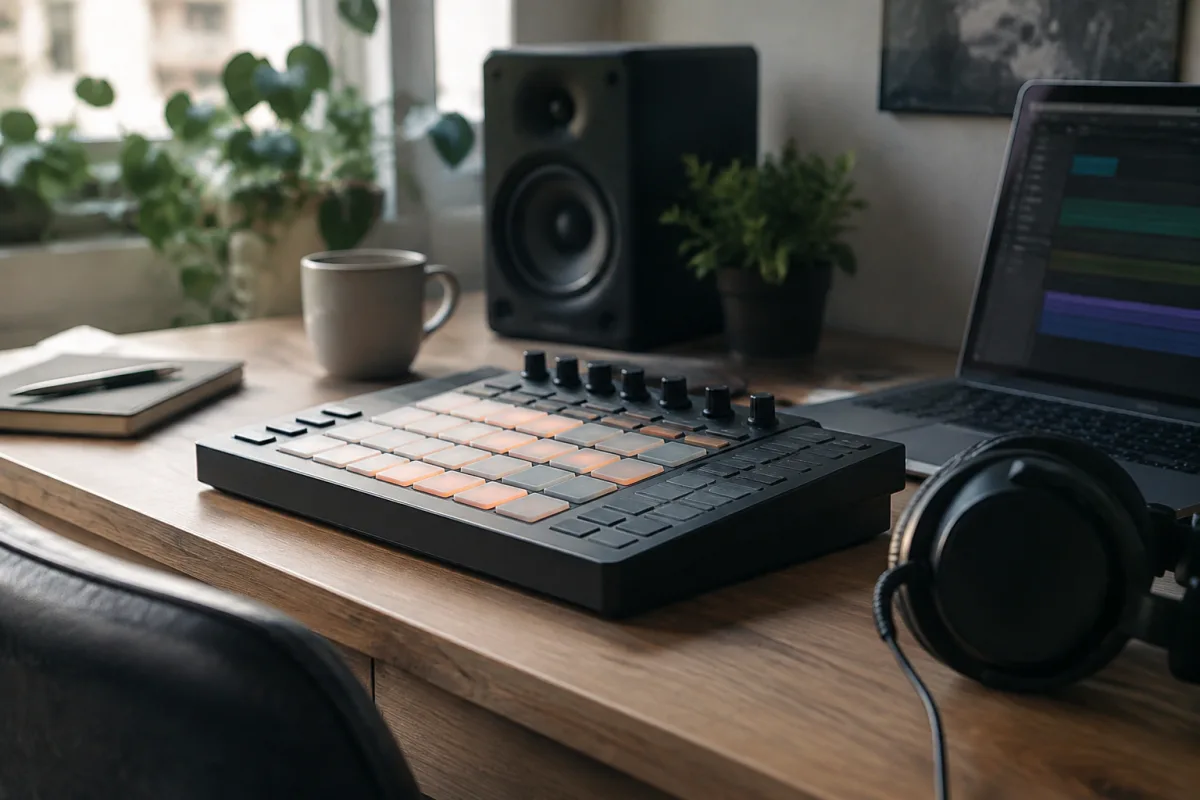
Buying a MIDI pad controller requires understanding what specs genuinely matter for your workflow. Whether you're producing beats, triggering samples live or controlling a DAW, the wrong choice wastes money and frustrates you in the studio. I'm going to walk you through the specifications, build quality and feature trade-offs that actually determine whether a MIDI pad controller suits your needs and budget.
Pad Resolution and Sensitivity
The quality of your pads directly shapes your playing experience. Entry-level MIDI pad controllers often use membrane-style pads that respond inconsistently unless you strike them hard and precisely. Professional-grade controllers feature velocity-sensitive pads with genuine tactile feedback, allowing natural dynamic control and expressive playing.
Look for 8, 16 or 32 pads depending on your workflow. Eight pads are genuinely enough for triggering samples in basic setups, whilst 16 pads offer more creative possibilities during live performance. Thirty-two pads let you sequence complex patterns and control multiple elements simultaneously. More pads don't automatically make a controller better; choose based on how you actually work.
Test the pad response curve yourself if possible. Some controllers let you adjust sensitivity, which matters tremendously if you're switching between gentle finger-drumming and aggressive live triggering. Inconsistent pad behaviour forces you to learn compensation techniques rather than music.
Build Quality and Durability
MIDI pad controllers take physical punishment in live settings and studios. Cheaper models use thin plastic casings that crack after months of gigging, whilst better-built units employ reinforced construction, metal brackets and proper padding underneath.
Check the connection points carefully. Flimsy USB ports and fragile jack sockets are common failure points on budget controllers. A well-designed unit has recessed connectors and cable strain relief to prevent damage during transport. If you plan to take your controller places, build quality becomes essential rather than nice-to-have.
Look at reviews from actual users who've owned the controller for at least six months. Durability problems emerge over time; initial first-impressions reviews won't catch them. Check whether replacement pads are available and reasonably priced if you damage them.
Key Specifications to Compare
When evaluating MIDI pad controllers, these specifications genuinely affect your experience:
| Specification | What It Means | Why It Matters |
|---|---|---|
| Pad Count | Number of velocity-sensitive pads | More options for patterns, but not always necessary for your workflow |
| Pressure Sensitivity | How many velocity levels the pads detect | Higher values (127 levels standard) mean smoother dynamic control |
| Connection | USB, Bluetooth, or both | Wired is more reliable; Bluetooth offers flexibility but adds latency |
| DAW Integration | Direct compatibility with your music software | Native support means less configuration; generic MIDI works everywhere |
| Buttons and Encoders | Control elements beyond pads | Useful for transport controls, parameter adjustment and navigation |
Connectivity and Latency
USB connection remains the most reliable option for studio work. It provides power directly, eliminates battery concerns and delivers rock-solid MIDI transmission. Bluetooth controllers offer wireless freedom for live setups, but introduce latency that can throw your timing during performance.
If you're triggering samples live or finger-drumming, even tiny latency becomes noticeable and exhausting. You'll naturally compensate by playing earlier, which breaks your timing instincts. Wired controllers remove this problem entirely. Reserve Bluetooth for specific situations where cables genuinely get in your way.
Check whether your DAW automatically recognises the controller. Some models require driver installation on certain operating systems. Native support means plug-and-play functionality; generic MIDI compatibility works but demands manual configuration.
Price Tiers and Value
Budget MIDI pad controllers (under £100) handle basic triggering and offer quick entry-level learning. Their pads are often less responsive and durability is questionable, but if you're testing whether pad-based production suits your style, they're acceptable starting points.
Mid-range controllers (£100–£300) deliver balanced quality. Pads respond reliably, construction feels solid and you get genuine professional features without excessive cost. Most producers working at any level land here because value-per-feature is genuinely excellent.
Premium controllers (over £300) emphasise build quality, aftertouch sensitivity, extensive buttons and encoders for sophisticated control. They're worthwhile if you perform live regularly or produce professionally, but overkill for bedroom producers experimenting with production.
Avoid the trap of buying the most expensive option assuming it's automatically best. A £200 controller that perfectly matches your workflow beats an expensive model with features you'll never use.
Feature Extras and Nice-to-Haves
Some MIDI pad controllers include sounds, loops or sequencers built-in. These are genuinely convenient for quick sketching without opening a DAW, but they're bonuses rather than essentials. If you already own production software, standalone sounds add cost without adding capability you need.
RGB pad lighting looks impressive and helps with performance visibility, but drains batteries on Bluetooth models and adds unnecessary cost. Some performers genuinely benefit from visual feedback; others find it distracting.
Programmable buttons save time if you work with the same DAW constantly. However, generic MIDI mapping is flexible and works with any software, making this feature less critical than raw pad quality.
Compatibility with Your Setup
Before purchasing, confirm the controller works seamlessly with your operating system and DAW. Check the manufacturer's official compatibility list rather than assuming universal compatibility. Some controllers function on Mac but behave temperamentally on Windows, or vice versa.
Look at the manual to understand MIDI mapping options. Can you customise which MIDI note each pad sends? Are there bank-switching capabilities if you need more than the visible pads? Flexibility matters tremendously when integrating a new controller into your existing workflow.
Test with borrowed gear if possible before committing to purchase. A controller that feels responsive to your playing style matters far more than feature lists and specifications.
Common Purchasing Pitfalls
Don't buy based on YouTube reviews from producers with different workflows. Someone recording orchestral samples needs different features than a live electronic performer. Find reviews from people doing exactly what you do.
Avoid assuming higher pad count automatically means better performance. Sixteen pads you can actually play is better than thirty-two pads crammed so close together that you miss-hit constantly.
Don't neglect warranty coverage and after-sales support. Cheaper brands sometimes disappear, leaving you with a dead controller and no replacement pads available. Established brands offer reliability and spare parts availability.
Resist the temptation to buy wireless Bluetooth-only models if you perform live. Cable-free convenience becomes a genuine liability when your battery dies mid-set or latency shifts your timing.
Making Your Final Decision
Choose a MIDI pad controller that matches your actual budget, delivers responsive pads that feel natural under your fingers and integrates seamlessly with your existing setup. The best controller is the one you'll actually use consistently. For more detail on getting started, see our complete beginner's guide to MIDI pad controllers.



Comments