


Piano Pedal article
The Complete Guide to Piano Pedal
Piano pedals enable sophisticated musical expression far beyond finger technique alone. This guide explores the sustain, soft and sostenuto pedals, their mechanical functions and how to master pedal technique for genuinely expressive playing.
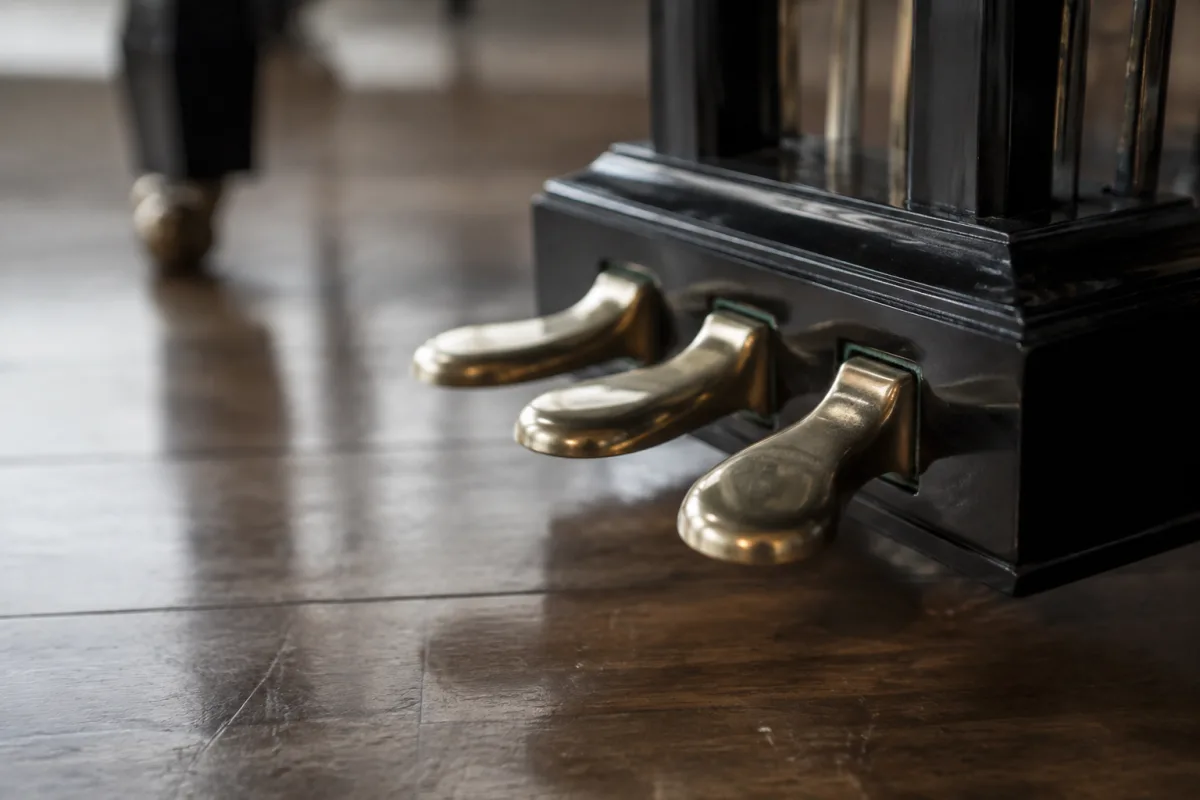
Piano pedals represent one of the most misunderstood aspects of piano playing, yet mastering their use separates adequate players from genuinely expressive musicians. These three mechanisms—the sustain pedal, soft pedal and sostenuto pedal—profoundly influence tone colour, resonance and emotional impact, enabling pianists to shape sound in ways impossible using fingers alone.
Understanding Piano Pedal Fundamentals
The piano pedal system represents an ingenious mechanical design enabling musicians to alter the instrument's tonal characteristics without touching the keys. Each pedal operates through elegant mechanical linkage, with the right pedal engaging the sostenuto mechanism, the middle pedal controlling selective sustain, and the left pedal shifting the entire action sideways. Understanding each pedal's function forms the foundation for expressive piano playing.
Beginner pianists often neglect pedal technique, viewing pedals as peripheral to fundamental finger skills. However, experienced teachers recognise that pedal mastery distinguishes accomplished players from merely competent ones, making pedal study essential rather than optional.
The Sustain Pedal: The Right Pedal
The sustain pedal, operated by the right foot, raises all dampers simultaneously, allowing notes to ring freely after the pianist releases keys. This creates legato passages impossible through finger technique alone, enables harmonic resonance enriching the sound and permits strategic sustain enhancing emotional expression.
Sustain pedal usage demands refinement—careless over-use creates muddy, blurred sound as competing harmonics clash. Mastering the sustain pedal requires learning precisely when to engage it, how long to hold it and when to release it for maximum clarity. Classical composers notated pedal indications meticulously, providing guidance for interpreting their intentions.
The Soft Pedal: The Left Pedal
The left pedal, known as the soft pedal or una corda in classical terminology, shifts the entire action sideways, enabling hammers to strike fewer strings. On concert grands, this causes each hammer to strike only one string rather than the usual three, fundamentally altering the tonal character to something more delicate and intimate.
The soft pedal does not merely reduce volume—it transforms tone quality, producing a distinctive character entirely different from simply playing more quietly. Composers like Chopin and Debussy exploited the soft pedal's unique sonic properties for specific artistic effects.
The Sostenuto Pedal: The Middle Pedal
The sostenuto pedal, the most misunderstood mechanism, sustains only selected notes rather than all strings. Engaging the sostenuto after striking specific notes, but before releasing them, sustains only those particular pitches whilst leaving others unaffected. This enables complex passages combining sustained and non-sustained elements.
Contemporary players often neglect the sostenuto pedal due to its complexity. However, Romantic and modern composers intentionally composed passages requiring its specific capabilities, making its mastery necessary for authentic interpretation.
Pedal Technique and Coordination
Proper pedal technique requires developing foot independence and sensitivity paralleling finger dexterity. Professional pianists practice pedal transitions as diligently as finger passages, recognising that clumsy pedal work undermines otherwise excellent finger technique.
The challenge involves timing—knowing precisely when to engage and disengage pedals to create intended effects without introducing unintended harmonic muddiness. This demands listening sensitivity and careful coordination between hands and feet.
Sustain Pedal Usage Across Musical Styles
Classical composers notated specific pedal indications throughout their works. Beethoven symphonic transcriptions employ sustain pedal for dramatic harmonic effects. Chopin nocturnes utilise delicate pedal shading for romantic character. Debussy impressionistic works exploit pedal for atmospheric resonance and colour.
Contemporary and jazz pianists approach pedal usage more intuitively, responding to the moment's emotional requirements rather than following strict notation. This stylistic flexibility demands understanding pedal mechanics deeply enough to adapt their use to various musical contexts.
Common Pedal Mistakes and How to Avoid Them
Beginning pianists frequently engage the sustain pedal throughout entire passages, creating murky, indistinct sound. Seasoned players learn to "change the pedal"—release and re-engage it rhythmically to maintain harmonic clarity whilst preserving sustain effects.
Neglecting soft pedal exploration represents another common mistake. Many developing players never experiment thoroughly with the left pedal's tonal possibilities, missing opportunities to develop sophisticated tone shaping abilities.
Pedal Study for Developing Musicians
Piano teachers incorporate pedal study gradually, introducing the sustain pedal first, then the soft pedal, and finally the sostenuto as students progress. Dedicated pedal exercises, like those in Cortot's "Rational Principles of Pianoforte Technique," develop coordination and sensitivity essential for expressive playing.
Recording oneself pedalling develops awareness—listening objectively reveals unintended harmonic muddiness or overly abrupt pedal changes, enabling targeted improvement.
Digital Piano Pedals: Limitations and Considerations
Digital piano pedals attempt replicating acoustic piano mechanics, though with varying success. Quality digital instruments respond to gradual pedal engagement, producing half-pedalling effects comparable to acoustic instruments. Budget digital pianos offer basic on-off pedal response lacking this nuance.
Players transitioning from digital to acoustic pianos often discover unexpected challenges adapting to sophisticated acoustic pedal mechanics, highlighting the importance of quality digital instruments for serious students.
Concert Grand vs. Upright Piano Pedals
Concert grand pianos feature superior pedal mechanisms, with sostenuto pedals functioning smoothly and sustain dampers responding sensitively. Upright pianos employ simplified mechanisms—the middle pedal typically functions as a mute pedal rather than true sostenuto.
This mechanical distinction influences repertoire selection—challenging works requiring precise sostenuto control traditionally demand concert grand access.
Conclusion
Piano pedals transform the instrument from a percussive mechanism into a vehicle for sophisticated musical expression. Mastering pedal technique—understanding each mechanism's specific function and developing refined control—represents an essential progression for serious pianists. Whether employing the sustain pedal's harmonic richness, the soft pedal's tonal transformation or the sostenuto's selective sustain capabilities, pianists who master these mechanisms unlock expressive possibilities unavailable through finger technique alone, elevating their playing from mechanically competent to genuinely artistic.


Comments