


Light Up Keyboards Piano article
The Complete Guide to Light Up Keyboards Piano
Light up keyboards guide you to the correct keys as you play, making practice faster, more accurate and genuinely enjoyable for learners at every level.
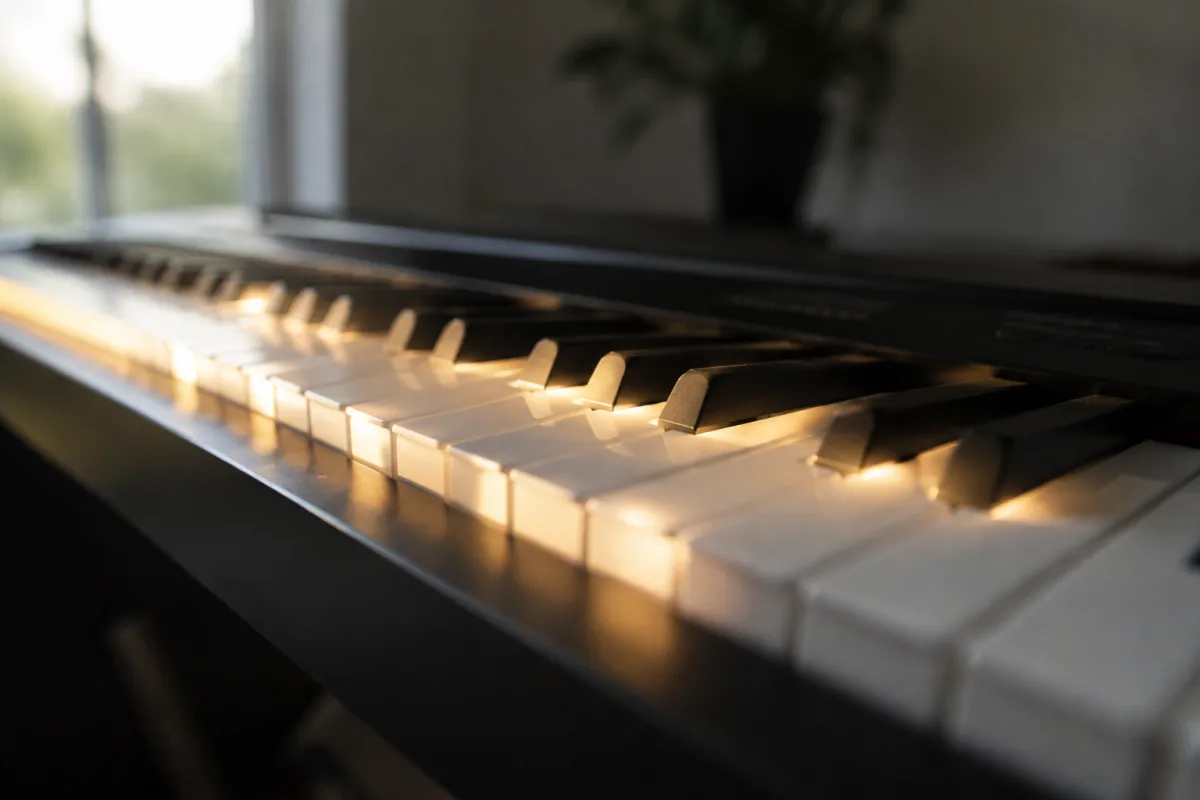
If you're learning piano or keyboard and the keys look exactly like they do on every other instrument, it's easy to miss where your fingers should land when you glance away from the music. Light up keyboards solve that problem by illuminating each key as you're supposed to play it, turning your instrument into a visual guide that keeps you focused and confident. Whether you're a complete beginner or someone who's been playing for years but struggles with consistent hand positioning, a light up keyboard makes practice faster, more accurate and genuinely more enjoyable.
What Are Light Up Keyboards and How Do They Work?
A light up keyboard is an electronic instrument with LED lights built into or beneath each key. As you play—either by following sheet music through special software, playing along with a song, or using the keyboard's own built-in lessons—the lights guide you to the correct keys in real time. Some models display which finger should play each note; others simply illuminate the next key you need to hit. Most light up keyboards run on rechargeable batteries or USB power, making them portable and practical for home, studio or travel.
The technology works through a combination of MIDI connectivity (the protocol that connects instruments to computers) and either proprietary software or embedded circuitry within the keyboard itself. When you pair a light up keyboard with your computer or tablet, apps can send MIDI data to trigger the lights. Standalone light up keyboards have the software built in and work without any external device.
The Learning Benefits of Lit Keys
Light up keyboards offer distinct advantages for learners at every level. Beginners benefit most dramatically: rather than staring intensely at both the music and the keyboard, you can focus on keeping rhythm and listening to the sound. The lights provide constant feedback about whether you're playing the right notes, building muscle memory faster than traditional practice methods. Even experienced pianists find light up keyboards useful for sight-reading unfamiliar pieces or learning a new style of music, since the visual cue eliminates the mental translation delay between "I see this note on the staff" and "my finger should be there."
Light up keyboards also help with hand position consistency. When the same key lights up every time in the same place, your fingers develop reliable, accurate positioning without thinking about it. This builds the foundation for better technique on any acoustic piano you later play.
Different Types of Light Up Keyboards
Light up keyboards come in several varieties, each suited to different needs and budgets:
- Portable light up keyboards with built-in lessons: These range from 32 to 88 weighted keys, include beginner songs and tutorials loaded into the instrument itself, and require no external software. They're ideal for travel or casual learners who want simplicity.
- App-based systems: A standard MIDI keyboard paired with software on your tablet or computer (like Simply Piano or Yousician) that illuminates keys on a screen or, on some newer models, projects lights onto a standalone keyboard. These offer more flexibility and access to a vast music library.
- Professional-grade lit keyboards: Heavier, weighted 88-key models designed for serious students and performers. These use weighted, weighted hammer keys that simulate acoustic piano resistance and include advanced light features for stage use.
- Mini keyboards with lighting: Compact 49- or 61-key models perfect for beginners on a budget or anyone with limited space. Most are less expensive than full-size variants but still deliver the lighting benefits.
Key Features to Look For
When choosing a light up keyboard, consider brightness and visibility first. Are the LEDs bright enough to see clearly under normal room lighting? Some models use edge lighting (lights along the key edges) while others illuminate the entire key surface; brighter, surface-level lighting is easier to follow quickly. Check whether the lights correspond to finger numbers or just key positions, as some players prefer one system over the other.
Battery life and power options matter if you plan to move the keyboard around. A device that runs 20 hours on a charge suits different needs than one that requires constant USB power. Also examine the number of keys: 49-key models work fine for beginners and pop songs, but if you ever want to tackle classical piano, 88 weighted keys become essential. Look at what's included or required: some light up keyboards work entirely standalone, while others need a computer and specific software.
Sound quality varies widely. A light up keyboard with thin, synthetic tones may discourage practice, whilst one with richer, more realistic piano sounds keeps you motivated to keep playing. Don't overlook build quality; cheaper models sometimes have cheap-feeling keys that develop faults after a few months of heavy practice.
Light Up Keyboards for Different Skill Levels
Beginners should prioritise simplicity and built-in lessons over advanced features. A 61-key light up keyboard with beginner songs already loaded, rechargeable batteries and a reasonable price point (£150–300) is an excellent starting point. You don't need 88 keys or weighted action when you're just learning; a responsive, well-lit keyboard that feels pleasant to touch is far more important.
Intermediate players often want to connect to their own sheet music or apps, making app-based light up systems increasingly attractive. At this level, a good MIDI keyboard (with light support) combined with software like Simply Piano or Synthesia gives you far more songs to learn and more control over your practice. Prices range from £200 to £600 for quality mid-range equipment.
Advanced players and professionals typically need weighted 88-key keyboards that feel like acoustic pianos but also support lighting for sight-reading or performance setups. These are expensive (£800–2000 and up), but they remain your primary instrument long-term rather than a stepping stone, so the investment makes sense.
Budget Considerations
Light up keyboards range dramatically in price. At the budget end, simple 32-key portable models with basic lessons cost £50–100 and serve casual learners well. Mid-range 61-key models with good sound and lesson content sit at £150–400. Premium models with 88 weighted keys, advanced lighting, and professional build quality run £800–3000 or more. App-based systems like Simply Piano or Yousician (which use your existing keyboard and phone or tablet) cost £10–15 monthly, making them a budget-friendly way to add lighting features to any MIDI keyboard you already own.
Rather than buying the most expensive model, match the keyboard to your actual commitment level. A beginner trying out piano should start with something modest (£100–200) and upgrade if they're serious after six months. Someone committed to learning will benefit far more from a mid-range light up keyboard and consistent practice than from the most expensive model played sporadically.
Maintenance and Durability
Light up keyboards are electronic instruments, so moisture is the enemy. Keep them away from damp environments, use them in climate-controlled spaces, and never expose them to direct sunlight for long periods, as heat can damage the LEDs. Dust the keys gently with a soft, dry cloth and never use liquids or solvents near the electronics.
Most light up keyboards are built to be portable rather than indestructible, so handle them carefully and store them in a dedicated keyboard case when not in use. Battery-powered models should be charged regularly (even if you're not playing) to keep the battery healthy over time. If a light stops working, check your keyboard's manual for troubleshooting; some models have replaceable LED units, whilst others may need professional repair.
Comparing Light Up Keyboards to Acoustic Pianos
An acoustic piano will always be the gold standard for serious piano study, with weighted keys that train your fingers for concert performance and a sound that cannot be synthesised. But a light up keyboard has genuine advantages for most learners. It's vastly cheaper, takes up less space, doesn't require tuning, makes no noise late at night (use headphones), and the lighting feature accelerates learning. Many accomplished pianists started on light up keyboards and made the switch to acoustic piano later, arguing they progressed faster because the lighting kept them practising longer and more confidently.
The best approach for most learners: start with a good light up keyboard and consider it an investment in your motivation and progress, not a permanent substitute for an acoustic piano if you eventually want one.
Conclusion
A light up keyboard bridges the gap between curiosity and genuine skill in a way that most instruments simply cannot. By showing you exactly where to play and eliminating the guesswork that discourages beginners, these instruments make learning faster, more accurate and infinitely more enjoyable. Whether you choose a portable beginner model, an app-based system, or a professional-grade instrument, a light up keyboard is a sensible, practical choice that will keep you engaged and progressing—which is ultimately what matters most in music. Pick one suited to your budget and commitment level, start practising and enjoy watching your skills develop with every session.


Comments