


Light Up Keyboards Piano article
Light Up Keyboards Piano for Beginners: A Complete Guide
Light up keyboards piano make learning piano less intimidating for beginners. This guide shows how to learn effectively, avoid common mistakes, and transition to independent playing.
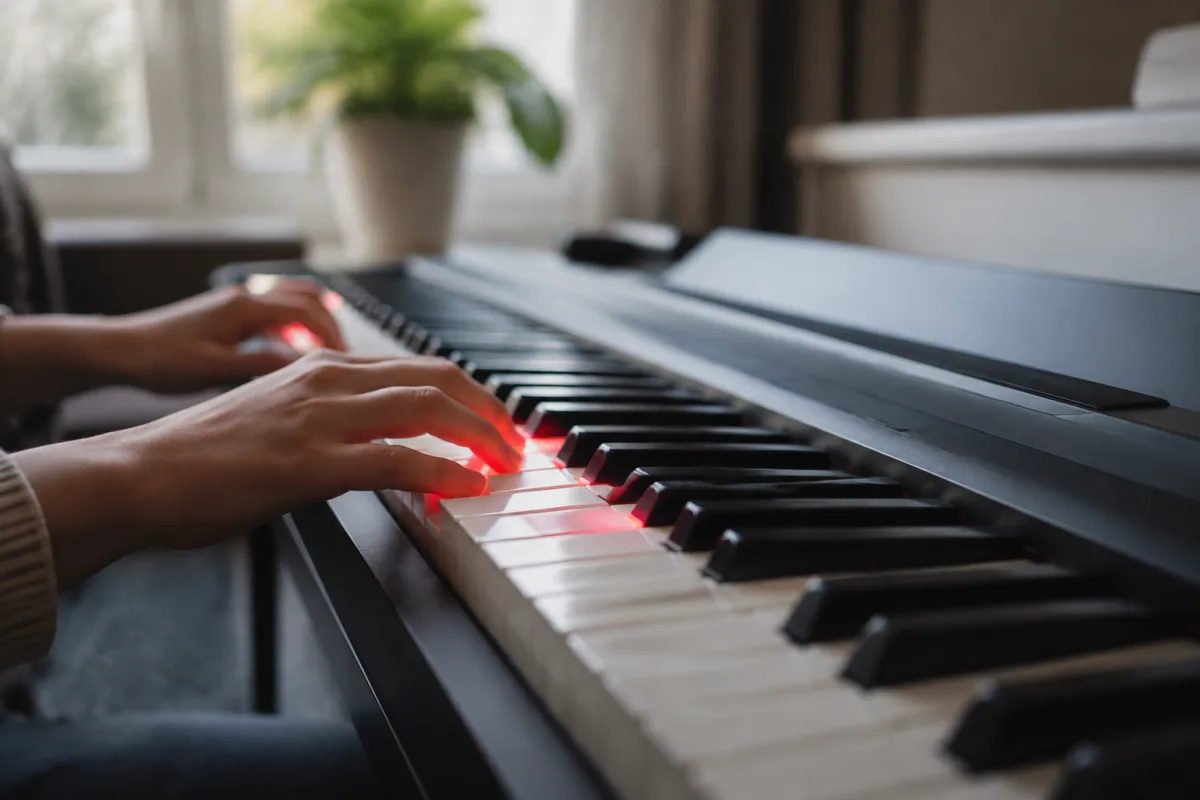
The prospect of learning piano can feel intimidating—all those keys, so much information to absorb, such a steep initial learning curve. Light up keyboards piano represent a modern solution to this anxiety: they use visual cues (glowing keys, on-screen guidance) to guide your fingers, removing guesswork and building confidence from day one. Yet many beginners wonder if light up keyboards piano are genuine learning tools or mere gimmicks that delay real skill development. The truth lies between: light up keyboards piano excel at motivation and basic note recognition but shouldn't replace proper instruction or traditional practice. This beginner's guide walks you through learning with light up keyboards piano effectively, maximises their teaching potential, and helps you transition to conventional keyboard practice as your skills develop.
How Light Up Keyboards Piano Work
Light up keyboards piano combine hardware and software in elegant ways. Most modern systems use LED lights embedded in the keys that illuminate in sequence, showing you which key to press next. Accompanying software displays sheet music on-screen (or via app) whilst simultaneously lighting the corresponding keys. Your job is straightforward: watch the lights, press the illuminated key, and hear the correct note. This removes the most intimidating barrier for beginners—the knowledge of which key is which.
Different light up keyboards piano systems vary considerably. Entry-level versions have simple light sequences and few built-in songs. Professional-grade systems (like Yamaha's Smart Pianist-compatible keyboards or Casio's keyboard-app hybrids) integrate with sophisticated learning apps offering hundreds of songs across genres and difficulty levels. Understanding the capabilities of your specific light up keyboards piano matters more than the bells-and-whistles list.
Why Light Up Keyboards Piano Benefit Beginners
Light up keyboards piano excel at solving specific beginner challenges:
- Eliminating key identification anxiety: Traditional learning requires memorising which physical key produces which note. Light up keyboards piano remove this burden entirely, letting you focus on rhythm, timing, and hand independence. You learn to play immediately rather than spending weeks on theory preliminaries.
- Building immediate confidence: Playing recognisable melodies within your first session is profoundly encouraging. Light up keyboards piano deliver this gratification instantly. Beginners who feel success early in learning tend to maintain practice consistency—and consistency is everything in music development.
- Enabling rhythm training: Watching lights illuminate in sequence trains your rhythm sense more effectively than reading sheet music initially. Light up keyboards piano literally show you timing. This kinesthetic learning method suits many people's nervous systems.
- Reducing cognitive load during early learning: Your attention when learning on light up keyboards piano focuses on hand position, posture, finger independence, and timing. Traditional learning divides attention between finger location, note identification, reading sheet music, and hand position simultaneously. Light up keyboards piano simplify this overwhelm.
- Maintaining child engagement: Children learning on light up keyboards piano often practice longer than those using traditional methods because the visual feedback feels like play rather than study. This increased practice time accelerates skill development, assuming light up keyboards piano usage eventually transitions to reading conventional sheet music.
Your First Session: Getting Started on Light Up Keyboards Piano
Setting up your first light up keyboards piano session requires minimal preparation:
- Position yourself comfortably: Sit at roughly 90-degree angles at hip and elbow. The keyboard height should allow your wrists to remain relatively straight whilst playing. Posture matters from day one—bad habits developed on light up keyboards piano carry forward to traditional playing.
- Adjust the light brightness: Most light up keyboards piano allow brightness control. Set lights bright enough to see clearly but not so bright they're distracting. You'll adjust this preference as you become comfortable.
- Start with the system's slowest tempo: Light up keyboards piano typically offer adjustable speed settings. Begin at the slowest speed—even slower than feels comfortable. Speed gradually increases naturally as muscle memory develops.
- Play your first simple song: Most light up keyboards piano come with beginner songs—nursery rhymes, simple melodies, classical fragments. Choose something you find motivating. The joy of playing recognisable music immediately reinforces your commitment to continued learning.
- Focus on finger placement, not speed: On light up keyboards piano, accurate finger positioning matters more than keeping perfect time initially. If you miss lights, don't panic—just catch up when you can. Developing muscle memory is the priority at this stage.
Maximising Learning on Light Up Keyboards Piano
Light up keyboards piano are most effective when used strategically rather than passively:
- Gradually increase difficulty: Most light up keyboards piano systems categorise songs by difficulty. Start in the beginner category, master several songs, then progress. This scaffolded approach builds confidence systematically.
- Repeat songs until they're comfortable: Playing a song perfectly once is meaningless. Repeat each light up keyboards piano song 5–10 times across multiple sessions, allowing muscle memory to develop. Only then progress to new material.
- Increase speed incrementally: Once you can complete a song at slow tempo without missing lights, increase speed by 10–20%. Light up keyboards piano speeds should feel slightly challenging but achievable. Frustration is counterproductive.
- Turn off the lights occasionally: Once you've played a light up keyboards piano song multiple times, attempt it without visual guidance. This bridges the gap between light-guided playing and independent performance. You'll likely make mistakes—that's the point of this practice.
- Combine with sheet music reading: After playing a song on light up keyboards piano, look at its sheet music representation. Start connecting visual-auditory learning (lights) with traditional notation. This transition is gradual and natural.
Common Mistakes Beginners Make with Light Up Keyboards Piano
Several errors undermine effective learning on light up keyboards piano:
- Relying entirely on lights without developing reading skills: Light up keyboards piano are brilliant scaffolding tools, not permanent crutches. If you never transition to reading conventional sheet music, you'll stagnate. Plan from day one to eventually play without visual guidance.
- Progressing too quickly through difficulty levels: Light up keyboards piano systems often tempt learners to constantly unlock new, "harder" songs. Resist this urge. Mastery of foundational songs matters infinitely more than breadth of repertoire. Speed up gradually instead of jumping across difficulty levels.
- Neglecting proper posture: Light up keyboards piano's engaging gameplay sometimes leads to slouching, hunched shoulders, and poor hand position. Bad posture learned early becomes permanent habit. Correct yourself constantly; your future self will thank you.
- Ignoring hand independence exercises: Light up keyboards piano teach you which keys to press but not always how to coordinate your hands independently. Supplement light up keyboards piano with traditional finger exercises to develop the technical foundation professional playing requires.
- Assuming light up keyboards piano replace real instruction: Light up keyboards piano excel at motivation and basic skill-building but can't address individual technique issues, correct misunderstandings, or personalise learning to your unique needs. Consider pairing light up keyboards piano with occasional lessons from a qualified teacher.
- Losing motivation when lights are removed: Many beginners thrive on light up keyboards piano but panic when transitioning to conventional sheet music. This is normal. Maintain patience with yourself during this transition. The skills you've built on light up keyboards piano transfer completely to traditional playing.
Transitioning from Light Up Keyboards Piano to Traditional Learning
After weeks or months on light up keyboards piano, you'll eventually need to move toward standard reading and playing. This transition is gentler than it seems:
- Introduce sheet music gradually: Start with simple melodies you've already mastered on light up keyboards piano. Reading the notation whilst knowing what notes come next reduces cognitive load.
- Turn off lights while reading music: Play songs with conventional sheet music displayed but without light guidance. You've already built muscle memory, so finger placement comes naturally. Music reading becomes the new skill you're developing.
- Explore traditional learning apps and books: Excellent beginner method books (Alfred's Basic Piano, Bastian Piano Basics) build systematic skill development. Combine these with your light up keyboards piano instrument for hybrid learning.
- Consider lessons during transition: A qualified teacher can provide feedback on technique, help you interpret sheet music correctly, and accelerate your development beyond light up keyboards piano's capabilities.
- Embrace both methods simultaneously: Light up keyboards piano and traditional learning aren't either-or choices. Use light up keyboards piano for motivation and speed-building; use traditional instruction for depth and technical foundation. Together, they accelerate progress.
Choosing Between Light Up Keyboards Piano Models
Light up keyboards piano range from simple children's toys to sophisticated learning instruments:
- Entry-level systems (£50–150): Limited song libraries, basic lights, simple features. Suitable for children testing commitment or very casual adult learners.
- Mid-range systems (£150–400): Solid build quality, app integration, hundreds of songs, good light systems. Most beginners find excellent value here.
- Professional-grade (£400+): Integration with sophisticated learning apps, weighted keys that simulate acoustic piano resistance, extensive song libraries, professional audio. For serious learners ready to invest in long-term development.
For your first light up keyboards piano, mid-range systems offer the best balance of capability and price. Premium models are unnecessary until you're certain piano learning is your commitment.
You're Ready to Begin
Light up keyboards piano represent an invitation to music-making you might otherwise have declined. Your anxiety about complex sheet music and countless keys disappears when lights guide your fingers. Within your first week on light up keyboards piano, you'll play melodies that felt impossible. This confidence and early success matter more than any technical perfection. For broader context on light up keyboards piano and their role in modern music education, see our complete guide to light up keyboards piano.
Your learning journey begins with one song on light up keyboards piano. Choose something you love, press the illuminated keys, and experience the immediate joy of playing music. That joy is what transforms light up keyboards piano from a gimmick into a genuine learning tool.



Comments