


Kawai Digital Piano roundup
Kawai Digital Piano: A Complete Buyer's Guide
Choosing a Kawai digital piano is an exciting decision, but without proper guidance it's easy to feel overwhelmed by options. I'm going to walk you through everything you need to know, thinking through the practical questions that matter most whether you're buying for yourself, your child or your whole family to enjoy together.
Assessing Your Space and Budget
Before you start looking at specific Kawai digital piano models, have an honest conversation with yourself about two practical things: how much space you have and what you can comfortably spend. A Kawai digital piano doesn't need to take up an entire room like an acoustic piano might, but some models are more compact than others.
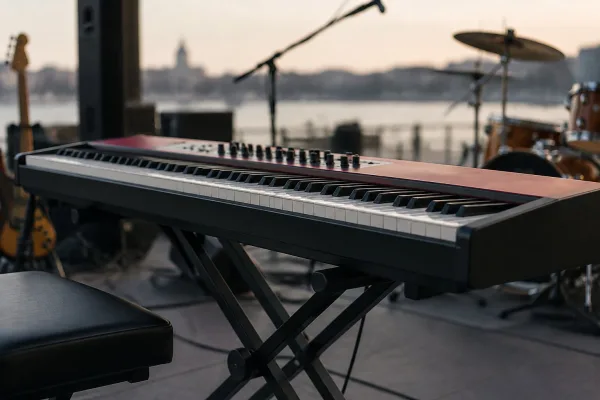
Portable models offer genuine Kawai quality without demanding much space. Console models look beautiful and feel more like "proper" pianos, but they need more room and cost more money. Stage pianos are brilliant if you perform or move between locations, but they lack built-in speakers unless you buy them separately. Your available space genuinely shapes which category makes sense for your situation.
Budget considerations matter too. Kawai makes excellent instruments at every price level, and honestly, an entry-level Kawai is better than a premium model from a brand without Kawai's pedigree. Decide what you can actually afford, then find the best Kawai model within that range rather than overstretching.
Understanding Key Action and Touch
The action is where you'll really feel the difference between adequate and exceptional. Every Kawai digital piano uses weighted keys that resist your fingers, but the quality of that resistance varies. Lower-priced models have basic weighting, whilst more expensive Kawai instruments feature hammer action systems that actually allow you to re-strike notes without fully releasing keys.
If you're serious about developing proper piano technique, hammer action is genuinely worth the investment. If you're starting out and mainly want to have fun, a basic weighted key action will serve you perfectly well. Test several models in person if you can, as this is the one thing you absolutely cannot judge from a description or photograph.
Sound Quality and Built-in Voices
Kawai digital pianos sample their sounds from real acoustic instruments. The quality of these samples varies somewhat by price point, though even entry-level models sound quite convincing. What really matters is whether the piano sound itself appeals to your ear, and the only way to know is to listen.
Beyond piano sounds, most Kawai models include various electric piano, organ, harpsichord and string sounds. For pure piano learning, you might rarely use these extras, but they're lovely to have when you want to explore different musical styles or tackle jazz standards that call for electric piano sounds.
Consider how many voices you actually need. More voices sound impressive on spec sheets, but quality matters far more than quantity. A Kawai digital piano with fifty sounds you love beats one with two hundred sounds that feel synthetic or thin.
Recording and Connectivity Features
Most Kawai digital pianos let you record your playing internally. This feature is genuinely useful for practice because listening to yourself reveals habits you cannot hear whilst performing. You can typically record several minutes of playing, save it, and review it later.
MIDI and USB connectivity matter if you want to work with computers. This opens doors to educational software, composition tools and sharing your playing online. If you're purely learning traditional piano technique, connectivity is nice but not essential. If you're interested in music technology or composition, it becomes quite valuable.
Bluetooth connectivity on newer Kawai models lets you play along with backing tracks from your phone or tablet. This makes practice feel less isolated and helps develop rhythm skills in a more musical context.
Pedals and Expression Control
The sustain pedal is the most important one to get right. On Kawai digital pianos, pedals respond to partial pressing, just like acoustic pianos. This halfpedalling ability distinguishes serious instruments from toy pianos where pedals are essentially on-off switches.
Some models include a soft pedal and sostenuto pedal to match acoustic grand pianos. These add authenticity and expand the musical possibilities, though many learners primarily use the sustain pedal anyway.
Test the pedals yourself. They should feel responsive and intuitive, not cheap or flimsy. Good pedals encourage proper technique development from the beginning.
Considering Your Learning Journey
If you're buying for a beginner, consider whether this is a commitment or an experiment. If you're genuinely uncertain whether your child or yourself will stick with piano, starting with an entry-level Kawai digital piano makes perfect sense. You're still getting authentic Kawai quality at a price point that won't hurt if it turns out piano isn't your thing.
If you're returning to piano after years away, or if you know you're serious about learning, investing more generously in a better Kawai model often pays dividends. Better touch and sound genuinely encourage longer practice sessions and faster improvement.
Where to Buy and After-sales Support
Purchase from retailers who stock Kawai digital pianos and can let you try before buying. Online prices might be cheaper, but the ability to sit down and play for fifteen minutes is genuinely valuable when making this decision.
Check what warranty and support comes with your purchase. Kawai instruments are reliable, but you want to know who to contact if anything goes wrong. Some retailers offer extended warranties that might be worth considering depending on your situation.
Making Your Final Decision
Choose a Kawai digital piano that fits your budget, sounds lovely to your ear, and feels responsive under your fingers. The best model is ultimately the one that inspires you to sit down and play regularly. That's how you progress, enjoy your music and ultimately decide whether this is going to be a long-term passion for you.





Comments