


Behringer Guitar Effects article
The Complete Guide to Behringer Guitar Effects
Behringer offers surprisingly capable guitar effects at affordable prices. This guide reveals what these budget pedals deliver, how they compare to boutique alternatives and whether they deserve a place on your rig.
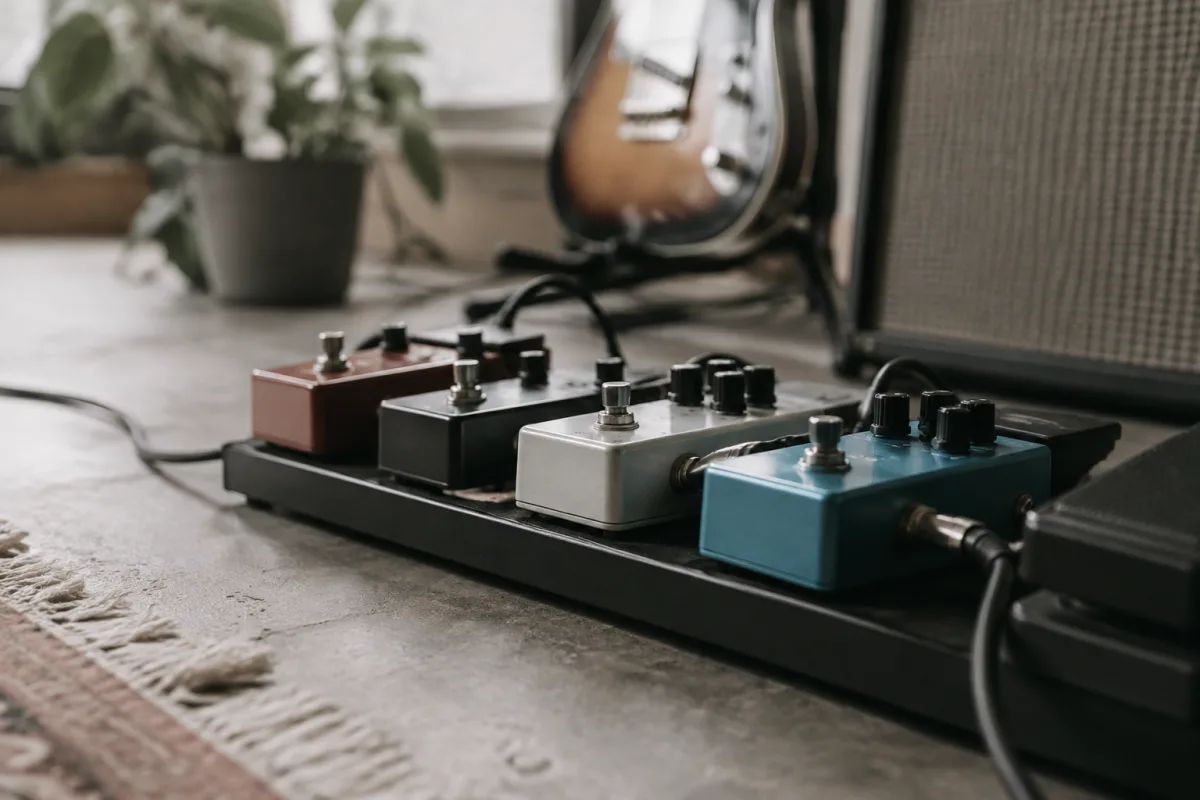
Budget-conscious guitarists have long turned to Behringer for affordable signal processors and effects pedals. As a brand known for value-for-money equipment, Behringer guitar effects offer surprising capability and quality at price points that won't break the bank. Whether you're building your first pedalboard or expanding an existing rig, understanding what these pedals deliver helps you make wise choices.
Who Is Behringer and Their Approach to Guitar Effects
Behringer is a German company specialising in affordable professional audio equipment. Their philosophy centres on democratising access to music technology through competitive pricing. Behringer guitar effects follow this model — offering solid digital processing, recognisable circuit designs and feature-rich pedals at a fraction of boutique prices.
The trade-off is minimal compared to competitors. Build quality on modern Behringer effects has improved dramatically. Sound quality matches or exceeds pedals costing twice as much. The primary consideration is durability — road-tested Behringer units hold up well, though budget materials mean they're not indestructible.
Key Behringer Guitar Effects Categories
Behringer produces several classes of effects suited to different needs:
- Distortion and overdrive: Affordable alternatives to Boss and ProCo models, with comparable tones and controls.
- Modulation effects: Chorus, flanger, phaser and tremolo units offering lush, dimensional textures.
- Reverb and delay: Digital reverbs and delays capturing classic tape and spring tones without excessive cost.
- Compression and dynamics: Dynamics processors helping shape tone and sustain.
- Wah pedals: Classic expression pedals offering responsive, musical filtering.
- Multi-effects units: Compact processors combining dozens of effect types in one chassis.
Popular Behringer Pedal Models
Specific Behringer guitar effects have earned strong reputations across the player community:
| Model | Effect Type | Price Range | Notable Strengths |
|---|---|---|---|
| FCB1010 | MIDI Controller | £100–150 | Extensive footswitch control; programmable; versatile |
| FX600 | Multi-effects | £60–80 | Compact, powerful processing, good effects selection |
| BEQ700 | 7-band EQ | £25–40 | Clean EQ, precise filtering, excellent value |
| CL9 | Compressor | £30–50 | Smooth compression, intuitive controls, professional results |
| HD400 | Multi-effects/Amp Modelling | £80–120 | Amp simulations, effects, USB recording, compact |
Sound Quality and Tone
Modern Behringer guitar effects deliver surprising fidelity. Digital processing technology has advanced such that budget implementations now rival expensive alternatives. Distortion algorithms capture the aggressive, responsive character of classic overdrive pedals. Reverbs and delays recreate authentic plate and tape textures convincingly.
The distinction lies in subtlety and nuance rather than raw capability. A boutique reverb might offer slightly warmer or more musical decay characteristics, but the difference often matters less than your amp, guitar and playing technique. For rock, blues, metal and folk music, modern Behringer effects sound genuinely professional.
Build Quality and Durability
Behringer gear has historically attracted criticism for build quality. Older models featured plastic housings, unreliable switches and questionable component choices. Contemporary Behringer pedals show marked improvement. Metal chassis construction is standard, footswitches respond consistently, and internal components use professional-grade materials.
Real-world durability depends on application. Bedroom and studio use treats Behringer effects kindly — they'll last years with minimal wear. Heavy road use tests them more severely. Switches may eventually fail after years of nightly gigging, and plastic jacks can wear. This doesn't mean they're fragile, just that boutique alternatives might offer longer service lives under extreme conditions.
Behringer Compared to Competitors
Budget effect pedals compete primarily against Boss, Zoom and affordable boutique brands. How do Behringer guitar effects stack up?
- vs Boss: Boss offers slightly better build quality and more refined interfaces. Behringer offers equivalent sound at 40–50% of the price. The trade-off favours Behringer for most players.
- vs Zoom: Zoom multi-effects are more feature-rich. Behringer single-effects pedals offer superior sonic depth and more intuitive operation for dedicated effect types.
- vs Boutique brands: Boutique pedals command premium prices for hand-crafted builds and bespoke designs. Behringer delivers 70–80% of that quality for a quarter of the cost.
Behringer Guitar Effects for Different Budgets
Cost considerations make these pedals accessible across budgets:
- Entry-level (under £50): Single-effect pedals like compressors, EQ units and basic distortions. Perfect for learning which effects you actually use.
- Intermediate (£50–150): Quality multi-effects units, specialised pedals and controllers. Covers most practical pedalboard needs.
- Advanced (£150–300): Behringer rarely enters premium markets, but some controllers and specialised units reach this range for professional users.
The affordable entry point means you can experiment extensively without significant financial risk, building confidence and taste in effects gradually.
Common Behringer Criticisms and Reality Check
Behringer gear faces regular online criticism. Many complaints stem from older models, personal preference, or snobbery about budget brands. Reality check:
- "Behringer sounds cheap": Modern implementations sound professional. Online bias often exceeds actual performance difference.
- "They always fail": Contemporary build quality is solid. Survivorship bias focuses attention on failures while ignoring the many reliable units in daily use.
- "Real musicians don't use them": Many working professionals use Behringer gear either alone or mixed with boutique equipment, especially for backup systems.
- "The interface is confusing": Most pedals share industry-standard control layouts. Learning one helps you navigate others quickly.
Building a Behringer-Based Pedalboard
Creating a functional pedalboard on a tight budget works perfectly with Behringer. A realistic setup might include:
- Distortion/overdrive pedal (£40–60)
- Modulation effect like chorus or phaser (£35–55)
- Reverb or delay (£40–70)
- Compression or EQ (£30–50)
- Tuner pedal (£20–40)
- Power supply and cables (£30–50)
Total investment: roughly £195–325 for a versatile, giggable setup. This price would purchase a single boutique distortion pedal or two used vintage pedals. The breadth of capability with Behringer represents excellent value.
Maintenance and Support
Behringer provides decent warranty coverage and worldwide service support. Finding replacement parts is straightforward — the company stocks common components and offers reasonable repair costs. Online communities share troubleshooting advice and modification tips extensively, so technical support extends beyond official channels.
Conclusion
Behringer remains an excellent choice for guitarists seeking capable, affordable effects without compromising sound quality. Modern Behringer guitar effects deliver professional results suitable for recording, rehearsal and live performance. Build quality has improved significantly, durability proves adequate for most applications, and the financial accessibility enables experimentation and learning. Whether supplementing expensive boutique gear or building your first pedalboard entirely from affordable options, these pedals deserve serious consideration before dismissing them based on brand reputation alone.



Comments