


Behringer Guitar Effects article
Behringer Guitar Effects for Beginners: A Complete Guide
Behringer effects are affordable, accessible, and perfect for beginners exploring tone shaping. This guide covers essential effects, setup, and common mistakes.
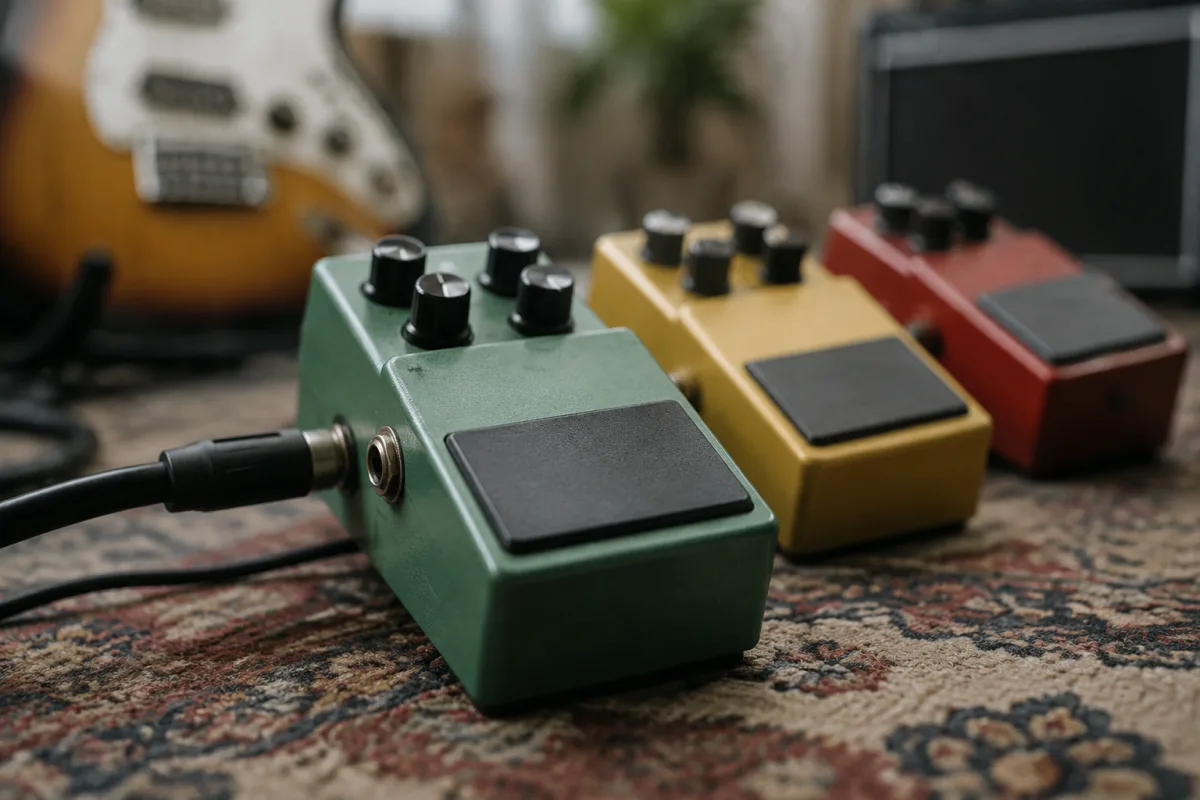
Behringer guitar effects are an affordable entry into sound shaping for new players. If you've been playing through a clean amp and wondering how to add texture, warmth, or drama to your tone, Behringer effects make experimentation accessible without breaking the budget. This guide walks you through what effects are, which ones matter first, and how to start using them without feeling overwhelmed.
Why Beginner Guitarists Should Try Effects
Effects transform your tone instantly. A simple overdrive pedal can make a clean amp sound aggressive; reverb adds space and dimension; delay creates texture and interest. Most importantly, effects are fun to experiment with — they inspire creativity and make practice sessions genuinely enjoyable rather than grinding through scales.
Behringer makes effects accessible. Their products are genuinely cheap (£30–100 per pedal), so you can explore multiple effects types without major financial commitment. They're not boutique-quality gear, but they're reliable and sound good enough that many professionals use Behringer alongside expensive pedals. For beginners, this democratization of tone-shaping is liberating.
Understanding Effects: The Basics
Effects fall into broad categories: dynamics (compression, gates), tone (EQ, distortion, overdrive), modulation (chorus, flange, phaser), and ambience (reverb, delay). For beginners, start with tone effects because they're immediately satisfying and teach fundamental concepts. A distortion or overdrive pedal changes your character entirely — you hear the effect right away. Modulation and ambience effects are more subtle and can be confusing initially.
Effects don't fix bad technique. If your playing is sloppy without effects, effects won't magically tighten it. Instead, they complement good playing. Start learning pedals after you're comfortable with basic technique — roughly 3–6 months of practice. Combining weak playing with fancy effects is frustrating for everyone listening.
Starting with Overdrive: The Gateway Effect
Overdrive is the best first effect. It adds warmth, sustain, and aggression to your tone without sounding artificial or thin. Plug an overdrive into a clean amp and hit a power chord — suddenly you sound heavier, more controlled, and instantly better. This confidence boost motivates continued learning.
Behringer's TO800 Tube Overdrive (around £30–40) is an excellent beginner choice. It's based on the Ibanez Tubescreamer, an industry standard that's been around for decades. When you're ready to upgrade, the Tubescreamer itself costs £100+, but the TO800 is 90% of the tone at 30% of the price. That's a smart starting point.
Setup is simple: plug your guitar into the pedal's input, pedal output to your amp. Turn on the pedal with the footswitch, then adjust the three knobs — Drive (how much effect), Tone (brightness), and Level (output volume). Spend time tweaking these; understanding how each knob shapes tone teaches you about tone-shaping in general.
Adding Gain Variety: Distortion and Fuzz
After comfort with overdrive, explore distortion. Distortion is more extreme than overdrive — it's fully saturated and aggressive. Behringer's HD400 (around £50) offers heavy distortion tones suitable for rock and metal. Fuzz is the most extreme gain effect — squishy, thick, and vintage-sounding. Behringer's BF200 (around £40) captures classic fuzz character.
Many beginners want to buy all three immediately. Resist this. Spend a month with overdrive, understanding how it responds to your amp, your guitar's volume knob, and your picking intensity. Then add distortion. Learn that combination thoroughly before exploring fuzz. This methodical approach builds intuition rather than accumulating a pile of pedals you barely understand.
Essential Accessories: Cables, Power, and Placement
You'll need short instrument cables to connect pedals together (don't twist pedals in series using long cables — use 30cm patch cables between each pedal). Behringer and other brands make cheap patch cables; avoid the £2 ones, but £5–10 patch cables work fine.
Power your pedals correctly. Most Behringer pedals run on 9-volt batteries or a 2.1mm barrel connector (the industry standard DC power jack). Buy a proper power supply (around £20–50) rather than juggling batteries. A daisy-chain supply powers multiple pedals from one outlet — convenient and economical.
On stage or in the studio, arrange pedals in order of signal flow: tuner first (to avoid losing signal if you turn off a pedal), then dynamics/tone effects (overdrive, distortion), then modulation (chorus, flange), then ambience (reverb, delay). This order feels intuitive and sounds good. You can experiment later, but start here.
Common Beginner Mistakes with Behringer Effects
Don't max out every knob. Beginners often turn every control all the way up, assuming "more is better." Instead, start at noon (12 o'clock) on each knob and adjust slowly. This prevents harshness and teaches you how controls interact. Many beautiful tones sit at moderate settings, not extremes.
Avoid buying in bulk. The temptation to grab a Behringer multi-effects unit (which includes dozens of effects) is strong. Resist it. For beginners, one or two individual pedals teach far more than a multi-effects processor. You'll actually use and understand them rather than having 50 effects you've never explored.
Don't neglect your amp's controls. Many beginner guitarists blame pedals when the real issue is amp settings. A Behringer overdrive pedal into a tinny 5-watt practice amp will sound tinny. The same pedal into a proper 15–20 watt combo amp sounds professional. Your amp matters as much as your pedals.
And avoid chaining effects without playing through them. Read the manual, but mostly just plug things in and listen. Effects are learned through playing, not studying. Make mistakes safely in your bedroom, then apply what you've learned when gigging or recording.
Building Your First Pedalboard
Once you have 2–3 pedals, a small pedalboard (£30–50) keeps them organized and lets you move them together. Arrange them according to signal flow, secure them with velcro or brackets, and run cables underneath. A proper pedalboard looks professional and is more stable than pedals scattered on the floor.
Start small. A board fitting 4–6 pedals is plenty for beginners. Many players use the same core setup for years, adding one special-purpose pedal occasionally. Quality over quantity. Understanding 3 pedals deeply beats owning 20 you barely touch.
Moving Forward: When to Upgrade
After 6–12 months with Behringer effects, you'll know your preferences. Maybe overdrive is your core tone and you want to upgrade to a boutique model. Maybe you discovered modulation effects are your thing and want deeper chorus or flange. That knowledge makes paid upgrades purposeful rather than impulse-driven.
Many players keep entry-level Behringer pedals as backups or alternative tones alongside expensive pedals. It's not shameful; it's practical. The gear matters far less than what you do with it. A great player through a Behringer pedal sounds better than a mediocre player through a £500 vintage effect.
Cross-link: For detailed specs and comparisons of all Behringer guitar effects models, read our complete guide to Behringer guitar effects.
Your Effects Journey Starts Here
Behringer guitar effects are tools for discovering your sonic voice. There's no shame in starting affordably — everyone does. Pick one effect that intrigues you, learn it thoroughly, and let your tone evolve from there. Within months, you'll have a sound that's distinctly yours, and you'll understand effects well enough to make informed decisions about upgrades. That's real progress.


Comments