


Behringer Guitar Effects Buying guide
Behringer Guitar Effects: A Complete Buyer's Guide
Behringer guitar effects offer affordable entry into effects-based playing. This guide shows you exactly what to check when buying—and the mistakes to avoid.
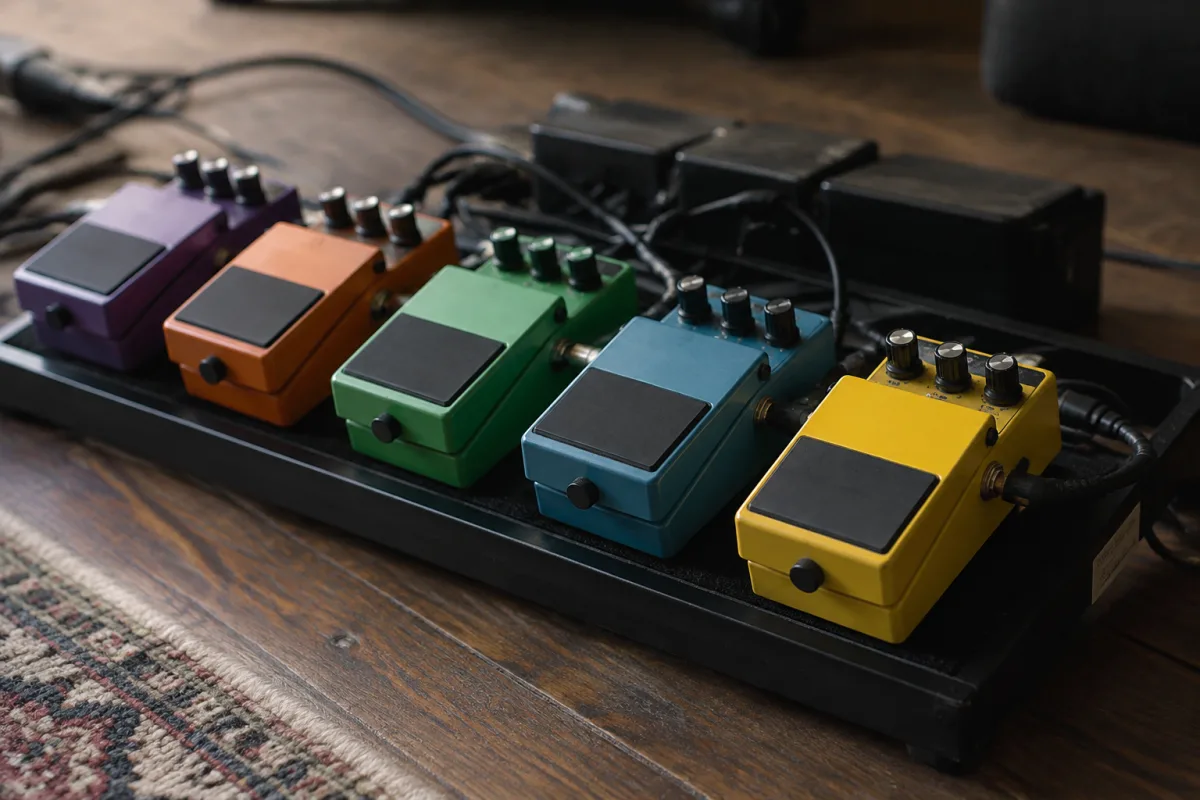
Behringer guitar effects offer an accessible entry point into effects-based guitar playing at a fraction of premium brand prices. Whether you're upgrading from a multi-effects unit or building a pedalboard for the first time, this guide cuts through the marketing and shows you exactly what to look for when buying Behringer effects—and what common mistakes to avoid.
Understanding Behringer's Product Tiers
Behringer manufactures effects across three distinct categories, each with different sound quality, build durability, and price points. Understanding these tiers is the first step to choosing what works for your needs and budget.
The entry-level Behringer guitar effects start around £15–25 for single pedals like the Ultra Shifter, Distortion, or Octaver. These compact, colourful pedals deliver basic effects suitable for bedroom guitarists, bedroom recording, or casual jamming. Higher up, the brand's compact stompboxes occupy the £30–60 range with improved circuitry. At the top of Behringer's lineup, the Multistomp and MIDI-ready units command £80–200, competing directly with Boss and Zoom's mid-tier offerings.
Key Specs to Check Before Buying
Behringer guitar effects specifications vary significantly even within a single category. Knowing which specs matter—and which are marketing noise—saves time and buyer's remorse.
Footprint and Pedalboard Fit. Behringer's compact stompboxes measure roughly 50mm × 100mm and are designed to nest tightly on standard pedalboards. If you're building a board from scratch, check whether you need full-size pedals (Boss-equivalent ~60 × 130mm) for stability or whether compact units will stay in place with good velcro or a purpose-built compact board.
Power Requirements. Most Behringer pedals run on two AA batteries or a single 2.1mm centre-negative DC plug (9V). Check the spec sheet—some models like the Phaser and Chorus demand more current than others, and mismatching power supplies leads to ground hum and intermittent audio dropouts. A quality pedal power supply (not a cheap wall adapter) makes a huge difference.
Footswitch Type and Expression Control. Single-footswitch pedals toggle the effect on and off; three-pedal units (typically multi-effects) let you select effect types and sometimes control parameters in real time. If you want hands-free sweep control during a solo (wah simulation, filter modulation), check whether the specific Behringer model includes an expression port or expression pedal input.
Input/Output Connectors. Behringer uses standard 6.3mm mono jack connectors on nearly all pedals. This is good news—they're universal. However, some compact pedals have tighter spacing, so test the fit with your guitar cable and pedalboard layout before committing.
Sound Quality: What to Realistically Expect
Behringer guitar effects sound character is the central question for every potential buyer. The brand has earned a reputation for excellent value—solid, usable tones at entry-level prices. However, they consistently lag behind Boss, TC Electronic, and Electro-Harmonix on sheen and depth, particularly in reverb, delay, and modulation effects.
Strengths. Behringer distortions, fuzz, and overdrive pedals hold their own against pedals costing twice as much. The crunch and sustain are convincing. Compression pedals perform admirably for studio recording. Pitch-shift and harmonizer algorithms are surprisingly clean for the price.
Weaknesses. Vintage-style reverb and lush plate reverb algorithms on Behringer units sound noticeably digital and thin. Analogue-modelled delays have a metallic edge that betrays their budget pedigree. If your tone depends critically on a lush reverb wash or warm plate verb, consider saving for a Boss or Strymon unit instead.
Workaround. Many professional guitarists use Behringer compression, distortion, and utility effects (tuner, tuner-compressor combos) as backbone tools, then add a premium reverb or delay pedal for the final tone shaping. This hybrid approach costs less than buying all premium and sounds subjectively better than all Behringer.
Build Quality and Durability Issues
Behringer guitar effects have a mixed reputation for longevity. The compact stompboxes feature tough plastic enclosures and printed circuit boards that survive heavy tour schedules and studio wear. However, several common failure modes are worth knowing about before you buy.
Footswitch Wear. The single footswitches on compact Behringer pedals are notoriously soft and can develop a mushy feel after 50,000–100,000 presses (roughly 1–2 years of heavy use). Replacement footswitches are available on eBay or specialist retailers for £10–20, but opening the pedal voids most warranties. If you gig or record heavily, budget for a replacement footswitch in year two.
Loose Potentiometers. Some batches suffer from loose tone potentiometers that rattle or develop scratchy channel-switching noise within months. Quality control on Behringer factory runs varies. Buy from retailers offering a 30-day return window, test the knobs firmly before the return deadline, and report any rattle.
Oxidised Battery Contacts. Battery-powered Behringer pedals left unused for months sometimes develop corroded battery contacts, causing intermittent audio dropout. A pencil eraser or fine sandpaper on the contacts usually fixes it—but it's an annoyance absent on premium brands.
Comparing Behringer to Direct Competitors
Behringer is not the only affordable effects brand. Comparing its strengths and weaknesses against Boss, Zoom, Electro-Harmonix, and newer boutique labels helps you avoid buyer's remorse.
| Brand | Price Range | Sound Quality | Build | Best For |
|---|---|---|---|---|
| Behringer | £15–200 | Good distortion; digital reverb/delay acceptable but thin | Plastic, footswitch prone to wear | Budget pedalboards, studio utility |
| Boss | £50–350 | Excellent across all effects, especially reverb and delay | Metal, robust footswitches rated 1M presses | Tour-grade reliability and tone |
| Zoom | £40–150 | Good reverb/delay, limited customisation | Solid multi-effects, smaller footprint | Travel, session recording, all-in-one solutions |
| Electro-Harmonix | £80–400 | Vintage character, warm overdrive and fuzz | Hand-built, premium components, heavy | Tone seekers with deep pockets |
For most guitarists, Behringer offers the best bang-for-buck at the entry level. However, if you gig regularly or depend heavily on reverb and delay for your sound, the investment in a Boss multi-effects unit or Zoom device pays for itself in durability and tone.
Price Tiers and Value Analysis
Breaking down Behringer guitar effects by price point helps you allocate your budget wisely across a pedalboard.
Under £30: Single-function compact pedals (Distortion, Reverb, Delay, Chorus). These are true entry-level—fun, gig-ready for small venues, and forgiving of mistakes. Sound is basic but passable. Use these to learn effect use and pedalboard technique without financial risk.
£30–75: Higher-end compact stompboxes and the FCB1010 MIDI controller platform. Tonal quality jumps noticeably. These pedals rival Boss equivalents sonically and are worth considering if you already have a pedalboard and want to fill a gap affordably.
£75–150: Behringer multistomp units (U-Turn, Multistomp) and floor units. Real value here—you get 100+ effects, MIDI control, and USB audio I/O for the price of a single premium stompbox. Ideal for home recording, live looping, or bedroom experimentation.
Over £150: Limited Behringer options at this price; better alternatives exist from Boss, TC Electronic, or Electro-Harmonix.
Common Buying Mistakes to Avoid
Mistake 1: Underestimating Power Supply Cost. Many Behringer pedals include basic wall adapters or rely on batteries. A proper isolated power supply (Truetone, Voodoo Lab, or equivalent) costs £50–100—not an afterthought. Budget for it in your total.
Mistake 2: Ignoring Footswitch Robustness. A cheap footswitch can ruin an otherwise excellent pedal. Before buying, read user reviews on footswitch durability—search "Behringer [model] footswitch problem" to spot recurring issues in a batch.
Mistake 3: Buying Reverb and Delay Last. Temptation is to get the flashy distortion and fuzz first, then fill with reverb. Resist. Reverb and delay are the workhorses of modern guitar tone. If your budget is tight, buy a solid Behringer reverb/delay combo and one good distortion, rather than three mediocre units.
Mistake 4: Neglecting Pedalboard Space. Behringer's compact format tempts you to pack 15 pedals on a board. Then at a gig, you'll find knobs are unreachable, cables tangle, and footswitches are too close. Plan for 30% empty space on your board; you'll appreciate it on stage.
Mistake 5: Ignoring the Sibling Overview. Before committing to a Behringer effects purchase, review a complete guide to Behringer guitar effects to understand the full landscape of what the brand offers. This buying guide focuses on smart choice-making; the overview covers product breadth and history.
Where to Buy and Returns Policy
Behringer effects are stocked by most major music retailers (Thomann, Gear4music, Amazon UK). Price variation is minimal, so focus on the retailer's return window. A 30-day full return or 14-day "try before you keep it" policy is essential—you need time to test the specific footswitch feel, tone, and integration with your existing gear before the return deadline passes.
Buy from Thomann or Gear4music first if available; their return policies are generous and shipping is reliable. Avoid marketplace sellers with unclear return terms.
Final Thoughts: Is Behringer Right for You?
Behringer guitar effects answer a clear question: "I want functional, inexpensive effects to experiment with, without committing £100+ per pedal." If that's you, they deliver. If your tone is critically dependent on premium reverb, delay, and modulation algorithms, or if you gig 200+ nights per year and need tour-grade durability, save for Boss or Electro-Harmonix.
The smartest approach? Start with an affordable Behringer pedalboard to learn signal flow, effect order, and your personal tone preferences. After 1–2 years, upgrade selectively to premium models where your ear has identified priorities. Behringer units make excellent affordable platforms for this learning curve—and many remain in use as utility pedals long after the flashier purchases fall away.


Comments