


Arturia Digital Piano article
The Ultimate Guide to Arturia Digital Piano
Arturia digital piano instruments deliver professional-grade sound using physical modelling technology, not just samples. Learn what sets Arturia apart and which model suits your playing style.

Arturia digital piano instruments have established themselves as serious alternatives to traditional acoustic pianos, offering professional-grade sound quality, innovative features, and remarkable value. Whether you're a classically trained pianist, a contemporary music producer, or a touring musician, an Arturia digital piano provides the sonic authenticity and versatility needed for studio and stage. This guide explores what sets Arturia's approach apart, which models suit different needs, and how to get the best performance from your Arturia digital piano.
The Arturia Digital Piano Philosophy
Arturia's engineering philosophy differs markedly from other digital piano manufacturers. Rather than simply sampling acoustic pianos and layering them into a keyboard, Arturia focuses on modelling the physical mechanisms that create piano sound. This approach, called physical modelling, means an Arturia digital piano doesn't just reproduce recorded piano tones—it recreates how a real piano resonates, how its strings vibrate, and how the instrument responds to subtle playing dynamics.
This commitment to authenticity extends to the keyboards themselves. Most Arturia digital piano models include hammer-action keyboards that mimic the weighted response of acoustic piano keys. When you play an Arturia digital piano, the keys resist your fingers with varying weight depending on register, just as an acoustic piano does. This tactile feedback is essential for pianists transitioning between acoustic and digital instruments.
Key Technologies in Arturia Digital Piano Systems
Understanding what makes an Arturia digital piano sound distinctive requires knowing the core technologies Arturia uses:
Physical Modelling Engine is Arturia's signature technology. Rather than storing samples, the Arturia digital piano engine calculates how a piano's components interact in real time. When you press a key, the physical modelling engine simulates hammer strike, string vibration, damper action, and soundboard resonance. This approach results in sounds that evolve naturally and respond to playing technique in ways sampled pianos cannot.
Multiple Piano Modelling Options give an Arturia digital piano flexibility beyond a single acoustic piano model. Most Arturia digital piano instruments include modelling of several iconic pianos: the warm, dark-toned concert grand; the bright, articulate upright; the characteristic Fender Rhodes electric piano sound. An Arturia digital piano's diversity means one instrument serves multiple musical styles and eras.
Pedal Dynamics in an Arturia digital piano faithfully model how acoustic piano pedals function. The sustain pedal doesn't simply extend note length; it affects how strings interact, creating the natural harmonics and resonance of a real piano's sustain. The soft pedal shifts the entire hammer mechanism sideways so fewer strings sound, reducing volume whilst changing tonal character. An Arturia digital piano's attention to pedal physics is one reason serious pianists prefer it.
Touch Sensitivity and Key Scaling ensure that an Arturia digital piano responds naturally across the entire keyboard. Lower register keys feel heavier (as they do on acoustic pianos); upper register keys feel lighter. This scaling is essential for authentic playing feel and is a detail many budget digital pianos omit entirely.
Popular Arturia Digital Piano Models
Arturia offers several digital piano products, each designed for specific contexts:
| Model | Best For | Key Features |
|---|---|---|
| Arturia KeyLab 88 | Studio work; control surface + digital piano | 88 weighted keys, 16 pads, multiple piano models, USB/MIDI |
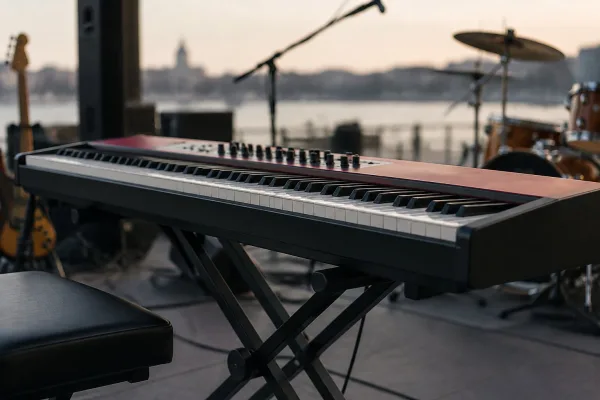
| Arturia Stage 88 | Live touring; gigging musicians | Portable, hammer-action keyboard, stage-ready build, 88 keys |
| Arturia V Collection (software) | Studio production; sound design | Virtual instruments, pianos plus synths, reverb, effects |
| Arturia Analog Lab | Compact portable setup | Preset-focused, integration with V Collection sounds |
| Arturia Standards Edition | Budget-conscious pianists | Core Arturia sound quality, essential features, lower price point |
Each Arturia digital piano option serves different priorities. Touring musicians favour the Stage series for durability; studio producers choose software instruments; classical pianists often invest in Stage 88 for its authentic hammer action and sound.
Understanding Arturia Digital Piano Sound Character
The sonic signature of an Arturia digital piano reflects its physical modelling approach. Unlike sample-based digital pianos that sound identical regardless of playing technique, an Arturia digital piano's tone shifts based on how you play. Strike the keys harder and the Arturia digital piano produces a brighter, more percussive attack; use a gentler touch and you get warmer, more singing tones. This responsiveness is what pianists mean when they say an Arturia digital piano has "character."
The multiple piano models built into most Arturia digital piano instruments also mean you're not locked into a single sound. The classical piano model suits Bach and Chopin; the Rhodes model excels in jazz and funk contexts; the bright model works beautifully in contemporary classical and minimalism. An Arturia digital piano essentially gives you three to five high-quality pianos in one instrument.
Comparing Arturia Digital Piano to Other Brands
Several manufacturers produce quality digital pianos. Here's how Arturia digital piano instruments stack up:
- Yamaha P-Series—excellent value and reliability; Yamaha digital pianos use sampling rather than physical modelling, so they're lighter and more affordable. Trade-off: less responsiveness to playing dynamics.
- Roland FP-Series—superior portability and battery options; Roland digital pianos are extremely lightweight. Sound quality is very good but lacks the evolving character of an Arturia digital piano's modelling approach.
- Nord Piano—stage-oriented, expensive, excellent build quality. Nord digital piano instruments are compact and built for gigging. Arturia digital piano offers similar features at better value.
- Kawai ES-Series—realistic touch and sound; Kawai digital pianos are known for authentic keyboard feel. Arturia digital piano competes directly here, with an edge in sound sophistication and feature set.
An Arturia digital piano's main advantage is the combination of authentic physical modelling sound with multiple instrument models in a single keyboard. If you prioritise authentic piano tone above all else, an Arturia digital piano deserves serious consideration.
Setup and Optimisation Tips for Arturia Digital Piano
Getting the best from an Arturia digital piano requires proper setup and understanding:
Invest in quality speakers or monitoring. An Arturia digital piano's sound quality is only as good as your monitoring system. Built-in speakers are adequate for practice; for serious playing or recording, connect to studio monitors or quality active speakers. The improved clarity reveals why the Arturia digital piano's physical modelling sounds so convincing.
Calibrate pedal sensitivity. Most Arturia digital piano models allow you to adjust pedal response curves. Spend time dialling in settings that match your playing style. Some pianists prefer the pedal to engage sustain gradually; others want more immediate response. An Arturia digital piano's customisability means you can match its behaviour to your preferences.
Experiment with different piano models. Rather than staying with the default classical piano model, rotate through the built-in options and pay attention to how each responds to your playing. You may discover that a different piano model in your Arturia digital piano actually suits your technique and musical goals better.
Use velocity sensitivity curves if your Arturia digital piano offers them. Some players prefer linear velocity response; others want the Arturia digital piano to feel heavier at lower velocities and lighter at high velocities. These curves significantly affect playing feel.
Connectivity and Integration
Modern Arturia digital piano instruments include multiple connectivity options. USB connectivity lets you record directly into a digital audio workstation; MIDI I/O enables integration with other hardware or software. Some Arturia digital piano models include wireless MIDI connectivity for untethered setup on stage.
If you own other Arturia gear, an Arturia digital piano integrates seamlessly. An Arturia digital piano can control other Arturia synths or controllers, or be controlled by them. This ecosystem approach is valuable for producers building comprehensive Arturia setups.
Maintenance and Longevity
An Arturia digital piano, like any quality instrument, benefits from proper care. Keep your keyboard clean and dust-free; avoid placing it in direct sunlight or near heat sources. The weighted keys and hammer mechanisms in an Arturia digital piano are robust but appreciate gentle treatment. Most Arturia digital piano models come with substantial warranties; register your instrument to access support.
Because an Arturia digital piano relies on electronic components and software, periodic firmware updates keep your instrument performing optimally. Arturia regularly releases updates that improve sound quality and fix issues. Setting up a routine to check for Arturia digital piano firmware updates ensures you're getting the latest improvements.
Conclusion
An Arturia digital piano represents a thoughtful investment for pianists and keyboard players seeking authenticity, versatility, and professional sound quality. The physical modelling approach that powers each Arturia digital piano produces tones that respond to playing technique with a naturalness sampled pianos struggle to match. Whether you're a classical pianist exploring the digital realm, a producer needing portable keyboard options, or a touring musician requiring reliability, an Arturia digital piano offers distinctive sonic character and the flexibility to adapt to diverse musical contexts. Spend time exploring the various models and piano sounds within your Arturia digital piano, and you'll discover why serious musicians choose Arturia.




Comments