


Arturia Digital Piano Buying guide
Arturia Digital Piano: A Complete Buyer's Guide
An Arturia digital piano combines authentic weighted keys with versatile sound engines. Learn which specs matter, what to budget, and how to avoid common buying mistakes.
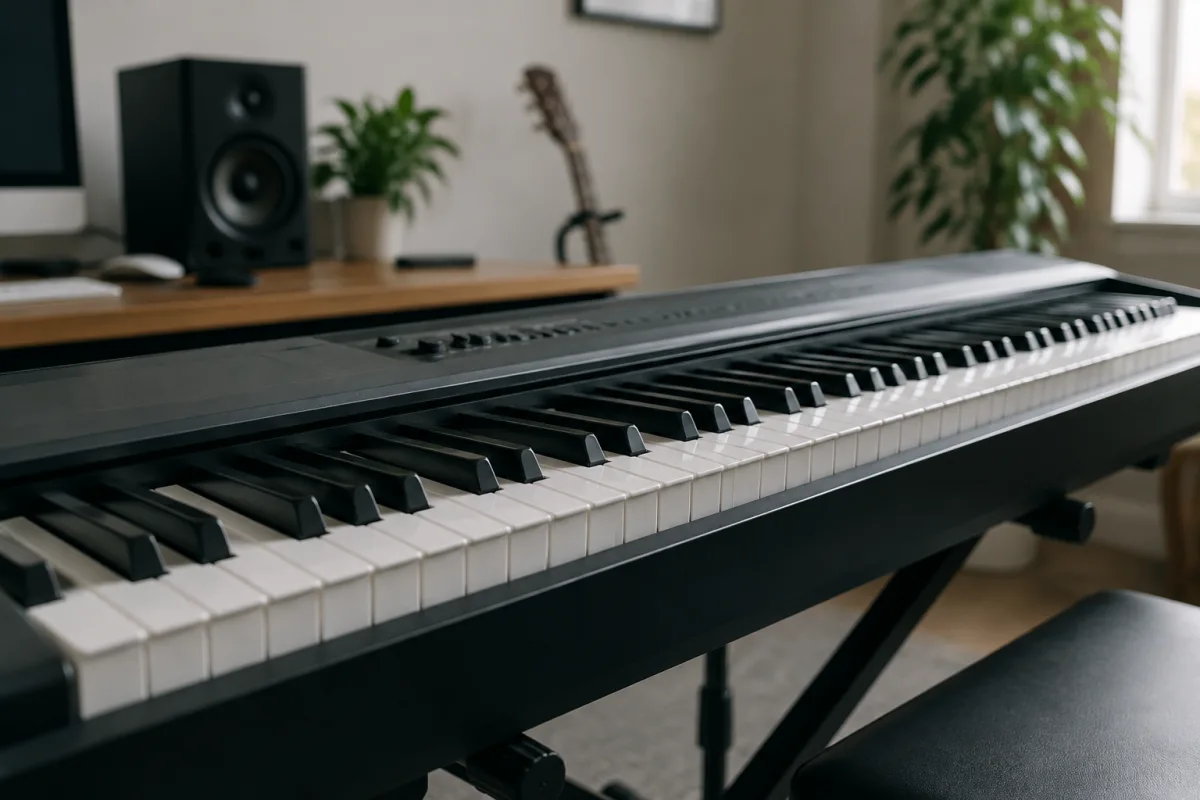
Arturia digital piano instruments range from compact desktop controllers to full 88-key weighted keyboard systems, each built with the company's signature sound engine and premium key action. Whether you're after a stage piano, a home studio controller, or something that bridges both worlds, knowing what to look for separates a smart purchase from a regret.
What Makes Arturia Digital Piano Worth Considering?
Arturia has made its name combining beautiful software (via Virtual Instrument collections) with hardware that actually feels good to play. Their digital piano keyboards aren't trying to fake an acoustic upright; instead, they're designed for musicians who want authentic weighted keys, extensive sound libraries, and the ability to control software instruments without a computer always in the room.
The key appeal: Arturia digital piano units integrate seamlessly with their software (and third-party DAWs), so your purchase works as a standalone instrument now and scales into a full studio later.
Specs That Actually Matter When Buying
Key Action: The Foundation
Arturia uses different key mechanisms across its range. Look for models with a "semi-weighted" or "fully weighted with hammer action" action—these terms aren't marketing fluff. Weighted keys teach your fingers real piano technique; unweighted or light-touch actions won't. Common Arturia options:
- Hammer action with escapement: The most authentic. Keys bottom out with resistance that mimics an acoustic piano's 88-key action. Worth the extra cost if you're serious about technique.
- Weighted semi-weighted action: A middle ground. Heavy and springy, suitable for most learners and gigging musicians. Less expensive than full hammer action.
- Unweighted keys: Found on budget models and controllers. Suitable only if you're triggering software samples and never touch acoustic pianos.
Keyboard Size: Space vs. Completeness
Arturia offers:
- 88 keys (full size): The standard. Covers the full range of acoustic pianos. Essential if you want to play real piano repertoire or perform live. Takes up desk/stage space and costs more.
- 61 keys: Portable and affordable. Covers most pop, jazz and modern music. Weak for classical learners or traditional piano pieces.
- 49 keys or controllers: Compact, perfect for studios where space is tight or you're mainly programming. Not a playing instrument in the traditional sense.
For a beginner serious about learning, 88 keys is non-negotiable. For a producer, 61 keys works fine.
Connectivity & I/O
Check what Arturia digital piano model offers:
- USB: Powers and connects to your DAW/computer. Essential for modern recording.
- MIDI IN/OUT (5-pin DIN or USB): Lets you sync external gear (sequencers, foot pedals, controllers) or send note data to software.
- Audio outputs (1/4" or XLR): If you want to hear it through studio monitors or a PA system, not just headphones. Budget models might only offer headphone jacks.
- Sustain pedal and expression pedal inputs: Pedals are essential for real piano playing. Verify your model supports them, and confirm whether the pedals are included.
- USB-C vs. micro-USB: USB-C is more robust and faster. A minor point but worth noticing.
Sound Engine: Quantity vs. Quality
Arturia boasts large sound libraries—often hundreds of sounds including pianos, electric pianos, synths, organs and more. But "how many sounds" is less important than "which core pianos sound good."
Listen to demos of the acoustic piano voice specifically. Does it sound organic and responsive when you play dynamics? Does it feel alive or canned? Arturia's virtual pianos (drawn from its flagship software) are genuinely good, but always trust your ears over a spec sheet.
Onboard Controls & Workflow
Budget Arturia digital piano models have minimal buttons and knobs. Higher-end models let you tweak sounds, switch banks, and control effects without reaching for a computer. If you're gigging or recording live, onboard control matters. For studio only, it's less critical.
Which Arturia Digital Piano Model for What?
Arturia's range shifts, but the pattern holds:
- Budget home players / beginners: Arturia KeyStep (49 keys, unweighted) or entry-level 61-key models. Weighted keys are worth the extra pounds; don't skip them.
- Serious learners: Look for Arturia's 88-key weighted models. Full range, realistic action, solid sounds.
- Producers & multi-instrumentalists: 49–61 keys with USB and MIDI. You're controlling software; portability trumps traditional piano range.
- Professional stage players: 88 keys, hammer action, robust build, redundant sustain/expression inputs, audio outputs. Arturia's higher-end stage keyboards fit here.
Price Tiers & What You Get
Under £400: Entry-level controllers or compact keyboards. Unweighted or semi-weighted action. Good for software control, weak for piano learning. Resale value low.
£400–£800: The sweet spot for home learners and hobby musicians. Weighted action, 61 or 88 keys, decent sound library, basic USB/MIDI connectivity. Arturia's most popular segment.
£800–£1,500: Professional and semi-professional systems. Weighted hammer action, 88 keys, premium connectivity (audio outputs, multiple pedal inputs), deep sound engines, stage-ready build. Worth it if you gig or do serious production.
£1,500+: Flagship models with bespoke key actions, high-end sound engines, performance features. Rarely necessary; excellent tools for touring and serious studios.
Hidden Costs & Gotchas
Included vs. Extra
Confirm what ships in the box: the keyboard, power supply, sustain pedal, USB cable, and documentation. Some Arturia digital piano bundles require you to buy pedals separately—budget an extra £50–100 for quality pedals if they're not included.
Software Licensing
Some Arturia keyboards bundle free or discounted software (DAW, sound packs, virtual instruments). Check whether those licenses are permanent or trial, and whether they apply to your workflow. Don't assume that free software is good software for your needs.
Warranty & Support
Arturia typically offers a one-year hardware warranty. Extended warranty is worth considering if you gig heavily (wear on keys/pedals is real). Check the company's UK support response times—they're generally fast, but verify.
Resale Value
Arturia digital piano prices hold reasonably well used, but older models drop faster than newer ones. If you're buying to re-sell later, stick to current-generation models and mid-to-high-end tiers—entry-level boards flood the used market.
New vs. Used
A used Arturia digital piano from a reputable seller (checked reviews, tested unit) is genuinely good value if it includes its original power supply and pedals. However: if you're learning piano for the first time, a new unit with a warranty removes the risk of hidden damage (failing keys, cracked casing). Used is best when you already know what you want and what to listen for.
Final Checklist Before Buying
- How many keys do you actually need? (88 for classical/serious learning, 61 for most modern music.)
- Is the key action weighted? Test it if possible; if online, read reviews specifically about key feel.
- Are the core piano sounds acceptable to your ears? Listen to demos, not just spec lists.
- Does connectivity match your workflow? (USB for a DAW, MIDI for live control, audio outputs for studios.)
- Are sustain and expression pedals included, or do you budget extra?
- What's the return policy if it doesn't feel right? Reputable retailers offer 14–30 days.
- Compare your top three models side by side: price, key action, sound quality, warranty.
An Arturia digital piano is a significant investment. Rushing the decision—or chasing the cheapest option—often leads to frustration. Spend time researching the specific model, read user reviews that focus on key feel and sound quality, and try before you buy if the retailer allows it.
For a comprehensive overview of Arturia digital piano models and how they work, see our complete guide.


Comments