


Ear Training App article
Ear Training App for Beginners: A Complete Guide
Beginners often think ear training is impossible. It's not. This guide shows you how to get started with ear training apps, what skills to focus on, and how to build real musical listening ability through daily practice.
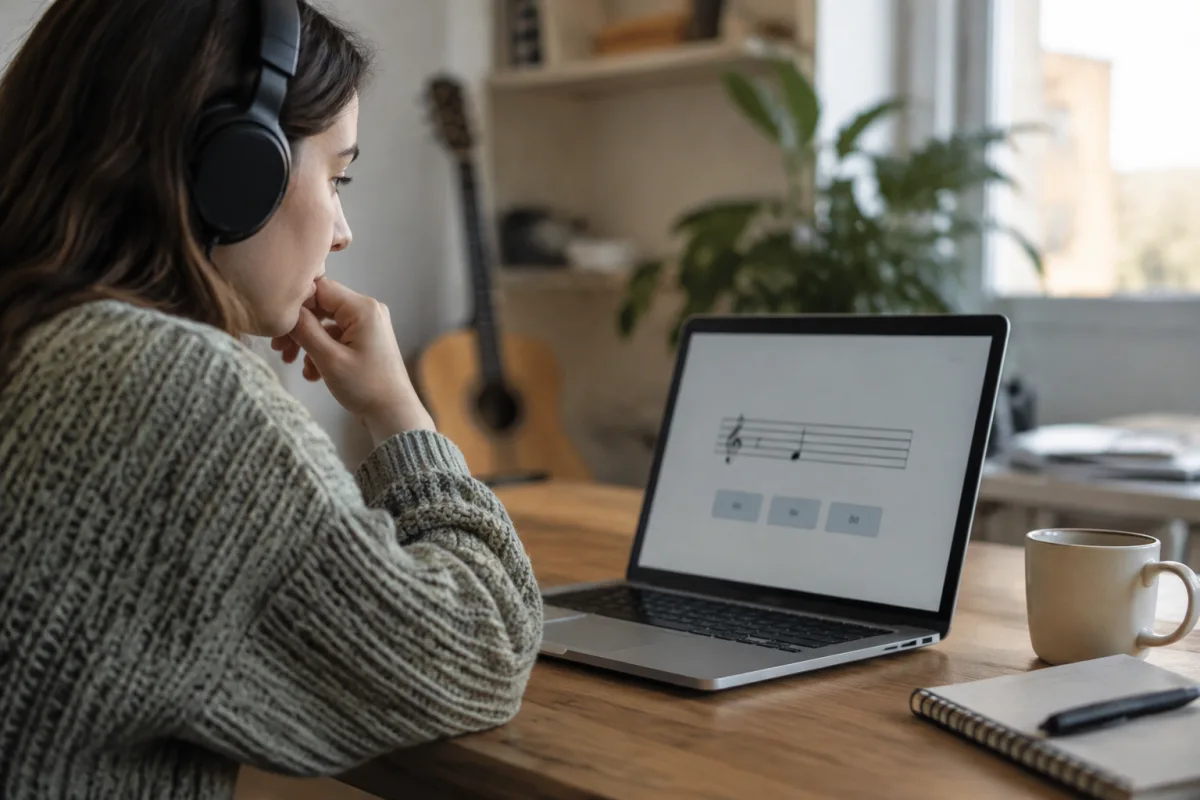
If you're beginning to learn music production, mixing, or performing, developing accurate ear training might feel impossible. How are professional musicians able to identify intervals, correct pitch problems, and create balanced mixes by ear? The answer is practice using ear training apps. Starting with these tools as a complete beginner removes intimidation and builds genuine musical listening skills. This guide walks you through getting started with ear training apps, understanding what they teach, avoiding common mistakes, and actually enjoying the process.
Why Beginners Should Use Ear Training Apps
Your ears are constantly learning from exposure to sound. An ear training app accelerates this process by providing structured, measurable practice with immediate feedback. Unlike passive listening, apps force you to make active decisions—"Is this note higher or lower?" "Do these intervals match?" This active engagement is where real learning happens.
For beginners specifically, ear training apps offer several advantages. They're patient—unlike a music teacher who might express frustration, an app will let you try the same exercise a thousand times without judgment. They're affordable, often free or genuinely cheap. They're convenient—you can practice during your commute or lunch break, which builds consistency better than occasional hour-long sessions.
Most importantly, ear training apps prove something profound: you absolutely can develop excellent ears. Beginners often assume musicians are born with perfect pitch or extraordinary talent. That's false. Ear training is a skill—just like learning an instrument. Consistent practice with the right tools produces measurable improvement in days and weeks, not months and years.
Essential Skills Ear Training Apps Teach
Different apps focus on different musical skills. Understanding what each category teaches helps you choose the right tools for your musical goals.
- Interval Recognition: Identifying the distance between two notes. A major third sounds happy; a minor third sounds sadder. Learning to recognise these differences by ear is fundamental to music and mixing. Most apps include interval exercises.
- Chord Identification: Hearing the difference between major, minor, suspended, and extended chords. This skill is invaluable for musicians, producers, and anyone working with harmony.
- Pitch Recognition: Identifying the specific note you're hearing (C, D, E, etc.) without visual reference. This is challenging initially but develops remarkably well with consistent practice.
- Rhythm and Timing: Recognising note durations, detecting off-beat rhythms, and understanding polyrhythms. These skills directly improve music production and performance.
- Frequency and EQ Training: Learning to identify specific frequency ranges and predict how EQ adjustments will affect sound. For mixing engineers and producers, this skill is transformative.
- Relative Pitch Development: Understanding note relationships rather than absolute pitch. This is more practical and learnable than perfect pitch.
Getting Started with Your First Ear Training App
Download a respected ear training app—research shows apps with simple interfaces and clear explanations work best for beginners. Look for apps with good reviews specifically mentioning beginner-friendly design.
Start with the absolute basics. If you're new to music, begin with interval recognition before attempting chord identification or pitch training. The app will likely offer a progression from easiest to hardest; follow it. Don't skip ahead thinking easier exercises are beneath you. Solid fundamentals make advanced training possible.
Practice for 10-15 minutes daily rather than sporadic hour-long sessions. Your brain learns through consistent, spaced repetition far better than cramming. A daily 10-minute routine beats once-weekly one-hour sessions every time.
Common Beginner Mistakes with Ear Training Apps
Jumping to advanced exercises too quickly. Beginners consistently overestimate their current ability and attempt exercises designed for intermediate players. This leads to frustration and abandonment. Honour the progression. If intervals feel hard, spend two weeks on intervals before moving to chords. The app's structure exists for good reasons.
Practicing with poor audio quality. Ear training depends on accurate sound reproduction. Cheap laptop speakers or compressed audio files sabotage your learning. Use decent headphones or monitor speakers. For frequency training specifically, quality audio equipment is essential—you can't learn to identify 3kHz presence peaks if your playback system doesn't accurately represent that frequency.
Expecting immediate perfection. Your first ear training session will reveal how underdeveloped your ears currently are. This is encouraging information, not discouraging. You're establishing a baseline. Within two weeks of daily practice, you'll notice measurable improvement. Within a month, improvement becomes dramatic.
Practising when mentally fatigued. Your ears learn best when your brain is fresh. Practising ear training late at night after a long day of work produces minimal results. Practise in the morning or when you're mentally alert. Quality of practice matters more than duration.
Ignoring active listening outside the app. Ear training apps are tools, not your entire practice. Listen actively to professional music with intention. When you hear a chord change, try to identify it. When you notice EQ work on a vocal, ask yourself what frequency range was adjusted. This real-world application of app-learned skills accelerates your development dramatically.
Structuring Your Ear Training Practice Routine
A simple, sustainable routine beats a complicated, abandoned one. Here's a realistic approach for beginners:
- Minutes 1-5: Review previous exercises. This reinforces learning and builds confidence.
- Minutes 5-10: New exercise or current focus. This prevents boredom and ensures progress.
- Minutes 10-15: Optional: application practice. Listen to a professional recording and apply what you've learned.
This structure balances review (which builds retention), new material (which ensures progress), and application (which makes learning relevant to actual music).
Free vs. Premium Ear Training Apps
| App Type | Advantages | Disadvantages |
|---|---|---|
| Free apps | No financial commitment, full feature sets often available, excellent for testing if ear training appeals to you | May contain ads, limited exercise variety, basic analytics |
| Freemium (free with paid features) | Try before you buy, basic features available freely, paid upgrades typically modest cost | Some exercises locked behind paywalls, may require premium to access full progression |
| Premium apps | Comprehensive exercise libraries, sophisticated progress tracking, often most user-friendly design | Upfront cost, may be overkill for beginners still exploring ear training |
For beginners, start free. If you stick with ear training for four weeks, invest in a premium app if you feel limited by the free version. This prevents spending money on something you won't maintain.
Tracking Progress and Staying Motivated
Most ear training apps track your scores and improvement over time. Use these statistics. Watching your accuracy climb from 60% to 75% to 85% is enormously motivating. Screenshot your progress periodically and celebrate milestones.
Set realistic goals. Instead of "I'll develop perfect pitch," aim for "I'll correctly identify 80% of major and minor intervals within 30 days." Specific, measurable goals are motivating; vague ones lead to abandonment.
Applying Ear Training to Real Music
Once you've built foundational ear training skills, apply them. Listen to a mix and identify the presence peak applied to vocals. Play a chord progression and name the chords. Hear someone sing out of tune and understand precisely which direction the pitch drifts. These real-world applications make ear training feel relevant and rewarding.
This application phase is where ear training becomes actually useful in your music production, mixing, or performance. The app teaches fundamentals; real music application teaches mastery.
Your Ear Training Journey Begins
Download an app today. Commit to 10 minutes daily for 30 days. Don't overthink which app—any respected app with good reviews will serve beginners excellently. Within a month, you'll notice measurable improvement. Within three months, improvement becomes dramatic. Your ears are trainable. Professional musicians aren't born with exceptional ears; they trained them exactly as you're about to.
For comprehensive exploration of specific ear training apps, advanced techniques, and deeper music theory connections, see the complete guide to ear training apps.



Comments