


Mechanical Metronome article
Everything You Need to Know About Mechanical Metronomes
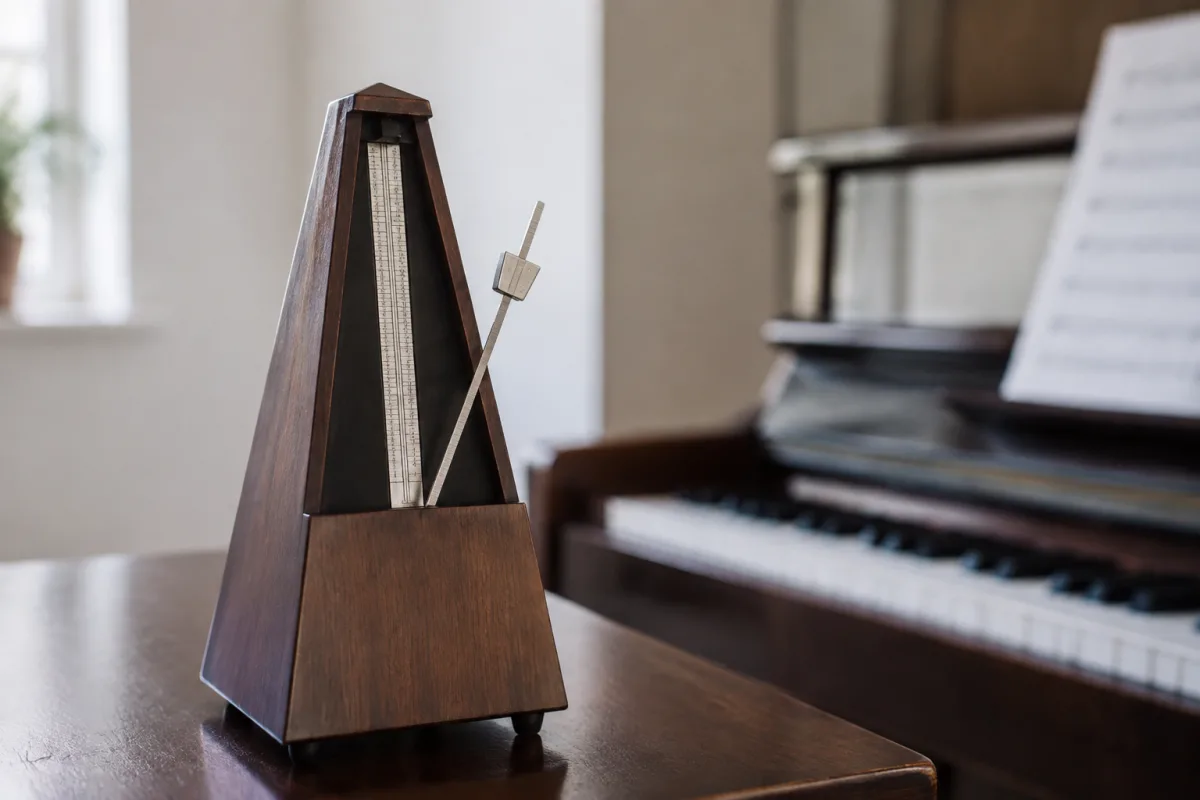
The mechanical metronome remains one of music education's most durable and effective tools, despite decades of digital alternatives. These spring-driven, pendulum-based devices produce a precise, audible click that helps musicians develop rhythmic stability and ensemble synchronisation. Whether you're teaching students, practising independently, or conducting rehearsals, understanding which mechanical options suit your needs and how to use them effectively enhances their role in musical development and performance preparation.
How Mechanical Metronomes Work
A mechanical metronome operates through a weighted pendulum driven by an escapement mechanism—a small mechanical device that catches and releases the pendulum at precise intervals. This escapement converts the regular pendulum swing into audible clicks. By adjusting the pendulum's weight position, tempo changes from slow (40 BPM) to fast (200+ BPM) become possible.
This mechanical elegance appeals to musicians intuitively. The visible pendulum provides visual rhythm reference alongside audible clicks, creating redundancy that aids learning and synchronisation. Unlike digital devices requiring batteries or electricity, mechanical metronomes function indefinitely through careful construction and reasonable maintenance.
Advantages of Mechanical Metronomes
Musicians have chosen mechanical metronomes for over 150 years for several compelling reasons:
- Mechanical precision: Well-maintained mechanical metronomes deliver remarkably consistent timing, often superior to budget digital alternatives.
- Visible rhythm: The swinging pendulum provides visual rhythm reference, benefiting players who respond to visual cues alongside auditory information.
- Reliability without batteries: No charging, no dead batteries mid-rehearsal. Mechanical devices function indefinitely if maintained.
- Durability: Quality instruments function for decades or lifetimes, making them economically practical long-term investments.
- Aesthetic value: Beautiful designs appeal to musicians valuing instruments as objects worth displaying and cherishing.
- No digital distraction: Unlike phones or computers, mechanical metronomes provide focused rhythm support without temptation for other activities.
Types and Styles of Mechanical Metronomes
Several traditional designs remain popular, each offering particular advantages:
| Style | Characteristics | Best For |
|---|---|---|
| Pyramid metronome | Compact, affordable, quiet ticking | Budget-conscious students, quiet practice spaces |
| French double-escapement | Powerful swing, loud ticking, attractive design | Studio work, serious students, teaching |
| German solid-bar | Highly accurate, robust construction | Professional orchestras, recording studios |
| Conductor's metronome | Winding for silent operation, loud bell ring | Rehearsal and ensemble conducting |
| Portable travel metronome | Compact, light, practical case | Musicians travelling, touring performers |
Selecting a Quality Mechanical Metronome
Price ranges from £30 for budget pyramid models up to £200+ for professional German-made instruments. Higher-priced instruments typically offer greater precision, louder ticking, more elegant design, and longer functional lifespans.
For students beginning their musical education, budget metronomes provide adequate functionality at accessible prices. Serious musicians and professional teachers justify investment in quality instruments delivering superior timing precision and durability spanning decades.
Construction quality matters significantly. Look for devices with precise escapement mechanisms, sturdy wooden construction, and smooth pendulum swing. Test several models if possible, listening to ticking clarity and assessing pendulum stability.
Maintenance and Care
Mechanical metronomes require minimal maintenance but benefit from occasional attention. Keep devices on level surfaces to ensure proper pendulum swing. Periodically wind spring mechanisms fully—leaving them partially wound creates uneven timing. Avoid dropping or jarring instruments, which can misalign escapement mechanisms.
Professional servicing exists for valuable or vintage instruments. Piano technicians often maintain metronomes alongside their primary work. Regular maintenance extends functional lifespan indefinitely, making quality instruments economically sound long-term investments.
Comparing Mechanical to Digital Solutions
Digital metronomes offer advantages: portability, tempo variety, volume control, and silence when desired. However, mechanical metronomes provide superior reliability, no battery dependence, and the pedagogical advantage of visible rhythm. Many serious musicians maintain both mechanical and digital options, choosing based on context.
Mechanical Metronomes in Teaching and Performance
Music teachers frequently employ mechanical metronomes as teaching tools, valuing the visible pendulum as pedagogical advantage. Students learn rhythm through multiple sensory channels simultaneously—auditory clicks, visual pendulum movement, and the instrument's tactile presence all reinforce timing awareness.
Rehearsal conductors often prefer mechanical metronomes for ensemble work, where the visible pendulum helps musicians stay synchronised. The mechanical device's authoritative, non-negotiable rhythm supports disciplined rehearsal environments.
Conclusion
Mechanical metronomes endure as valuable tools in musical practice and instruction because they deliver reliable, precise rhythm support without technological complexity or dependency. Whether you're teaching students, practising seriously, or conducting ensembles, investing in quality mechanical metronome serves you reliably for decades. Select instruments from reputable manufacturers, learn to maintain them properly, and embrace the visible, mechanical rhythm support that makes these elegant devices invaluable to musical development.




Comments