


Stage Monitor Speaker article
Stage Monitor Speaker for Beginners: A Complete Guide
New to performing live? Understand what a stage monitor speaker does, how to use it, and why it's essential for confident live performance.
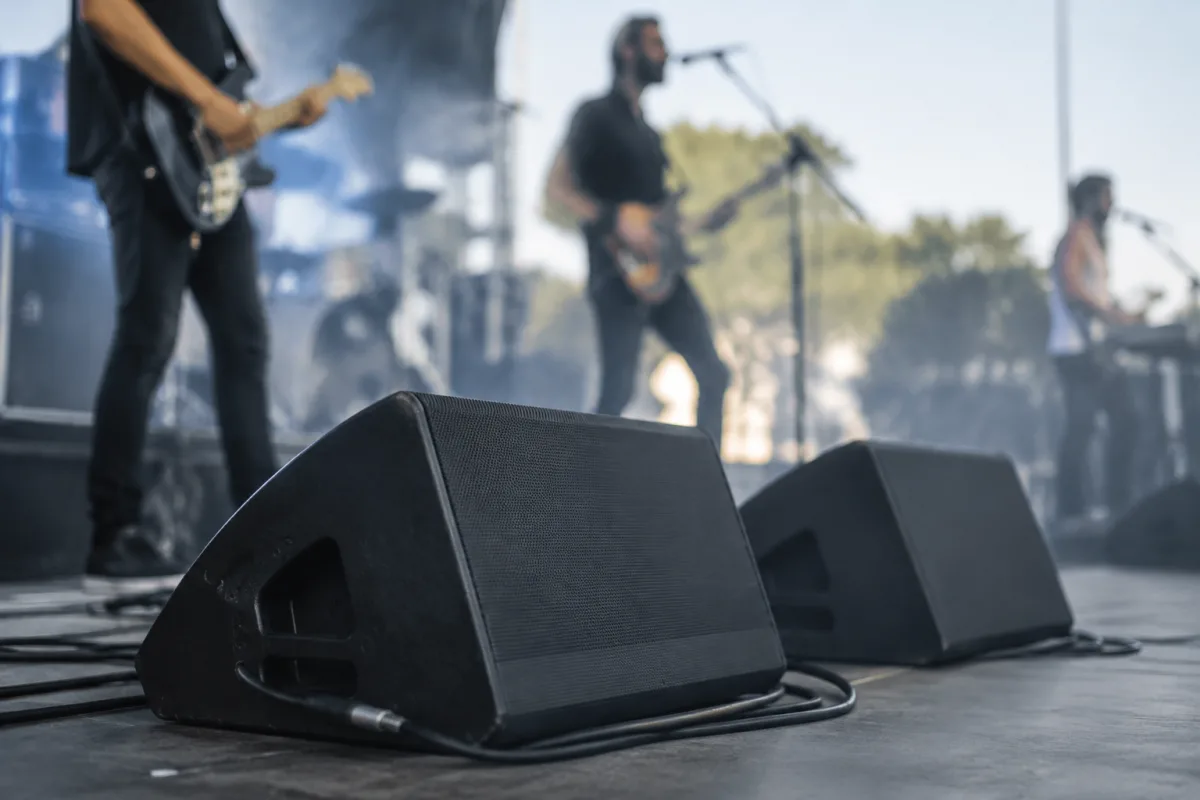
If you're new to live performance, the first time you need a stage monitor speaker, you'll suddenly understand why performers move around on stage the way they do. A stage monitor speaker is the wedge-shaped speaker pointing back at you on stage—it lets you hear yourself, the drummer's click, and everyone else in the band. Without it, you're playing blind. This beginner's guide explains what a stage monitor speaker does, why you need one, and what to expect when you're using one for the first time.
What a Stage Monitor Speaker Actually Is
A stage monitor speaker is a speaker that faces the performers on stage, not the audience. Whilst the main speakers (front of house) send music to the crowd, the stage monitor speaker sends a separate mix to you on stage. The sound engineer controls what each performer hears independently. You hear yourself louder, the bassist quieter, the click track loud enough to keep you locked in. It's a personal mix tailored to what you need to perform confidently.
Why You Need a Stage Monitor Speaker: The Practical Reality
Performing without a stage monitor speaker is genuinely disorienting. You can't hear yourself properly. You drift out of time. Your instinct is to play louder to "hear" yourself, which makes the performance worse. A good stage monitor speaker fixes all of this instantly. You hear yourself clearly, stay locked with the drummer, and perform with confidence. It's not a luxury—it's a necessity for professional live performance.
How a Stage Monitor Speaker Works: Simple Breakdown
Your microphone or instrument goes into a mixer. The mixer has multiple outputs: one for the main front-of-house speakers and separate monitor sends for each performer. The monitor engineer (sometimes a band member with a simple mixing board) controls your stage monitor speaker mix. You can give feedback: "I need more drums" or "Turn down the keyboard." The engineer adjusts and you hear the change instantly through your stage monitor speaker.
This is genuinely that straightforward. You're not controlling your own mix—that's the engineer's job. You're hearing what they've mixed for you.
Types of Stage Monitor Speakers: Know What You're Using
Wedge Monitors
These are the classic trapezoidal speakers angled up at you on stage. A stage monitor speaker in wedge form is compact, portable, and the industry standard. Most band rehearsals use wedges. They're cheap, tough, and work brilliantly for small to medium venues.
Floor Monitors
Larger, heavier versions of wedges, offering more power and better low-end. Larger stages and bigger venues use floor monitors. For your first gigs, you'll probably use wedge monitors.
In-Ear Monitors (IEMs)
Wireless systems where each performer gets their own custom mix through earpieces. Professional touring bands use IEMs. They're expensive and complex to set up. Don't worry about them yet.
What to Expect When You First Use a Stage Monitor Speaker
Your first experience with a stage monitor speaker might feel odd. You're hearing yourself from an angle, not directly. You might hear a slight delay if the cable run is long (this is actually normal and you adapt quickly). The mix might not be perfect—the engineer is learning your needs. Give feedback after the first song: "More kick," "Less vocals." They'll adjust.
The psychological shift is real: suddenly you can hear yourself. You feel grounded. Your performance immediately improves because you're not fighting to stay in time or wondering if you're in tune.
Positioning Your Stage Monitor Speaker: Practical Tips
A stage monitor speaker should point at you with the speaker face 2–3 metres away, angled up slightly. You want to hear it without it being deafening. Too loud and you lose the front-of-house mix; too quiet and you lose the benefit. The engineer will adjust the level, but positioning matters too.
If you're the lead singer, you want a stage monitor speaker pointing directly at you. If you're the bassist, you need to hear the kick drum clearly, so positioning matters. Communicate with the stage manager or sound engineer about what you need.
Common Beginner Mistakes With Stage Monitor Speakers
- Assuming the stage monitor speaker will fix bad mixing. A good stage monitor speaker mix comes from a good engineer. If the mix is muddy, tell them—they'll adjust the EQ or routing.
- Not communicating what you need. The engineer isn't a mind reader. After the first song, tell them what you need more or less of. "More drums, less keys."
- Standing in the wrong spot. If you move away from the stage monitor speaker, you lose the mix. Stay within the speaker's coverage area.
- Turning up your instrument to compensate for poor monitor mix. Instead, talk to the engineer. They'll fix it faster.
- Forgetting the stage monitor speaker during setup. It's easy to focus on the main speakers and forget the monitors. Check that each performer has one positioned correctly.
The Relationship Between You and Your Stage Monitor Speaker
A stage monitor speaker isn't your enemy—it's your lifeline on stage. A good one lets you perform confidently. A bad one (or no monitor at all) makes even experienced musicians struggle. When you do your first gig with a proper stage monitor speaker, you'll instantly understand why performers care so much about monitor mix. Suddenly performing is fun instead of stressful.
For the technical side of monitor system design and how professional venues set up multiple monitors, read our complete guide to stage monitor speakers, which covers mixing techniques, wireless systems, and advanced setup.


Comments