


Live Mixing Console article
Everything You Need to Know About Digital Live Sound Mixing Consoles
A live mixing console is the operational heart of professional sound reinforcement. This guide explores what makes a mixing console indispensable, how to select one for your needs, and the fundamental techniques that transform raw stage audio into polished, professional sound.
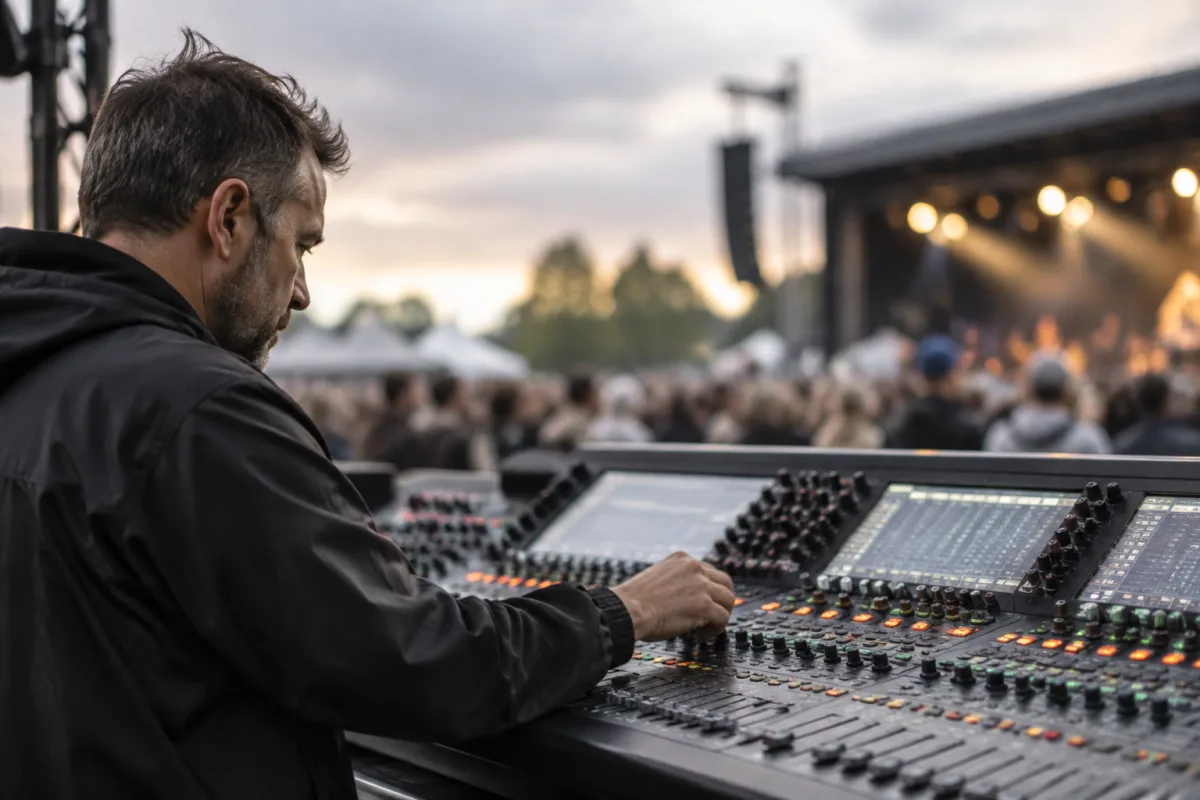
A live mixing console is the operational heart of any professional sound reinforcement system. Whether you're managing a concert, conference, theatre production, or religious service, your mixing console determines the quality of audio reaching the audience. This comprehensive guide explores what makes a live mixing console indispensable, how to select one for your needs, and the fundamental techniques that transform raw stage audio into a polished, professional sound.
Understanding the Live Mixing Console
A live mixing console—sometimes called a mixer, soundboard, or mixing desk—is an electronic device that combines, amplifies, and adjusts the audio signals from multiple sources. Microphones, instruments, wireless packs, and playback devices all feed into a live mixing console, which allows the engineer to control volume, EQ, effects, and routing in real time. Unlike studio mixing consoles designed for careful overdubbing and editorial work, a live mixing console must respond instantaneously to changing stage conditions, unexpected feedback, and dynamic performer energy.
The core function of any live mixing console is signal flow: inputs from various sources feed into the mixer, where they're processed, combined, and sent to outputs powering the main speakers, monitors for performers, and recording devices. A well-tuned live mixing console remains almost invisible to the audience—they hear polished, balanced sound with appropriate dynamics, whilst the console handles the complexity behind the scenes.
Key Components of a Live Mixing Console
Every mixing console shares core functional elements, regardless of size or price point. Understanding these helps you evaluate which live mixing console best suits your venue and workflow.
- Input Channels — Each input channel on a live mixing console processes one audio source: a vocal microphone, guitar, drum kit, or playback feed. Channels typically include preamps (for gain adjustment), high-pass filters, EQ, and insert points for dynamic processing like compression.
- Channel Faders — These linear or motorised faders control each channel's output level to the mix bus. Motorised faders on a live mixing console can recall precise positions automatically, essential for consistent shows and complex cue-based mixes.
- Master Faders — Control the overall output level sent to main speakers, subwoofers, and broadcast feeds. Most live mixing console designs include dedicated master faders for primary output and backup.
- Busses and Routing — Allow the engineer to group channels and route them to different outputs. A typical live mixing console features stereo main busses, separate monitor busses for stage performers, and auxiliary busses for effects returns and subwoofer sends.
- EQ and Dynamics — Built-in equalisers and compressors on each channel let you shape frequency response and manage dynamic range. Professional-grade live mixing console EQ is often parametric (adjustable frequency, bandwidth, and gain) rather than basic three-band.
- Effects Processing — Many modern systems include reverb, delay, and modulation effects. Traditionally, effects on a live mixing console were external rack units; today, integrated digital processors are common.
- Monitoring and Control — A meters section shows input levels, master output, and individual channel peak indicators. Many contemporary live mixing console models include digital scribble strips—small screens above each fader displaying channel information.
Types of Live Mixing Console
Consoles vary dramatically in scale and capability. Your venue size, budget, and technical demands dictate which category suits you. A small theatre's live mixing console differs fundamentally from that of a touring rock band or festival.
Small Format Consoles
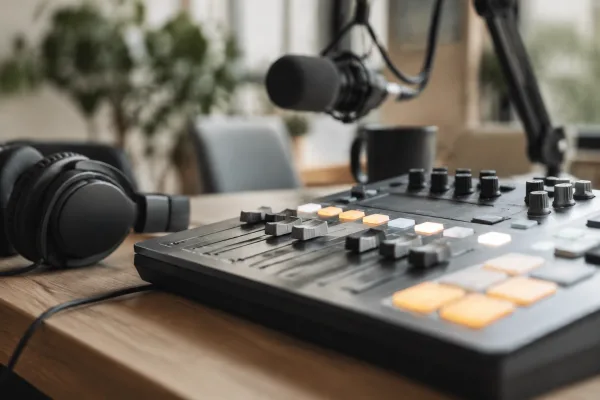
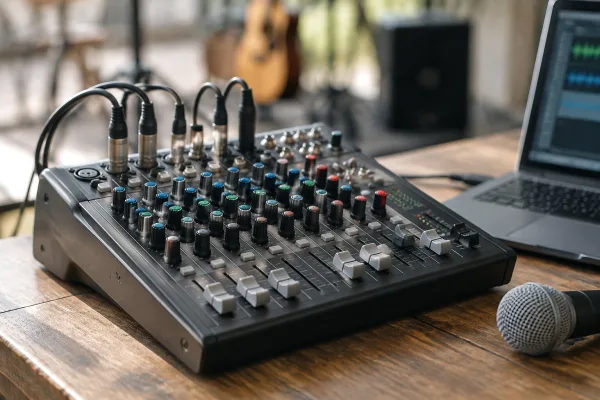
Ideal for intimate venues, rehearsal studios, and small events, compact mixers typically feature 12 to 24 channels. These portable live mixing console models prioritise simplicity and affordability. They may have integrated amplifiers (powered mixers) or connect to separate speaker systems. Small-format consoles sacrifice flexibility but offer ease of use—perfect for venues where sophisticated monitor mixing isn't essential.
Mid-Range Consoles
Professional venues, mid-sized theatres, and touring bands typically use mixing consoles with 24 to 40 channels. A mid-range live mixing console balances capability with portability. These models include comprehensive EQ, effects sends, and sophisticated monitoring options. They're complex enough for nuanced mixing but straightforward enough for travelling engineers to learn quickly.
Large-Format Consoles
Major festivals, arena concerts, television productions, and Broadway shows use large-format live mixing console systems. These typically feature 40+ channels, extensive subgroup and aux bus architecture, and powerful processing capabilities. Large consoles prioritise flexibility and recall stability, allowing engineers to archive and reload complex show settings instantly. Investment runs to tens of thousands of pounds.
Digital Consoles
Modern live mixing console technology has shifted dramatically towards digital architecture. Digital consoles offer advantages over analogue: greater channel capacity, onboard recording, recall recall, wireless control via tablets, and extensive built-in processing. However, every live mixing console—digital or analogue—requires thoughtful gain structure and careful setup. Digital doesn't eliminate the fundamentals.
Essential Mixing Techniques for Live Sound
Mastering a live mixing console demands understanding core mixing principles. These foundational techniques apply whether you're managing a small conference or a 10,000-seat arena.
Gain Structure and Level Setting
Proper gain structure is the foundation of quality mixing on any live mixing console. Begin by setting the input gain (preamp) so peaks hit around -18 to -12dB on the channel meter—not so hot that clipping occurs, but sufficiently loud to maintain a good signal-to-noise ratio. This initial step determines everything downstream. Many mixing mistakes trace back to poor gain structure at the console's input stage.
EQ and Frequency Management
Each voice and instrument occupies different frequency ranges. A live mixing console's EQ section lets you carve space for clarity. Reduce boxy low-mids on vocals (around 200–400 Hz), brighten snare drums with gentle high-mid boosts (around 5 kHz), and roll off rumble below 80 Hz on channels that don't need it. Surgical EQ decisions maintain clarity when multiple sources combine on your live mixing console.
Compression and Dynamics Control
Compression is essential on dynamic sources—lead vocals especially. A gentle 4:1 ratio with moderate attack and release smooths out dynamic swings without audibly squashing the performance. Every live mixing console worth its salt includes compressors on channels or busses. Learning compression fundamentals—attack, release, threshold, ratio—transforms a good mix into a professional one.
Reverb and Delay Management
Adding space and dimension makes a live mixing console mix feel cohesive. Reverb deceives the ear into perceiving a unified acoustic space. Use reverb sends on vocal and instrument channels, but apply restraint—too much reverb muddies the mix. Similarly, delay effects on vocals or lead instruments add interest without overwhelming the source. Most modern live mixing console systems include built-in reverb and delay algorithms.
Choosing the Right Console for Your Needs
Selecting a live mixing console requires balancing channel count, venue size, budget, and technical capability. Start with channel inventory: count every microphone, instrument, playback source, and wireless pack you'll use simultaneously. A typical five-piece band with drums, bass, two guitars, and vocals, plus two playback tracks and wireless monitor feeds, requires at least 12 input channels on a live mixing console—20 channels provides comfortable headroom.
Next, consider monitoring requirements. Do stage performers need separate mixes? A musician monitoring their own vocal and drums differently from the drummer's needs requires sophisticated monitoring architecture on your live mixing console. Small venues with passive monitor mixes can use simpler consoles; touring acts need advanced monitoring capability.
Budget matters, but be realistic. Investing in quality builds confidence and longevity. A decent mid-range live mixing console costs £3,000–£8,000; professional large-format consoles can exceed £50,000. However, quality used equipment often delivers professional performance at lower cost.
Conclusion
A live mixing console is far more than a collection of faders and buttons—it's the interface through which you interpret a performance and deliver it to an audience. Mastering your console requires understanding signal flow, learning EQ and dynamics fundamentals, and developing keen listening skills. Whether you're mixing a small community event or a major concert, a well-maintained live mixing console in capable hands produces audio that enhances rather than distracts from the artistic experience. The investment in understanding your mixer—whether studying its manual, practising in quiet time, or shadowing experienced engineers—pays dividends in every show you mix.




Comments