


16 Channel Mixer article
The Ultimate Guide to Digital 16 Channel Mixer
A 16 channel mixer manages multiple audio sources for live events, recording studios, and venues. This guide explains analogue versus digital approaches, key features, and how to select the right 16 channel mixer.
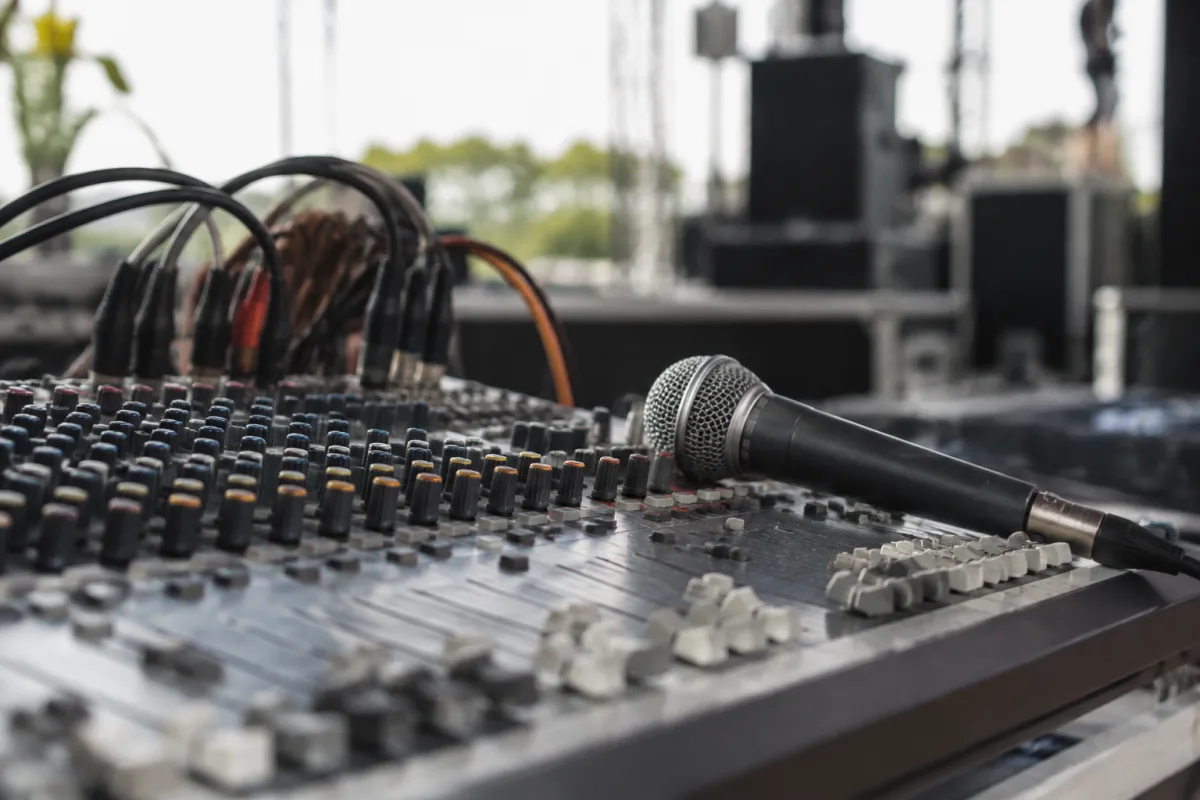
16 Channel Mixer: The Essential Guide to Multi-Channel Mixing
A 16 channel mixer sits at the heart of professional sound reinforcement, live event production, and recording studio workflows. Whether you're mixing a small band at a festival, managing multiple microphone sources in a recording session, or handling the front-of-house for a theatre production, a quality 16 channel mixer gives you the flexibility and control necessary for professional results. This guide explores what defines a professional 16 channel mixer, key features to evaluate, and helps you choose the right 16 channel mixer for your application.
Understanding 16 Channel Mixer Basics
A 16 channel mixer is an audio device that accepts up to 16 separate audio inputs, each with independent level control, equalisation, and optional processing. The mixer combines these signals into stereo outputs (left and right) or multiple auxiliary sends for monitoring, effects processing, and other applications. The simplicity of this concept belies the complexity of modern 16 channel mixers, which layer digital effects, recording capabilities, wireless microphone integration, and sophisticated routing options atop the fundamental mixing task.
Analogue vs. Digital 16 Channel Mixers
A traditional analogue 16 channel mixer uses dedicated knobs, faders, and switches for each channel, with signals routed through resistor-capacitor networks and amplifiers. An analogue 16 channel mixer offers immediate tactile control and requires no power to route signals (though powered monitoring usually is desired). Digital 16 channel mixers use onboard computers to manage routing, effects, and recall. A digital 16 channel mixer offers massive flexibility—recalling entire show settings instantly, applying sophisticated processing to any channel or mix bus—but requires learning a menu-driven interface.
Professional venues often prefer a hybrid approach: a digital 16 channel mixer for its flexibility and recall capability, or an analogue 16 channel mixer for its simplicity and immediate control. Your choice depends on your workflow and the complexity of your productions.
Key Specifications to Evaluate in a 16 Channel Mixer
When shopping for a 16 channel mixer, several technical specifications define how well it will serve your needs:
- Input Types: Does the 16 channel mixer include microphone preamps with phantom power (essential for condenser microphones)? How many line-level inputs versus mic inputs? A versatile 16 channel mixer handles both with quality preamps on each channel.
- Preamp Quality: The preamp is the first stop for every signal in your 16 channel mixer. A noisy preamp introduces hum or hiss; a clean, low-noise preamp preserves signal clarity. Check the specified EIN (equivalent input noise).
- Fader Count and Motorisation: A true 16 channel mixer has individual faders for all 16 channels. Motorised faders (servos that move automatically during recall) are a luxury on higher-end 16 channel mixers.
- Equalisation Depth: Does each channel of your 16 channel mixer include a 3-band or 4-band EQ? Parametric EQ (allowing you to adjust centre frequency and Q) offers more surgical control than fixed-frequency graphic EQ.
- Auxiliary Sends: Professional 16 channel mixers include 4–6 auxiliary sends per channel, allowing independent mixes for performer monitors, effects processing, and wireless microphone systems.
- Effects and Processing: Built-in reverb, delay, and compression in a 16 channel mixer save external gear investment. Does the 16 channel mixer process effects sends separately? Can you apply effects to individual channels?
- Recording Capability: Modern 16 channel mixers often include USB audio interfaces or multi-channel recording outputs, enabling you to capture all 16 channels simultaneously for mixing later.
- Durability and Build: A 16 channel mixer for touring or venue deployment must survive transport and constant use. Metal chassis, quality connectors, and professional construction matter.
Analogue 16 Channel Mixer Strengths
An analogue 16 channel mixer is immediately intuitive—the knob for channel 7 level is physically present, visible, and directly connected to the audio path. No menus, no searching screens. For live sound engineers who mix by feel and instinct, an analogue 16 channel mixer is unbeaten. The sonic character of an analogue 16 channel mixer is also worth noting—some engineers prefer the warmth and natural saturation of analogue circuitry.
Digital 16 Channel Mixer Advantages
A digital 16 channel mixer's strength lies in recall and flexibility. Program your entire show settings—every channel's EQ, every auxiliary send level, every effects parameter—into a digital 16 channel mixer and recall them instantly at the push of a button. Add a new microphone mid-show? A digital 16 channel mixer lets you reprogram routing in seconds. Many digital 16 channel mixers include touchscreen interfaces for intuitive control.
Sizing: Which 16 Channel Mixer Fits Your Needs?
A true 16 channel mixer is medium-capacity—enough for a six-piece band (six mics) plus keyboards, backing track, and ambient effects, or a small theatre production with multiple microphone sources. Larger events (full orchestras, major concerts) demand 24-, 32-, or 48-channel mixers. Smaller applications (acoustic duo, podcast recording) may suit a 6- or 8-channel mixer.
Before purchasing a 16 channel mixer, list your typical microphone count. If you consistently use 14–16 channels, a 16 channel mixer is right-sized. If you typically use 8–10 channels, consider whether expansion capacity justifies the cost of a 16 channel mixer, or whether a smaller mixer suits you better.
Connectivity and Integration
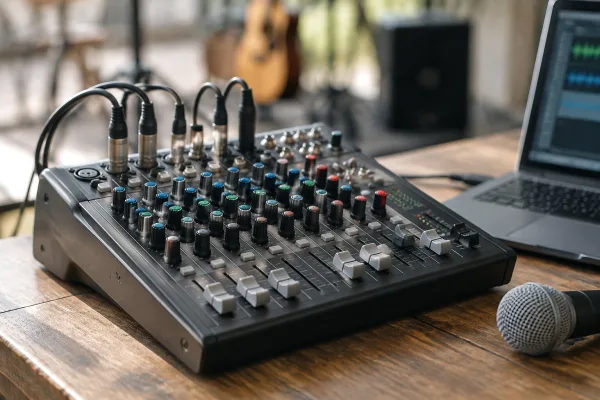
A professional 16 channel mixer includes balanced XLR and TRS connections for audio durability. Check that your 16 channel mixer accepts both microphone and line-level inputs, includes phantom power for condenser mics, and offers multiple output options (main stereo out, tape/recording out, auxiliary sends). Modern 16 channel mixers increasingly include USB audio for direct computer integration, enabling recording or remote mixing.
Wireless Microphone Integration
Many venues and touring productions rely on wireless microphones. A professional 16 channel mixer should accommodate wireless receivers seamlessly—via standard audio inputs or optional digital integration. Some higher-end 16 channel mixers include integrated wireless microphone management, simplifying cable routing and frequency coordination.
Building Monitoring Mixes with Auxiliary Sends
A key strength of a 16 channel mixer is the ability to create independent monitor mixes using auxiliary sends. A guitarist needs more drums in their monitor; a vocalist wants more reverb on their voice—a 16 channel mixer with multiple auxiliary sends lets you craft individual mixes for each performer simultaneously, keeping the main front-of-house mix untouched.
Cost and Budget Considerations
Entry-level 16 channel mixers start at £300–500; professional-grade options (Mackie ProFX16v3, Behringer SX3242FX) run £600–1200+. Premium digital 16 channel mixers exceed £3000. Consider your application: a 16 channel mixer for occasional local events needn't be expensive, but a touring or venue-based 16 channel mixer warrants investment in reliability and features.
Making Your 16 Channel Mixer Selection
Rent or borrow a 16 channel mixer if possible before purchasing. Use it for a real gig or recording session. Does the layout make intuitive sense? Do the preamps sound clear? Can you manage your typical show setup? The best 16 channel mixer is one that you trust and know deeply. Choose one, learn every feature, and your mixing confidence and efficiency will grow exponentially.
A quality 16 channel mixer is a long-term investment in your sound reinforcement or recording capabilities, capable of serving countless productions with reliability and professional results.




Comments