


Ibanez Rg article
Ibanez Rg for Beginners: A Complete Guide
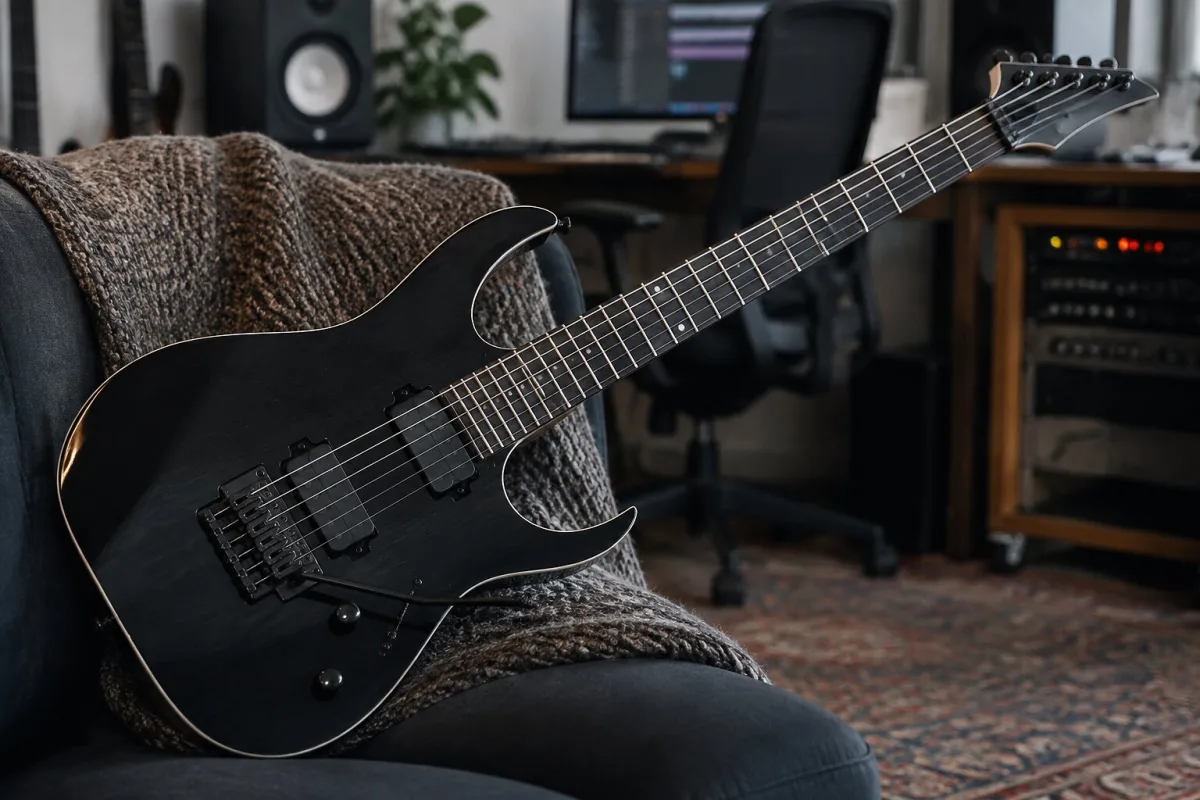
There's a moment when you first pick up an Ibanez RG when you realize something's different. The neck feels impossibly thin—like you could wrap your thumb halfway around it. The body sits close against your ribs in a way that feels deliberate. There's no excess material, no padding, just a guitar that wants to get out of your way and let you play. It's that moment that hooks a lot of players, beginners included. The RG isn't trying to be everything to everyone. It's unapologetically focused on letting you move fast and play precisely. And that, perhaps surprisingly, makes it a genuinely good choice for someone learning guitar.
Why a Beginner Might Choose an Ibanez RG
Most people start guitar on whatever their parent picked up at the local music shop—often something generic that looks and feels like every other guitar. There's nothing wrong with that. But if you've got the choice and you're drawn to the RG's looks, or if you know you're interested in rock or metal, the RG is worth considering. It won't make you a better player—no guitar does that—but it won't hold you back either.
The thin neck is actually a strength for beginners. Smaller hands? The RG's slim profile is more forgiving than a chunky traditional neck. Longer fingers? You've got less physical distance to cover, which means less strain when reaching across the fretboard. The 24 frets give you access to higher notes without having to move to the guitar's neck joint. And the overall balance of the body—being lighter and more compact—means less shoulder fatigue during practice sessions. These aren't radical advantages, but they're real, and they matter when you're building muscle memory.
Understanding the RG Formula
Every Ibanez RG starts from the same blueprint. It's a double-cutaway design, which means the upper bout (the section above the highest fret) is carved away on both sides, giving your fretting hand room to reach the higher registers. That doesn't matter much when you're learning basic open chords, but it means the guitar grows with you—as your playing ambitions climb toward the upper frets, the guitar doesn't physically block you from getting there.
The typical RG uses a thin neck called a Wizard profile. Different models have different versions—Standard Wizard, Wizard II, Super Wizard—but they're all considerably thinner than traditional guitar necks. Some people love this immediately. Others need a few weeks to adjust. If you try an RG in a shop and the neck feels strange or uncomfortable, that's worth noting. There are plenty of other guitars, and forcing yourself to play an uncomfortable instrument is how practice sessions become frustrating rather than enjoyable.
The 24-fret fingerboard is standard on all RG models. That's two full octaves per string, which is plenty for almost any style of playing. A beginner won't need to use those higher frets right away, but having them available means the guitar doesn't cap your ambitions.
Tremolo Versus Hardtail: A Beginner's Perspective
Most entry-level RG Standard models come with a double-locking tremolo system—a whammy bar that's clamped at both the bridge and the headstock, which means it maintains tuning stability even when you dive the bar. It's cool and fun to play with. It's also more complicated to maintain than a fixed bridge.
Here's the honest truth: as a beginner, you probably don't need a tremolo. You're not doing dive bombs or crazy whammy-bar effects. What you need is a guitar that stays in tune while you're building basic finger strength and learning chord changes. A fixed-bridge RG (they do make them) keeps your tuning rock-solid and requires zero tremolo balancing. Setup is simpler. It's the more practical choice for learning.
That said, if you love the idea of that whammy-bar expression and you don't mind spending time on setup and maintenance, the tremolo RG is playable. Just understand that it's one more thing to learn about alongside learning the actual guitar.
Pickup Configuration: What Does It Mean?
Most RGs use an HSH configuration—that's humbucker, single-coil, humbucker, describing the three pickups from neck to bridge. Humbuckers are thicker-sounding pickups that work brilliantly for rock and metal. Single-coils are brighter and twangier. By combining them, the RG gives you flexibility. You can get warm humbucker tones, bright single-coil tones, or anything in between by using different switch positions. That versatility is genuinely useful as you're discovering what sounds appeal to you.
As a beginner, you don't need to understand the physics behind this. What matters is that different pickup positions sound different, and that's fun to explore. Play different positions and listen. You'll develop preferences as your ear develops.
Entry-Level RG Models for Beginners
Ibanez's Standard RG line is where beginners typically start. They're made in Indonesia or China, they're reasonably priced—typically £300–500 for a complete instrument—and they play decently right out of the box. You won't get the refined fretwork of a Japanese-made Prestige model, but you'll get the core RG experience.
When shopping, play several examples. Look for smooth frets (sight down the neck to check for obvious high spots), hardware that moves freely and consistently, and pickups that sound balanced across all three positions. A little buzz under heavy bending is normal; significant fret buzz is worth investigating.
A Genesis model is worth considering if you like the retro aesthetic and you're willing to spend a bit more. They're a step up in playability from the cheapest Standards.
Practice and Growth
The RG isn't going to make you learn faster or play better than any other decent guitar would. What it does is remove friction. You don't struggle against the instrument; you struggle with the actual learning—chord changes, timing, finger coordination. That's as it should be.
Buy from somewhere with a return policy. Try it first. Play it in the shop and at home if possible. If it feels right and sounds decent, buy it. If it doesn't, try something else. The "right" guitar is the one that excites you enough to pick it up regularly, and that's deeply personal.
Looking Forward
If you stick with the RG as you develop, you can upgrade gradually. Move from a Standard to a Prestige if you want refined playability. Explore extended-range seven-strings if your musical interests shift toward lower tunings. The platform grows with you. That's perhaps the best thing about choosing an RG as a beginner—it's not a learning guitar you'll outgrow. It's a guitar that can develop with you for years.





Comments