


Ibanez Rg article
Ibanez Rg: A Complete Guide
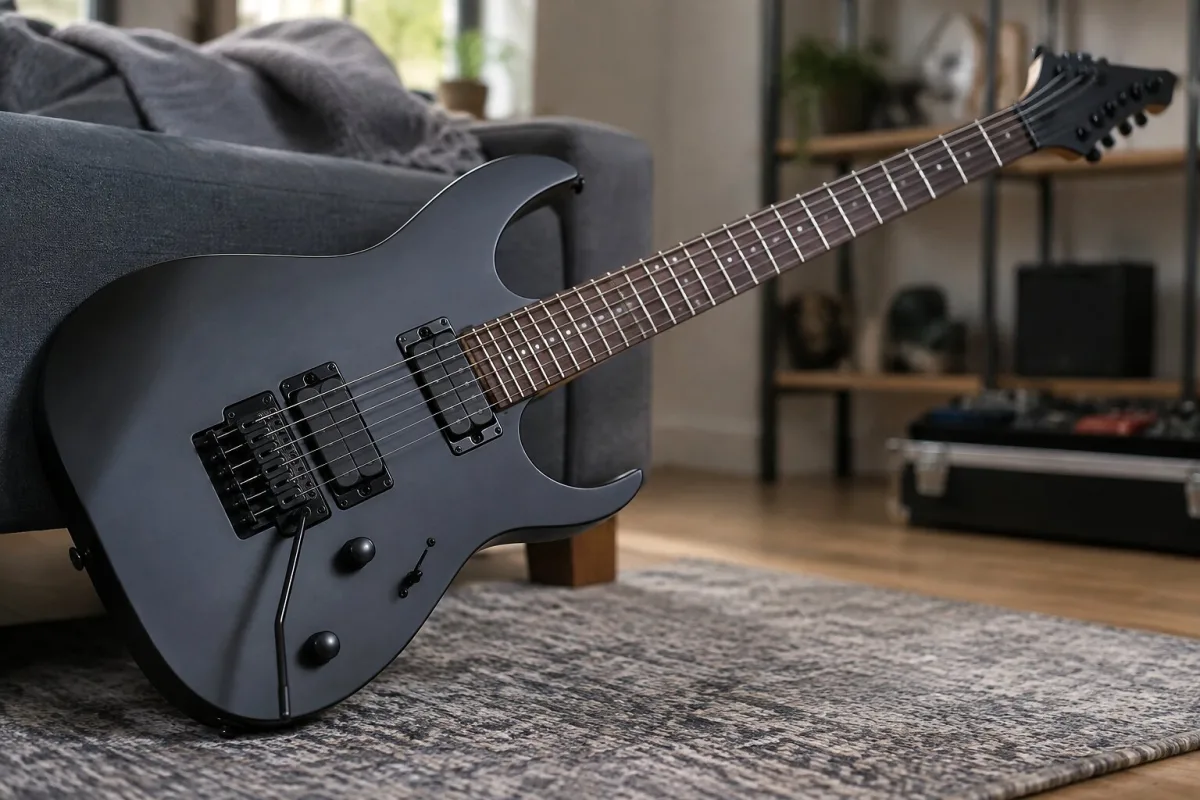
If you've ever stood in a guitar shop and spotted a sleek double-cutaway with a thin neck and an aggressive edge, odds are you were looking at an Ibanez RG. Since 1987, the RG has been the go-to instrument for players who want precision, speed and a guitar that doesn't apologize for its looks. It's one of those designs that just works, and it's remained relevant for nearly four decades because Ibanez keeps building them right.
What Makes the Ibanez RG Different?
The RG isn't a single guitar—it's a platform. Think of it as Ibanez's answer to the question: "What would a Stratocaster be if we stripped away everything that slows you down?" The result is something that feels immediately familiar to anyone who knows a Strat, but with the rough edges removed and the performance edges sharpened.
The original RG550 appeared in 1987, built around ideas that came from Ibanez's work with Steve Vai on the JEM. But where the JEM was an artist signature instrument with fancy inlays and appointments, the RG550 kept the core performance features at a price point that didn't require selling a kidney. It had the thin neck, the 24 frets, the HSH wiring, the locking tremolo—all the bits that let you play fast and stay in tune while you're diving the whammy bar.
Today, the RG comes in Standard versions, the Genesis Collection (which revisits classic designs), the Prestige line (Japanese-made, refined), and the Iron Label family aimed squarely at modern metal. There are six-string, seven-string, eight-string and even nine-string variants, hardtail models for players who want simplicity, and signature versions from touring musicians. But they all inherit the same basic DNA: a double-cutaway body, 24 frets, a thin fast neck and that singular focus on precision.
The Core Design: What You're Actually Getting
Let's talk specifics, because spec is what the RG is built on. Most six-string RG models use a 25.5-inch scale—the same as a Stratocaster—so the string tension and feel are familiar. The body is typically light. Early models used basswood, which has remained strongly associated with the RG because it's genuinely nice: it's light, balanced and lets the pickups do the talking without colouring the signal too much.
The neck is where the RG really separates itself. Ibanez's Wizard family of profiles are thin—genuinely thin, not marketing-thin. The original RG550 Wizard neck was about 17mm at the first fret and 20mm at the 12th fret. Modern versions come in Standard Wizard, Wizard II (common on affordable models), Super Wizard and Super Wizard HP (on higher-end guitars). If you're used to a chunky neck, you'll notice immediately. If you like thin necks, you'll wonder why you waited so long.
Frets are 24 as standard—that's two full octaves per string, which pushes the neck pickup closer to the bridge than on a 21 or 22-fret guitar and can give it a slightly different character. The fingerboard is generally flat, which makes bends and tapping feel easier once your fingers adjust.
Pickup-wise, the classic RG layout is HSH—humbucker at the neck, single-coil in the middle, humbucker at the bridge. This gives you options. You can get neck humbucker warmth, bridge humbucker punch, and by blending the middle pickup you can access single-coil sparkle without sacrificing output. Newer models sometimes go HH if they're aimed at metal, and some use active pickups or Fishman Fluence systems for tighter, cleaner high-gain response.
Tremolo: The Feature That Divides Opinions
Most RGs come with a double-locking tremolo—typically the Edge family. This clamps the strings at the nut and the bridge, which means you can dive and pull without the guitar going wildly out of tune. It's genuinely useful if you're doing whammy-bar work, and when it's set up correctly, it's stable enough for standard tuning too.
The trade-off is maintenance. Changing tunings involves loosening and tightening locking clamps. Restringing takes longer. Balancing the bridge (getting the plate parallel to the body so the springs and string tension match) is fiddly. Some players love this. Others find it a pain and prefer the hardtail models—fixed bridges with no floating section, just solid tuning stability and nothing to think about.
If you use standard tuning or occasional drop tunings and you want to pick up the guitar and play without setup, a fixed-bridge RG is worth considering. If you're doing serious whammy work or you like having pitch manipulation available, the tremolo RG is where you want to be.
Which RG Should You Actually Buy?
Standard RGs are solid entry points. Hardware quality and fretwork vary, so inspect carefully, but you'll get the RG experience at a reasonable price. Genesis models are for players who want the classic RG550 configuration and vibe. Prestige models are Japanese-built and refined—better fretwork, more consistent finishing, upgraded hardware—and they cost more, but the playability increase is real.
Iron Label models are built for modern heavy music. They often feature fixed bridges (no tremolo), HH pickup layouts, high-output pickups designed for tight, clear tones through distortion, and longer scales on extended-range models. If you're playing djent or technical metal, look here first.
Seven and eight-string RGs have wider necks and longer scales (27 inches for the RG8 instead of 25.5) to maintain string tension in low tunings. Extended-range playing is genuinely different—the technique, the setup, the approach—so try one before committing.
Setup and Looking After Your RG
A locking-tremolo RG needs patience when setting up. Get your tuning and string gauge sorted first. Install strings, stretch them thoroughly, balance the bridge, set intonation only once everything else is stable, then leave it alone for a week—bridge balance can shift as the neck acclimates. Lubricate the knife edges and contact points occasionally, but use products designed for guitars and avoid getting anything near finishes or electronics.
If you go hardtail, setup is simpler: check neck relief, set action at the bridge, confirm frets are level, adjust intonation. Both approaches work. It's just what suits your playing and your patience.
Why the RG Still Matters
The RG became influential because it took performance-focused design seriously. Thin neck, fast frets, locking tremolo, versatile electronics—it all worked together. It suited shred players, metalheads, fusion experimenters and studio musicians. It still does. Ibanez has refined the platform without abandoning its roots, which is harder than it sounds. If you want a guitar that prioritizes precision and speed, the RG delivers. It's that simple.





Comments