


Ibanez Rg article
Common Ibanez Rg Mistakes to Avoid
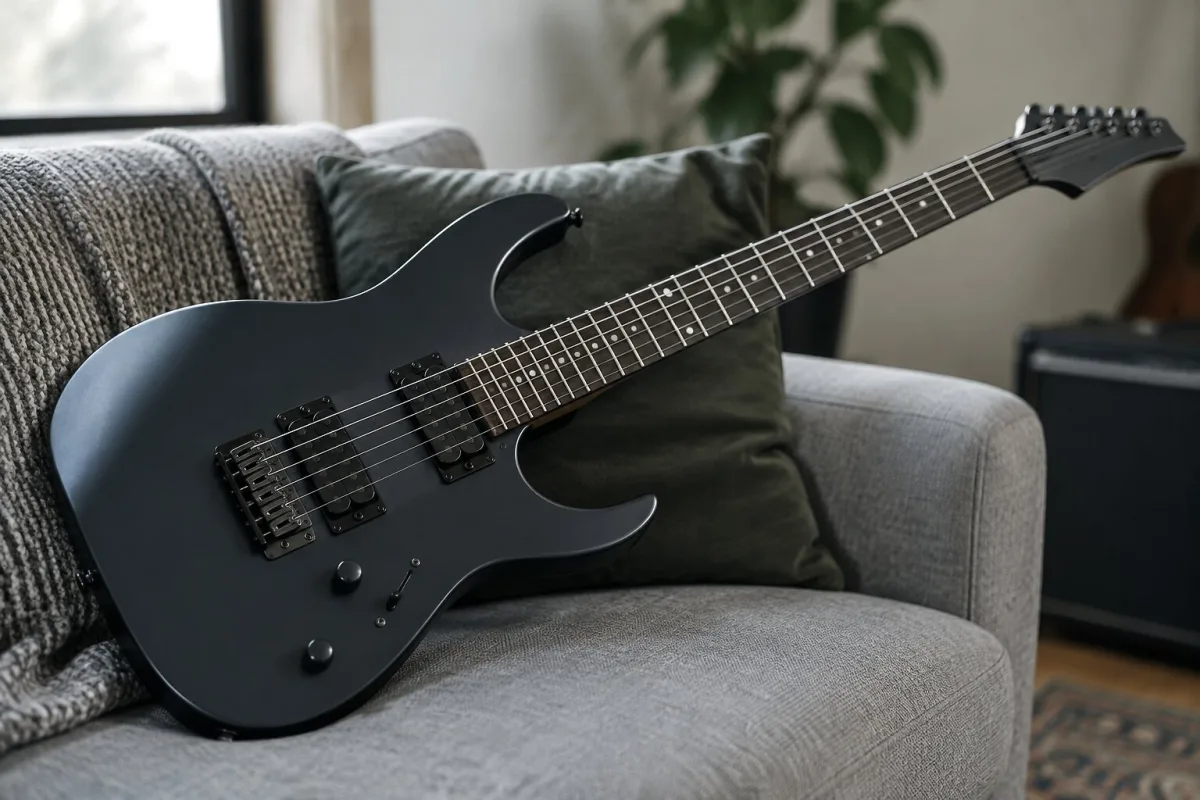
The Ibanez RG is a remarkable guitar precisely because it's so focused. It does one thing extremely well—enabling fast, precise playing—and doesn't apologize for the trade-offs that come with that focus. But that same clarity can work against you if you approach RG ownership without understanding what you're signing up for. Here are the mistakes I see repeatedly, and how to avoid them.
Mistake 1: Buying a Tremolo RG Without Understanding the Commitment
The double-locking tremolo is one of the RG's defining features. It's also one of its most misunderstood. People buy tremolo RGs imagining they'll casually use the whammy bar for expressiveness, then get frustrated when the guitar refuses to stay in tune because the bridge isn't properly balanced.
A floating tremolo is a system. Installing strings isn't just threading them through tuners and cutting the excess. You install them, stretch them thoroughly (this takes time), then balance the bridge by adjusting spring tension until the bridge plate sits parallel to the body. You set intonation only after everything else is stable. If you change string gauge or decide to try a different tuning, you rebalance. This isn't a minor maintenance task—it's an integral part of using the instrument correctly.
The mistake is thinking you can ignore this. You can't. The result is a guitar that sounds out of tune the moment you use the whammy bar, which is worse than not having a tremolo at all. Solution: if you're not prepared to learn tremolo balancing, buy a hardtail RG. If you buy tremolo, actually learn how to set it up or pay a professional to do it properly initially. It's worth the investment.
Mistake 2: Confusing "Thin Neck" With "Uncomfortable Neck"
The Wizard neck is thin. Some people find this immediately comfortable. Others find it feels wrong. The mistake is buying an RG, discovering the thin neck doesn't work for your hand, then forcing yourself to adapt because you've already spent £400–500.
Neck profile is personal. There's no "better" or "worse"—there's only what works for your hand. Before buying, play at least three different RG models if possible. Check different profile variants (Standard Wizard, Wizard II, Super Wizard on higher-end models have subtle differences). If the thin neck genuinely doesn't feel right after 20 minutes of playing, it probably won't feel right after six months of ownership. Walk away. Your money is better spent on a guitar you'll actually enjoy playing.
The corollary: don't write off the RG because one example felt bad. Try others. Neck feel varies slightly between production batches and sometimes between instruments from the same production run. You're looking for the one that feels right to you.
Mistake 3: Ignoring Hardware Quality on Budget Models
Entry-level Standard RGs are affordable because they're manufactured cost-consciously. That's fine. It's also necessary to inspect what you're getting. Check the tuning machines—do they turn smoothly? Inspect the bridge hardware—does the tremolo system move freely, or is there play or resistance that shouldn't be there? Look at the fretwork—are there obvious high spots or inconsistencies?
A budget RG can be excellent. It can also be built to a price point where corners were cut. The difference is often invisible until you own it. Solution: buy from somewhere with a return policy. Play it thoroughly in the shop. Play it for 15–30 minutes at least, not just a quick strum. If anything feels wrong—rough tuning machines, a tremolo that doesn't respond smoothly, visible fret issues—don't buy it. Ask to try another example. Quality control varies.
Mistake 4: Not Accounting for Setup Costs
A new RG out of the box is often not optimally set up. Action might be higher than ideal. Intonation might be slightly off. Pickups might need height adjustment. A professional setup typically costs £50–100 and makes a substantial difference in playability. Many people don't budget for this, then play an instrument that's harder to play than it should be.
Factor setup into your purchase decision. If you're buying a budget RG, add professional setup to the cost. It's not an indulgence—it's part of making the instrument playable. If you can't afford setup, consider saving for a model that costs slightly more and comes better-adjusted from the factory (Prestige models fit this description).
Mistake 5: Choosing the Wrong Pickup Configuration for Your Style
HSH (humbucker-single-coil-humbucker) is versatile. You can get rock tone, metal tone, clean tone, anything in between. HH (humbucker-humbucker) is more specialized toward high-gain playing. The mistake is buying HH thinking it's just "more powerful," then discovering you can't achieve the clean tones or mid-gain sounds you need for the music you actually want to play.
Before buying, understand your playing style. If you're playing metal or hard rock exclusively and you want focus on high-output, high-gain tone, HH is reasonable. If you play anything else, or if you want flexibility within a single instrument, HSH is the safer default. Once you own an HH RG, changing the pickup configuration is possible but requires routing and rewiring—it's not a casual upgrade.
Mistake 6: Overlooking a Prestige Model When Budget Allows
The jump from Standard to Prestige represents a genuine playability improvement. Japanese manufacture, refined fretwork, more consistent finishing and better hardware aren't marketing fluff—they change how the guitar plays. If you're at the upper end of a budget and you can stretch to a Prestige, do it. You'll appreciate the difference every time you play.
The false economy is buying a budget Standard because it's cheaper, then playing an instrument that's harder to play than it needs to be. If you can't afford Prestige, a Genesis model offers better value than the cheapest Standards. Spend what you can afford, but don't sacrifice playability just to hit an arbitrary price point.
Mistake 7: Buying Extended-Range Without Trying First
Seven-string and eight-string RGs are genuinely different instruments. Wider necks, different spacing, longer scales, different technique. Some people adapt to extended-range immediately. Others take weeks or months. The mistake is buying an eight-string in bulk online thinking you'll figure it out, then discovering it's fundamentally uncomfortable to play.
Try an extended-range model in a shop before buying. Play for 20 minutes at minimum. Get a feel for the wider spacing and the longer scale. If it doesn't feel natural, it probably won't become natural with ownership. There's no shame in preferring six-string guitars.
Mistake 8: Not Maintaining Fret Condition
RG frets are 24 in number and consequently closer together than on shorter-fret guitars. They're also subjected to harder playing (fast legato, aggressive bending, tapping) than many guitars. Fret wear accelerates if you don't change strings regularly or if you play with heavy pressure.
Change strings at least monthly if you're playing regularly. Clean the fretboard occasionally. If you notice frets developing flat spots or if playability deteriorates despite setup, have a luthier evaluate fret condition. Fret maintenance is less critical than it sounds for casual players, but ignoring it means you'll eventually need a fret dressing or refret, which is expensive.
The Broader Lesson
The RG's strength is its focus. Its weakness is that it doesn't compromise. Understand what you're getting into—the tremolo maintenance, the thin neck, the aggressive frets—and you'll have a genuinely brilliant instrument. Ignore those aspects and you'll be frustrated by aspects of ownership that are entirely avoidable.





Comments