


Gretsch Electric Guitar article
Gretsch Electric Guitar for Beginners: A Complete Guide
Starting with a Gretsch electric guitar? Discover why their comfort, tone and playability make them ideal for beginners, plus our essential beginner buying guide.
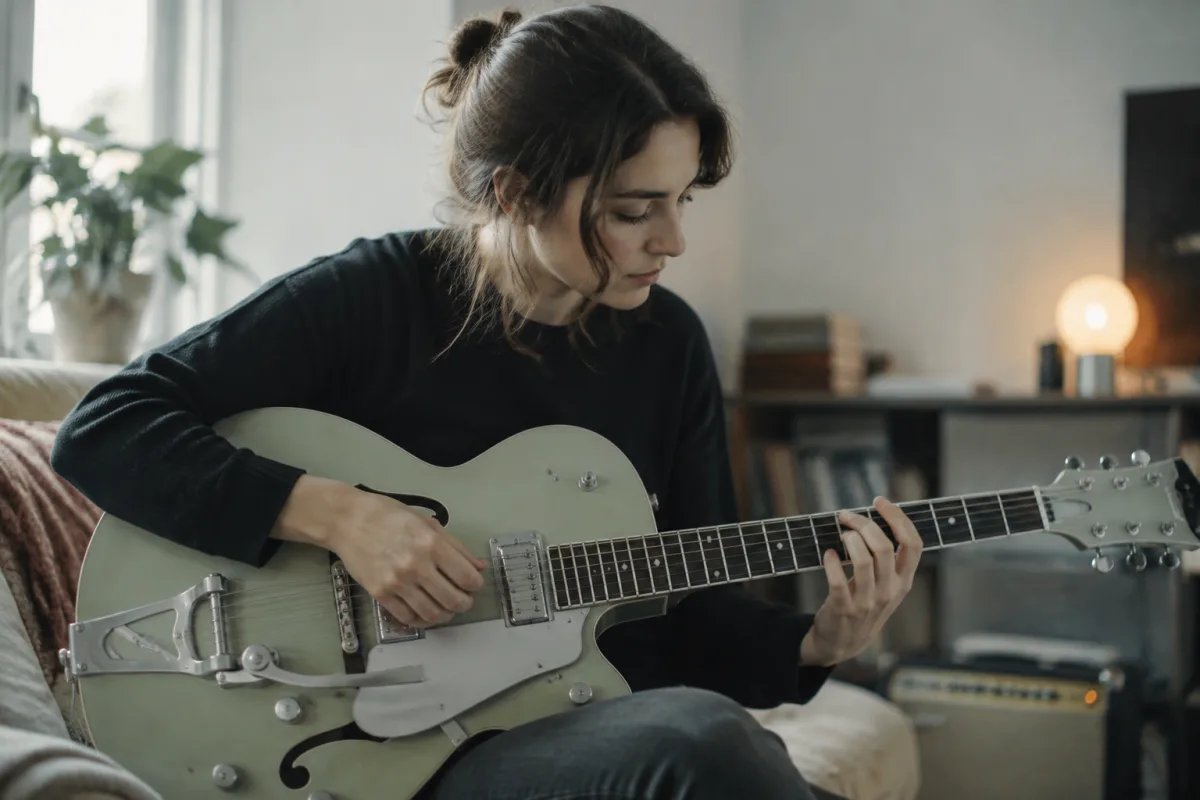
Why Gretsch Electric Guitars Are Perfect for Beginner Players
If you're just starting your guitar journey and considering a Gretsch electric guitar, you've already shown good instincts. Gretsch instruments have earned their reputation through nearly a century of consistency, and their beginner-to-intermediate models offer remarkable value, comfort and playability without requiring expert-level technique to sound good. This guide walks you through everything you need to know to choose and start playing a Gretsch electric guitar with confidence.
What Makes Gretsch Guitars Beginner-Friendly
The first question any nervous newcomer asks is: "Will this guitar feel right in my hands?" Gretsch electric guitars are engineered with player comfort in mind. Their semi-hollow and solid-body models typically feature contoured bodies that sit naturally against your chest, slim neck profiles that reduce finger fatigue during early practice, and action heights (the distance between strings and fretboard) that ship factory-set for comfortable fretting without excessive buzz.
Beyond physical comfort, Gretsch guitars are known for their bright, punchy tone right out of the box. This is a genuine advantage for beginners: even simple open chords and basic riffs sound rich and full. That immediate reward keeps practice sessions satisfying and builds confidence. Their versatility across genres — rockabilly, surf, country, indie, alternative — means you won't outgrow the sound as your interests develop.
Entry-Level Gretsch Models to Consider
Gretsch's current lineup includes several models perfectly sized for beginners. The Streamliner series offers solid-body guitars at prices that won't break the bank, with excellent build quality and that signature Gretsch brightness. The Electromatic line provides semi-hollow alternatives (which have a warmer, slightly more resonant character) and solid comfort in the £300–700 range depending on your chosen specifications.
For budget-conscious players, the G2420 (Streamliner) is a popular entry point: lightweight, well-balanced and equipped with workhorse pickups that handle everything from clean rhythm to light overdrive. If you prefer the semi-hollow feel and slightly darker tone, the G2622 (Electromatic semi-hollow) is equally approachable and builds good technique habits by encouraging proper body positioning and hand ergonomics.
Essential Specs to Check Before Buying
When you're shopping, pay attention to these practical details:
- Neck Width and Profile: Gretsch necks are generally slimmer than some competitors, which is genuinely helpful for smaller hands or those new to the instrument. Measure your neck width (the distance across the nut) if possible; aim for 42–43 mm for comfortable chord playing without hand strain.
- Body Weight: Semi-hollow Gretsch guitars are lighter than solid-body alternatives, reducing shoulder and neck fatigue during long practice sessions — a real consideration when you're building hand strength.
- Action and Setup: Ask the retailer to confirm the guitar has been professionally set up. "Out of the box" action varies; a proper setup (adjusting truss rod, bridge and nut) costs £30–50 but transforms playability and will prevent discouragement in your first weeks.
- Hardware Quality: Gretsch Streamliner and Electromatic models ship with decent tuning machines and bridges. Avoid the temptation to compromise on the cheapest sub-brand options; tuning stability matters far more to a beginner than pickup exotica.
- Pickup Configuration: Most entry-level Gretsch guitars use dual humbucking or semi-hollow-biased pickups. These are forgiving: they handle sloppy technique gracefully and work well at low volumes, ideal for bedroom players.
The Gretsch Sound: What to Expect
Gretsch guitars are famous for their bright, articulate tone. Clean chords chime; slightly overdriven sounds are snappy rather than muddy. This character comes from the company's historic use of Filter'Tron pickups (on pricier models) and their modern equivalents, combined with semi-hollow construction that encourages natural resonance. For beginners, this means that even if your fretting hand isn't yet perfect, the guitar's inherent brightness helps your playing cut through and sound more polished than it might on a duller instrument.
If you prefer a heavier, darker tone (classic rock, metal), Gretsch may feel bright in comparison. However, that brightness is entirely correctable through amp settings and effects — and it's an asset in the early months when technique is still developing.
Beginner Shopping Checklist
| Item | Why It Matters | Typical Beginner Budget |
|---|---|---|
| Gretsch Electric Guitar | Your main instrument; durability and playability set the tone for your practice | £300–700 |
| Amplifier (combo, 15–20W) | Essential for hearing what you're playing; solid-state practice amps are affordable and reliable | £80–200 |
| Guitar Cable | Low cost; avoid ultra-cheap versions that introduce noise | £10–20 |
| Strap | Comfort and correct posture during standing practice | £15–40 |
| Tuner (clip-on or pedal) | Essential; tuning by ear takes years of training | £10–30 |
| Spare Strings & Cleaning Cloth | Strings break; a cloth keeps your guitar and fretboard clean | £8–15 |
| Capo (optional initially) | Opens access to hundreds of songs; inexpensive and very useful | £8–20 |
| Professional Setup (if needed) | Adjusts action and intonation; transforms playability | £30–50 |
Getting Started: Your First Week
The moment you bring your Gretsch guitar home, resist the urge to dive straight into songs. Instead, spend 2–3 days simply holding it, getting comfortable with its weight and balance, and tuning it daily (tuning is practice too — your ear develops confidence). Learn the names of the six strings and identify the basic open chord positions: E major, A major and D major. These three chords unlock dozens of beginner-friendly songs.
Set realistic expectations: your fingers will hurt, and that's normal. Calluses develop within 1–2 weeks of consistent practice. Your first week will feel awkward; by week four, your fretting hand will start to feel at home. Most beginners report a turning point around the 6-week mark when muscle memory kicks in and playing suddenly feels less deliberate.
Common Mistakes to Avoid
Don't grip the neck too tightly. A common beginner habit is to squeeze for security; instead, let the guitar's weight rest in the curve of your thumb behind the neck. This alone cuts finger fatigue dramatically and improves your reach.
Avoid comparing your early progress to YouTube heroes. Learning guitar is a personal timeline, not a race. Focus on consistency (15–20 minutes daily beats 2-hour weekend binges) and celebrate small wins: hitting a chord change cleanly, keeping time to a backing track, learning one new song.
Don't assume a cheap amp will do. A good small amp costs less than many guitars but makes an enormous difference in motivation. When your guitar sounds clear and full, you'll practise more. A tinny, weak signal is demoralising.
Finally, don't expect the guitar to "tune itself." A Gretsch guitar will stay in tune longer than many competing brands (the hardware is solid), but you'll still need to tune before every session — at least at first.
Finding Your Style and Building Confidence
Gretsch guitars excel across an enormous range of genres: rockabilly and surf (their heritage), indie rock, alternative, country, and even jazz (their semi-hollow models punch above their price in jazz contexts). Don't feel locked into one style. Use your early months to explore different songs and genres, find what excites you, and let that enthusiasm drive your practice.
Your Gretsch guitar is designed to reward consistent effort. As your technique improves, the instrument will grow with you — many players keep their first Gretsch guitar for decades, moving it through different bands and stages of their musical life. That's a testament to the build quality and timeless design.
The Path Forward
Learning guitar is one of the most rewarding hobbies you can start. A Gretsch electric guitar gives you a solid, well-built instrument that sounds great, feels good to play and won't limit you as your skills develop. Focus on consistent practice, enjoy the journey through the clumsy early weeks, and remember that every guitarist you admire started exactly where you are now — holding a new guitar and wondering what's possible. Your Gretsch is ready; the rest is up to you.


Comments