


Gretsch Electric Guitar article
Gretsch Electric Guitar Explained: Features, Types and Tips
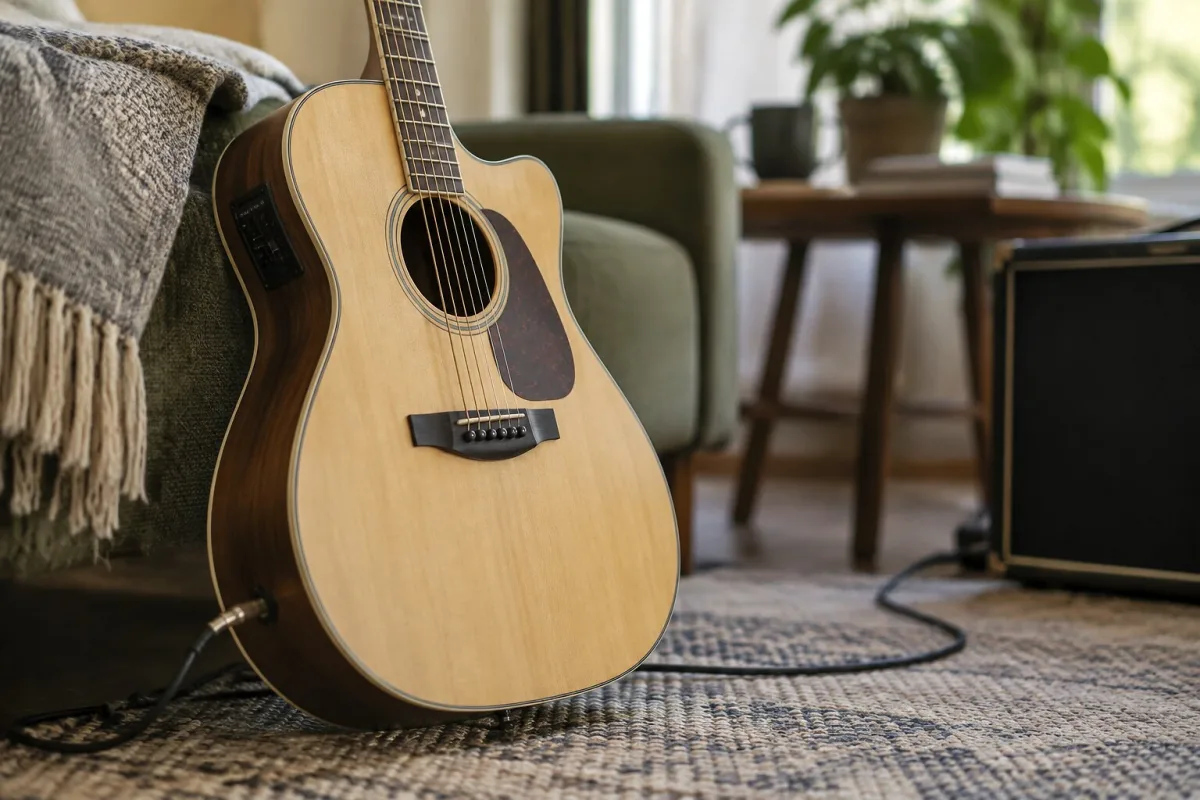
When I started playing guitar, I knew nothing about Gretsch electric guitars. I just knew they looked different and sounded different from the Fenders and Gibsons that seemed to dominate every shop shelf. Years later, after building my first pedal and staring at the electronics inside a guitar for the first time, I understood why. Gretsch has always done things their own way, and there's a logic to that difference that's worth understanding—whether you're shopping for your first guitar or your fifth.
What Makes a Gretsch Sound Like a Gretsch?
There are three construction approaches at the heart of the Gretsch electric guitar lineup: solid body, center block, and hollow body. This isn't just splitting hairs about wood thickness. Construction determines how the guitar body resonates, how it responds to the strings' vibration, and ultimately what the amplifier gets to work with.
Solid-body Gretsch guitars, particularly the Jet models, emphasize what I'd call "fast attack and presence." The instrument is built to be tight and controlled. You set it up, you play it, and the sound is what you're putting into it, amplified cleanly. The wood vibrates less, which means feedback stays manageable and sustain becomes predictable. If you're playing punk, hard rock, or anything that demands clarity at high volumes, a solid-body Gretsch electric guitar will do the job without fussing about it.
Center-block guitars sit in the middle. Imagine a hollow guitar with a wooden block running through its centre, like a block of stone inside the resonating chamber. You get some of that acoustic resonance—that air and shimmer that makes a hollow guitar special—but the center block cuts down on feedback and tightens the overall response. Gretsch's Broadkaster models and many of their Electromatic designs use this approach. They're genuinely versatile: you can use them for jazz, indie rock, or country without feeling like you're fighting the instrument.
Hollow-body guitars are where the acoustic character really shines. The entire body is essentially an empty box, which means it resonates like a real acoustic instrument. When you play a Gretsch hollow-body electric guitar unplugged, you hear something. Plug it in clean, and that character stays in the sound. You get shimmer, complex tones, and a sense of air that makes every note feel like it has space around it. The trade-off is feedback: at stage volume, you need to manage how loud you play and where you stand relative to the amplifier. But if you're playing jazz, country, rockabilly, or vintage rock, that's often exactly the sound you want.
Gretsch's Pickup Designs and What They Actually Do
Gretsch didn't invent dual-coil pickups, but they did something different with them. The classic Filter'Tron pickup is designed for clarity. Compared to a traditional PAF-style humbucker, a Filter'Tron has more definition in the upper-mid frequencies and a slightly tighter low end. That "Gretsch twang" people talk about—the sparkle, the clarity, the sense that every string is distinct even when you're playing a full chord—that comes largely from the pickup design.
There are variations. The Broad'Tron sounds fuller, more modern, less articulate. The High Sensitive Filter'Tron reaches out and grabs more signal. The newer Twin Six and Pro Twin Six designs that appeared in the 2026 Premier Jet and Broadkaster LX models add even more flexibility. But they all inherit the core Gretsch philosophy: let the player hear what they're doing. Don't cloak it in too much warmth or thickness.
I spend a lot of time thinking about what happens inside a pickup coil, because that's where the bridge between mechanical vibration and electrical signal lives. A Gretsch electric guitar pickup is designed to preserve the distinction between notes and frequencies, to not compress the dynamic range into a homogeneous blur. That matters whether you're playing clean or through a pedalboard.
The Three Collections: Professional, Electromatic, and Streamliner
Gretsch organizes their current line into three price tiers, each with a different philosophy about what craft matters and where to invest.
The Professional Collection is the flagship. These are the guitars you see on stage with artists who've chosen Gretsch deliberately. They use premium materials—solid wood, high-end hardware, carefully selected bindings. The electronics are often more elaborate. You're paying for decades of design refinement, traditional construction methods, and details that make a difference over years of playing.
The Electromatic Collection attempts something that shouldn't be easy: delivering recognizable Gretsch design and sound at half the price. These guitars use more efficient manufacturing without cutting corners on core construction. An Electromatic hollow-body still has a hollow body. An Electromatic Filter'Tron still sounds like a Filter'Tron. You're getting genuine Gretsch character, just without the premium finishes, hand-selected materials, and maximum hardware budget.
The Streamliner Collection pushes further toward affordability. These guitars are conceptually Gretsch—you'll recognize the shape, the general design—but they're simplified and modernized. Fewer frills. More direct construction. If your budget is tight or you want a contemporary Gretsch electric guitar platform without vintage styling, Streamliner is where to look.
Recent Gretsch Developments Worth Noticing
In 2026, Gretsch released the Electromatic Premier Jet, a model that signals where they're heading. It has a chambered mahogany body—that's semi-solid, not fully solid, giving you some resonance without the feedback sensitivity of a hollow guitar. The electronics are modern: Alnico 6 humbuckers, a treble-bleed circuit for better dynamics, push-pull filter controls. It's a Jet that sounds like a Gretsch electric guitar has always sounded—clear, present, characterful—but with more modern circuit engineering underneath.
They also released new Broadkaster LX variants with figured center blocks and updated hardware. These represent Gretsch thinking seriously about what center-block guitars can do in a contemporary context.
Which Gretsch Electric Guitar Is Right for You?
If you play jazz, country, rockabilly, or clean vintage tones, a hollow-body is probably your answer. If you need better feedback control but still want that resonance, center-block is the compromise that actually works. If you're playing punk, hard rock, or anything with sustain and high-gain demands, solid-body Jet designs deliver without apology.
Price matters too. Professional Collection instruments are genuinely premium. Electromatic gets you authentic Gretsch character at a fraction of the cost. Streamliner is honest about what it is: affordable and contemporary.
The reason I respect Gretsch is simple: they've never tried to be Fender or Gibson. They built their own path, they stuck to their engineering logic, and that logic produces guitars that sound and respond distinctly. If you understand how wood responds, how pickups work, and what you're actually trying to do with your amplifier, a Gretsch electric guitar makes sense. If you don't, it still might work out. But understanding the why makes everything better.





Comments