


Left Handed Fender Telecaster article
Left Handed Fender Telecaster for Beginners: A Complete Guide
Left-handed and learning guitar? This beginner's guide to the Fender Telecaster covers first steps, proper setup, and encouragement for your musical journey.
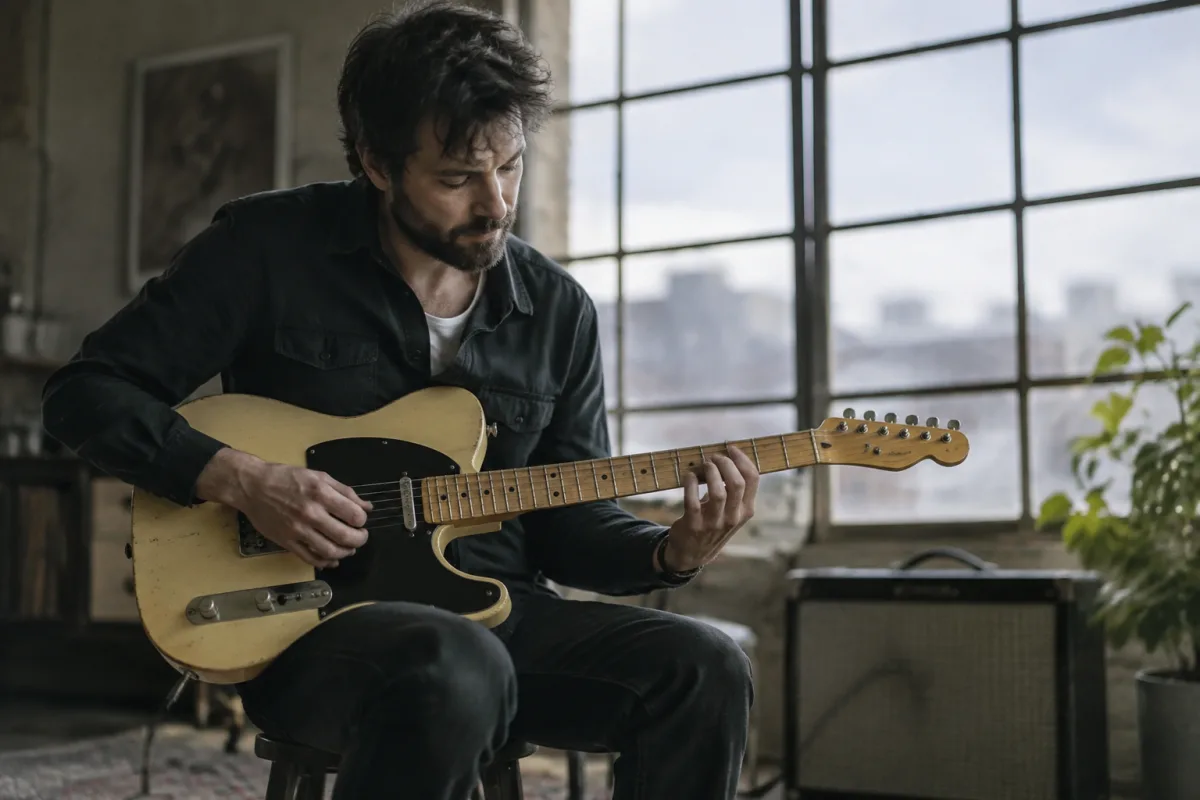
If you're left-handed and dreaming of playing guitar, you've likely faced the same frustration: finding an instrument that feels natural in your hands. Right-handed guitars force left-handers into awkward contortions, making practice uncomfortable and progress slower. That's where the left-handed Fender Telecaster comes in—a legendary guitar available in your preferred orientation. This guide walks you through your first steps with a left-handed Tele, helping you overcome common beginner challenges and set yourself up for success.
Why the Fender Telecaster is Perfect for Lefty Beginners
The Fender Telecaster is one of the most iconic guitars in music history, and for good reason. It's straightforward, reliable, and brilliant-sounding in almost any genre. For left-handed players, this matters tremendously. Unlike obscure models that might not be available in left-handed versions, the Telecaster is widely manufactured for both orientations. This means you have options, replacement parts are readily available, and you're learning on an instrument with massive community support.
The Tele's body shape is manageable and comfortable whether you're standing or sitting. Its single-coil pickups produce clear, articulate tone that makes your playing evident—mistakes become obvious, but so do improvements. You'll hear what you're doing, which accelerates learning far more than a muddy amp or uncomfortable instrument ever could.
Orientation and Setup: Feeling at Home with Your Instrument
This is crucial: a true left-handed Fender Telecaster has the string order reversed, the strap button repositioned, and the controls relocated appropriately. The low E string is on the bottom, the high E on top, matching what feels natural to your fretting hand. Never attempt to play a right-handed guitar with reversed strings—it's a hack that sounds terrible and feels fundamentally wrong.
When you first pick up your left-handed Tele, the weight distribution should feel balanced. Hold it across your body as you would when sitting down to practise. The strap button should sit naturally on your left shoulder (not your right). Play a few open strings with your strumming hand to confirm the action feels smooth and the strings are at a comfortable height.
Your First Steps: Establishing Comfort and Confidence
The first week with a new left-handed Telecaster is about building familiarity and confidence, not mastering complex skills. Here's what to focus on:
Get the setup right from the start. Take your Tele to a qualified guitar technician and request a professional setup, especially if it's new. This costs £30–£60 but prevents months of frustration. A proper setup ensures the action (string height) is comfortable, intonation is accurate, and the neck relief is appropriate. Don't skip this step—a poorly set-up guitar teaches bad technique and kills motivation.
Find your fretting hand position. Place your left hand on the neck around the 5th fret. Your fingers should be curved, wrist relatively straight, and thumb positioned behind the neck for support. It won't feel natural yet—that comes with practice. Don't grip too tightly; tension in your wrist and forearm will fatigue you quickly.
Master basic open chords. Start with the A minor chord (fingers on the 1st fret). Then E minor (2nd fret). These simple shapes teach finger placement without overwhelming your hands. Practice switching between them slowly, aiming for clean tone on each string.
Build picking consistency. Use your right hand to stroke open strings with a pick, focusing on even pressure and consistent angles. This isn't flashy, but it's foundational. Smooth, even strokes sound better than aggressive or wavering ones.
Embracing the Left-Handed Community
As a lefty guitarist, you're joining a surprisingly robust community that includes icons like Kurt Cobain, Jimi Hendrix, and Paul McCartney. This means two important things: you'll find experienced lefty players who understand your challenges, and you have inspirational role models to learn from. Online communities dedicated to left-handed guitar are supportive and full of practical advice.
Don't let anyone convince you that learning right-handed is easier or "better." Left-handers learning on left-handed instruments progress faster, develop better technique, and enjoy practising more. That's the only metric that matters.
Common Beginner Mistakes Left-Handed Players Make
Even with the perfect instrument, pitfalls await. Here are mistakes that specifically trip up left-handed beginners:
Mistake 1: Accepting a reversed right-handed guitar instead of a true left-handed model. This is the most damaging error. A right-handed Tele with reversed strings plays poorly, sounds weak, and develops intonation problems. The nut and bridge are cut for right-hand orientation and don't work correctly reversed. Invest in a true left-handed instrument.
Mistake 2: Neglecting the setup. Many left-handed players skip professional setup to save money. This creates playability issues that seem like personal failures, crushing motivation. A £50 setup investment prevents months of frustration.
Mistake 3: Practising without a teacher or structured guidance. Left-handed players sometimes avoid lessons, thinking instructors won't understand. In reality, most modern teachers understand left-handed orientation and can adapt their teaching. A few lessons save you from developing bad habits that take years to unlearn.
Mistake 4: Comparing your progress to right-handed players. Your learning curve might differ from right-handers, but that's normal. Focus on your own progress and don't judge yourself by others' timelines.
Mistake 5: Giving up on restring changes. Learning to restring your Tele is intimidating at first but essential. Don't rely on others to do this permanently. Watch tutorial videos, practise on scrap strings, and build confidence with your instrument.
Setting Up Your Practice Space
Create an environment that encourages regular practise. Your left-handed Tele should have a dedicated stand or wall mount where you can reach it comfortably. Keep a cable, strap, and extra strings nearby. A small practice amplifier (15–30 watts) gives you volume for self-expression without disturbing neighbours. Position yourself so your left hand has full freedom—not squeezed into a corner where the body hits a wall.
Your First Month Milestones
Track progress with realistic, achievable goals:
- Week 1: Get professional setup, learn proper left-hand positioning, play five minutes daily without hand pain
- Week 2: Master three open chords (A minor, E minor, E major), switch between them slowly
- Week 3: Play basic chord progressions, such as A minor to C to E minor, for 15 minutes daily
- Week 4: Learn your first simple song using these basic chords, celebrate finishing it
Connecting to Deeper Knowledge
This guide focuses on your first steps with a left-handed Fender Telecaster. For comprehensive information about the Tele's history, pickup options, modification possibilities, and advanced techniques, explore the complete guide to left-handed Fender Telecaster.
Your Left-Handed Tele Journey Begins
You're embarking on an exciting path with an instrument that's accommodated your natural orientation. The left-handed Fender Telecaster has a proven track record of inspiring musicians worldwide. Invest in proper setup, be patient with yourself during the learning curve, and practise consistently. Within a few weeks, the Tele will feel like an extension of your hands. Within months, you'll be playing music you love. The journey from uncertainty to confidence begins with a single chord. Start today.



Comments