


Fender Electric Guitar article
Fender Electric Guitar for Beginners: A Complete Guide
A practical guide for beginners choosing their first electric guitar, covering what to look for, how to set up properly and practice habits that actually work.
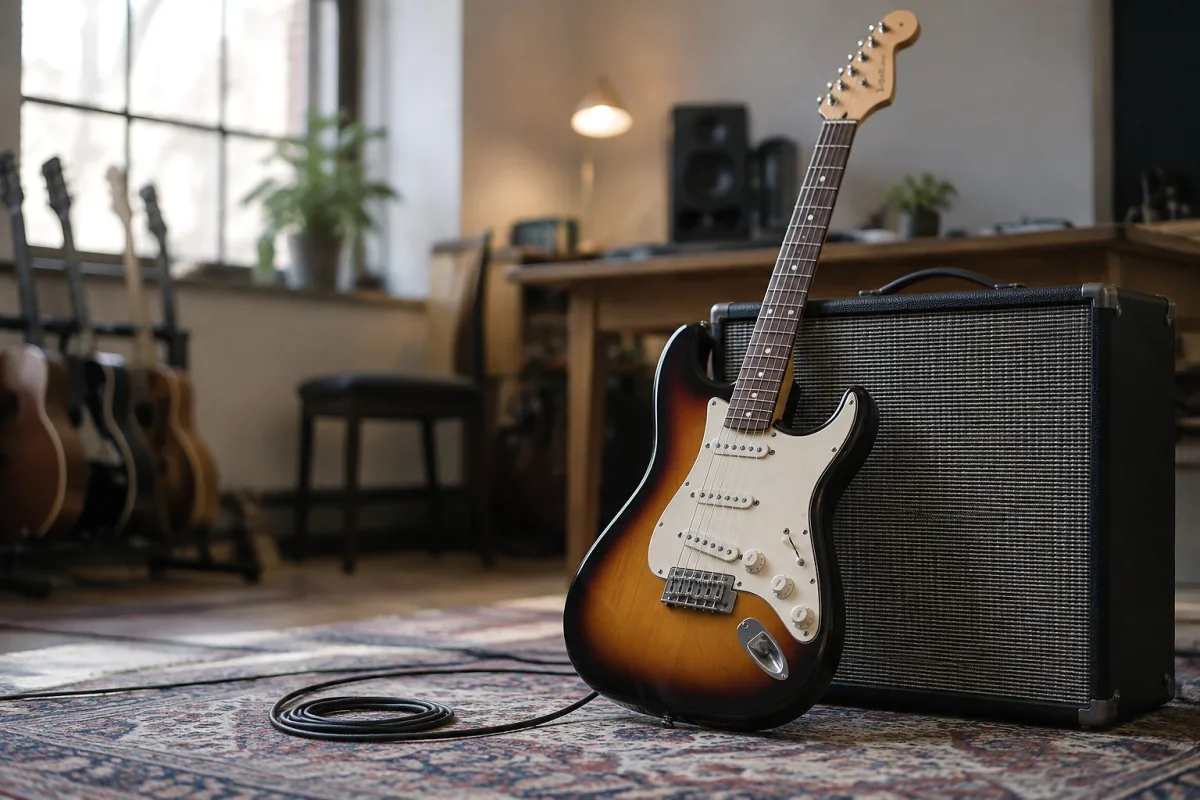
Starting electric guitar can feel overwhelming. Choosing your first electric guitar, deciding what amplifier to buy, learning how to hold the pick—it's a lot at once. This beginner's guide focuses on the essentials: what to look for in an electric guitar as a first instrument, how to get started without breaking the budget, and what setup and practice habits will help you progress fastest.
Choosing Your First Electric Guitar
Your first electric guitar doesn't need to be expensive or fancy. It needs to be playable and comfortable in your hands. A Squier Stratocaster at £150–£250 works fine for learning. A Fender Player at £400–£500 offers better long-term value. Either will serve you through your first year of playing. What matters far more than the brand is getting the instrument properly set up and committing to regular practice.
Body Shape and Comfort
Test different body shapes and see what feels natural. A Stratocaster's contoured body is genuinely comfortable—the curves fit against your body properly. A Telecaster's slab body is straightforward but less ergonomic. An offset guitar like a Jazzmaster or Jaguar looks cool but demands more setup knowledge from beginners. For your first electric guitar, choose comfort over cool. You'll play an uncomfortable guitar less, and progress matters more than appearance.
Neck Profile and Playability
Your first electric guitar's neck profile affects everything—how fast you can move your hand, how easily you can reach the strings, how naturally your fingers find the frets. Modern Fender neck profiles are thin and fast compared to vintage specs. A Modern C profile is great for beginners—relatively thin but not so thin it feels fragile. For your first electric guitar, play a few in a music shop and choose the neck that feels most natural in your hands. Don't overthink it; if it feels good, it's good.
Setting Up Your First Electric Guitar
After you buy your first electric guitar, invest £50–£80 in professional setup. Setup means adjusting neck relief, action height (how high the strings sit), intonation (whether fretted notes match the tuner) and pickup height. A proper setup on your first electric guitar transforms how it plays and sounds. Many beginners give up because their guitar doesn't play well—usually because it was never set up properly, not because it's a bad instrument.
Amplifier for Beginners
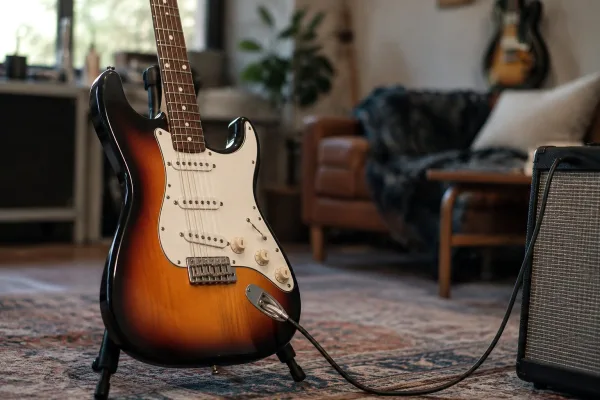
Your first electric guitar needs an amplifier, but you don't need an expensive one. A 10–20 watt solid-state amplifier at £100–£200 serves bedroom practice perfectly. Bigger doesn't mean better; a small amp at bedroom volumes sounds more focused than an oversized amp running at whisper levels. As you progress, you can upgrade to better equipment. Your first electric guitar and amp combination should prioritize playability over features.
Learning the Fundamentals
Your first electric guitar journey starts with fundamentals: holding the pick correctly, fretting notes without muting neighboring strings, developing finger strength. These basics matter more than playing full songs quickly. Spend your first month working on single-note exercises—scales, pentatonic patterns, simple melodies. This foundation makes everything that comes later easier. Most beginners struggle later because they rushed past fundamentals on their first electric guitar.
String Gauge and Playability
Your first electric guitar probably came with standard gauge strings (0.046–0.010). These are fine for learning. Lighter gauge (0.042–0.009) makes bending easier; heavier gauge (0.052–0.011) feels firmer. Don't overthink it yet. Your first electric guitar will teach you what you prefer as you develop your playing style. Standard gauge works for everything from blues to rock to metal.
Tuning and Maintenance
Your first electric guitar will go out of tune—all guitars do. A clip-on tuner at £10–£20 solves this problem instantly. On your first electric guitar, check tuning before every practice session. Once your instrument is properly set up, it should hold tuning reasonably well between sessions. Clean the fingerboard every few weeks on your first electric guitar by wiping it with a soft cloth after practice—sweat and dirt accumulate over time.
Practice Habits That Actually Work
Fifteen minutes of consistent daily practice on your first electric guitar beats four hours on Saturday. Set a specific time each day to practice. Start with exercises or scales rather than trying to play whole songs. Record yourself occasionally to hear progress. Join an online beginner guitar community—accountability helps. Your first electric guitar journey is a marathon, not a sprint, and consistency trumps intensity every time.
Conclusion
Your first electric guitar doesn't need to be expensive or feature-loaded. A playable instrument, proper setup, a small amplifier and consistent practice are everything you need. The best first electric guitar is one you'll play regularly. Buy something comfortable, get it set up, and commit to practice. Everything else follows naturally once you start.





Comments