


Electric Guitar to Headphones article
Electric Guitar To Headphones for Beginners: A Complete Guide
Connecting an electric guitar to headphones is simpler than you think. This beginner-friendly guide walks you through the easiest path from guitar to headphones, with budget options and step-by-step setup instructions so you can start playing tonight.
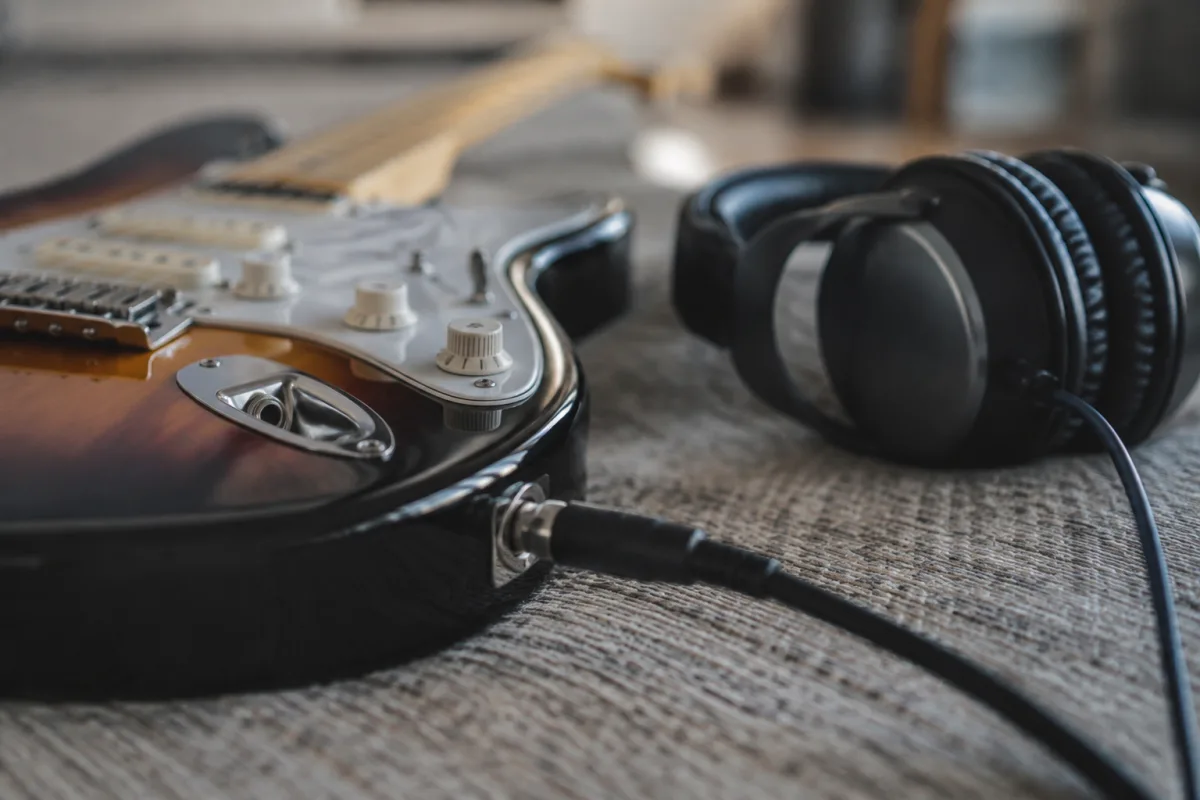
Your First Steps with Electric Guitar and Headphones
If you've just bought an electric guitar and you're nervous about plugging it into an amplifier—maybe you live in a flat, maybe you worry about annoying your family, maybe you just want to practise quietly—you're in exactly the right place. Connecting an electric guitar to headphones is one of the best ways to start playing without stress, and it's easier than you might think. This guide walks you through the simplest path from guitar to headphones, so you can start playing tonight without frustration or confusion.
Understanding What You'll Need
To get sound from your electric guitar to headphones, you need three things: your guitar, a small interface device, and your headphones. The interface is the bit that often confuses beginners, so let's clear that up first. Your electric guitar produces a tiny electrical signal—far too quiet and the wrong format for headphones to understand. The interface's job is to amplify that signal and convert it into something headphones can play clearly.
The good news: you don't need expensive equipment to start. A simple, affordable interface designed for beginners works beautifully, and many come with free software that gives you amp sounds, effects, and recording capability built in.
The Easiest Setup for Complete Beginners
If you're just starting out, here's the absolute simplest approach: buy a beginner-level audio interface (around £60–£120), plug your electric guitar into it, plug your headphones into the interface, download the free software it comes with, and you're done. That's really all there is to it.
Look for interfaces that specifically mention "beginner friendly" or "starter pack" in the product description. Many come with everything you need: USB cable, software license, basic amp and effects, plus a straightforward manual. Brands like Focusrite, PreSonus, and Behringer all make excellent beginner interfaces that won't overwhelm you with options you don't need yet.
Avoid the urge to buy professional studio equipment. A beginner trying to use a £400 audio interface with a menu system designed for recording engineers will quickly get frustrated. Start simple, learn, and upgrade when you know what you actually need.
The Budget Path (Under £80)
If budget is tight, you can get started with an electric guitar to headphones connection for under £80. A basic USB audio interface from Behringer or a similar brand often costs £50–£70, and your headphones are probably sitting in a drawer already. Yes, cheap interfaces have limitations—lower sound quality, fewer effects, simpler software—but they work and they're a great way to figure out if this hobby sticks before spending serious money.
The key insight: a £60 interface lets you play and learn just fine. You're not paying for studio-quality sound; you're paying for the tool to hear yourself through headphones. That's worth £60. Upgrade to something nicer once you've been playing for a few months and know what you want.
Connection Steps (Slower, Explained)
Let's walk through connecting your electric guitar to headphones step by step, because the first time can feel confusing.
First, take your guitar cable (the one that comes with most guitars, or a cheap one from any music shop). Plug one end into the output jack on your electric guitar body. This is usually on the bottom of the guitar or on the side near the tuning pegs.
Take the other end of the cable and plug it into the "input" port on your audio interface. This port is usually labelled "In 1" or "Guitar In" or sometimes just has a guitar symbol. Don't worry about breaking anything—these connectors are meant to be plugged and unplugged hundreds of times.
Now grab a USB cable (usually included with your interface). Plug one end into the interface's USB port and the other end into your computer or laptop. The interface should light up (usually an LED turns on), and your computer will recognise it.
Take your headphones and plug them into the headphone jack on the interface. This is usually on the front and labelled "Headphones" or "Out." Your interface should come with a manual that clearly shows you which jack is which—refer to it if you're unsure.
Download and install the software that came with your interface (usually available on the manufacturer's website). Open the software, hit "play" or "monitor" or "input listening" (naming varies), and you should hear your guitar through the headphones when you strum. If you don't, check that your interface is selected as the audio input in the software settings.
Choosing Your Headphones Wisely
You can play through almost any headphones—phone earbuds, gaming headsets, whatever you have. But some headphones are genuinely better for this purpose. Look for headphones with a reasonably flat frequency response (this means they won't add too much bass or treble that would mislead your ears). Studio headphones or "reference" headphones are designed for this and aren't expensive—£40–£80 gets you good ones.
Comfort matters too. You'll spend hours wearing these headphones, so they shouldn't pinch or fall off. Closed-back headphones (where sound doesn't escape) are better than open-back if you're practising in a quiet space, because open-back headphones leak sound into the room around you.
Budget earbuds work fine for starting out, but if you're planning to practise seriously, spending £50 on decent headphones is worth every penny. Your ears will thank you, and you'll hear yourself play more accurately.
Getting Amp Sounds and Effects
One of the fun bits: the software that comes with beginner interfaces usually includes amp simulations and effects (reverb, delay, distortion, etc.). These let you practise with different amp tones without owning an actual amplifier, and many are surprisingly good.
Don't overthink the effects at first. Just load up a simple amp tone (usually a "clean" setting to start) and play. Once you're comfortable, experiment with a bit of reverb or a simple effect to make practise more interesting. Effects should be fun, not confusing—if a setting bewilders you, just ignore it and move on.
Some interfaces also include recording software, which lets you record yourself and play it back. This is incredibly useful for spotting mistakes you didn't notice while playing, and it's motivating to hear your own progress over time.
Common Beginner Mistakes to Avoid
The biggest mistake beginners make is buying a used or damaged guitar cable. A dodgy cable introduces crackling, intermittent sound, or complete dropouts while you're playing, and it makes the whole experience frustrating. Buy a new, cheap guitar cable (£5–£10) and avoid this headache entirely. It's not worth fighting with an old cable that might be failing.
Another common error: plugging the guitar cable into the headphone jack instead of the guitar input jack. It won't break anything, but you'll get no sound and assume something is wrong. Always double-check the cable is in the "In" jack, not "Out" or "Headphones."
New players often turn the interface's input level all the way up, thinking it makes the sound louder. It doesn't—it just makes the signal so strong that the software distorts, even if you didn't want distortion. Start with the input level at about 50%, play, and adjust upward only if the signal is too quiet.
Finally, don't expect your headphones to sound like a real amplifier at first. Headphones deliver sound directly into your ears, which feels different from sound coming from a speaker in front of you. After a few weeks of practising through headphones, your brain adjusts and it starts to feel normal. Stick with it.
What Interface Should You Buy?
If you're a complete beginner and want the simplest path, look at the Focusrite Scarlett Solo (around £100). It's designed specifically for people new to this, the setup is genuinely straightforward, and the included software is more than adequate to start. The Behringer U-Phoria UMC202HD is an excellent budget alternative at around £60.
For slightly more money, the PreSonus AudioBox GO (around £100) is wireless and portable, which some beginners prefer because it feels less "fiddly" than being tethered to a computer.
Any of these will let you play electric guitar through headphones reliably. The exact brand matters less than finding one that's clearly marketed toward beginners and has good reviews from other guitar players (not audio engineers).
What You Should Know About Software
The software (sometimes called a DAW—digital audio workstation—or an amp simulator app) that comes with your interface is your gateway to amp tones and effects. At first, you don't need to understand how everything works. Load a basic clean amp tone, hit play, and practise. After a month or two, you'll be curious about reverb or distortion, and you can explore then.
Many interfaces now come with subscription access to software libraries—free for the first month, then a small monthly fee. You don't have to subscribe to anything; the basic software is often enough to learn on. Wait and subscribe later if you decide you want more amp models or effects.
Moving Beyond Headphones (Eventually)
After a few months of practising through headphones, you might want to plug into an actual amplifier to hear your guitar with real speaker sound. That's fine—your interface has an output that can connect to an amp's input, so everything you've learned carries over. But for now, headphones are the perfect place to start because they're quiet, they're cheap, and they let you focus on learning without worrying about neighbours or volume.
For more detailed information about connecting electric guitars to different audio systems, including setups beyond headphones, read our complete guide to electric guitar to headphones.
Conclusion
Connecting an electric guitar to headphones is genuinely simple once you take it step by step. Buy a beginner interface, plug in your guitar, add your headphones, download the software, and you're playing within an hour. Don't overthink it, don't buy expensive equipment you don't understand yet, and don't assume you need anything fancy. Start playing tonight, learn as you go, and upgrade when you know what you actually need. That's the beginner's path, and it works.


Comments