


Electric Guitar to Headphones Buying guide
Electric Guitar To Headphones: A Complete Buyer's Guide
Proper amplification transforms silent practice. This guide covers headphone amps, interfaces, and how to choose the right equipment for your needs.
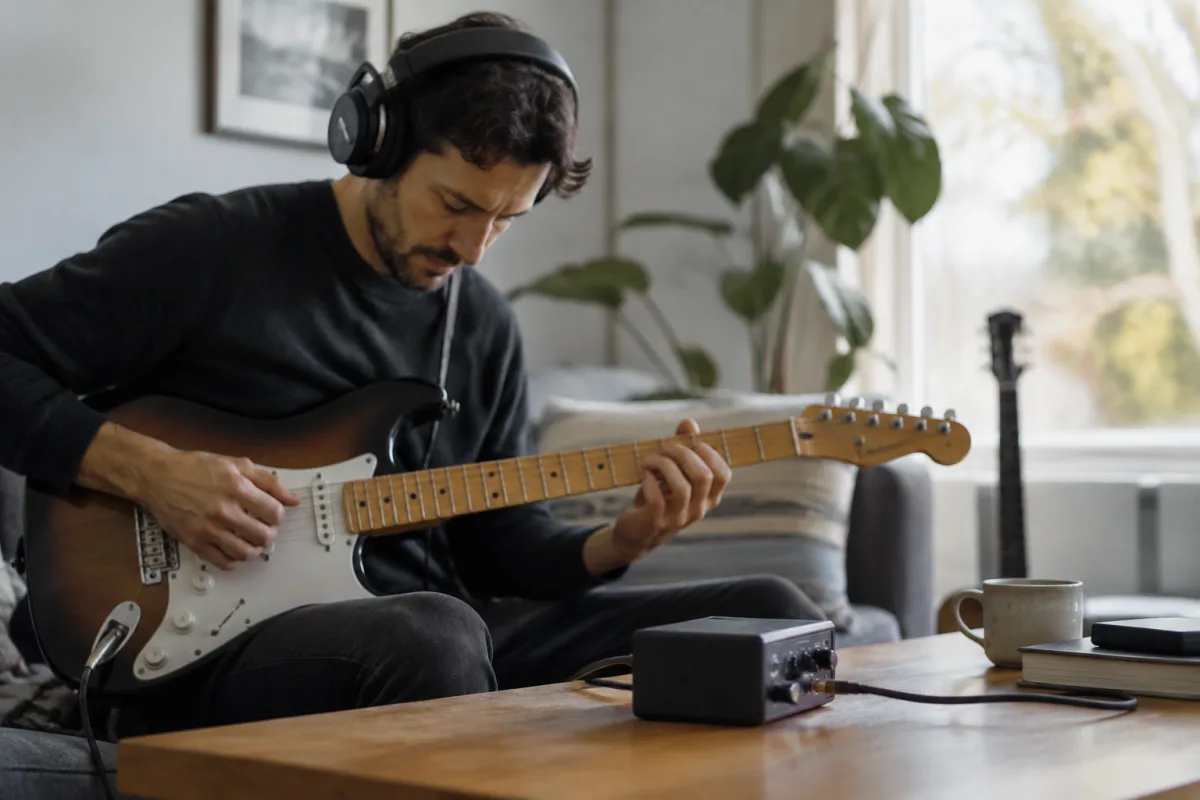
Connecting an electric guitar to headphones seems straightforward—plug in and play—but the reality is more nuanced. A direct connection without amplification typically produces weak, thin sound. Buying the right solution for electric guitar to headphones listening requires understanding your options, price tiers, and what audio quality to expect. This guide walks you through solutions from budget-friendly to professional-grade, helping you choose what matches your playing style and budget.
Why Direct Connection Doesn't Work Well
Plugging an electric guitar to headphones with a simple cable produces technically audible sound but inadequate tone. Electric guitar pickups produce high-impedance signals that headphones expect pre-amplified low-impedance signals. The impedance mismatch results in thin, weak tone lacking bass and presence. Additionally, headphones need a proper amplifier to drive them adequately. A passive connection wastes the potential of both guitar and headphones.
Professional studio recording solutions (audio interfaces) solve this problem but overkill for casual practice. The sweet spot for most players seeking electric guitar to headphones solutions lies between direct connection and full studio gear: affordable headphone amplifiers and multi-effects units with headphone outputs.
Headphone Amplifier Solutions for Electric Guitar
A dedicated headphone amp is the simplest path to good electric guitar to headphones tone. These pocket-sized devices sit between your guitar and headphones, amplifying the signal and shaping tone. Entry-level models (£30–£80) like the Vox Amplug or similar pass-through amps provide clean amplification, basic tone controls, and sufficient volume for practice.
Mid-range headphone amps (£80–£200) add effects, better tone-shaping, and louder output. A electric guitar to headphones experience through these devices rivals a small bedroom amplifier. You get clean channels, overdriven channels, reverb, delay, and volume adequate for extended practice sessions without disturbing others.
Premium headphone amps (£200+) feature extensive modelling (digital amplifier and effects simulation), expression pedal inputs, and wireless connectivity. These are professional-quality tools for serious practice, recording, and gigging via headphones. Unless you're a touring musician or recording engineer, premium is unnecessary.
Multi-Effects Units with Headphone Output
If you're considering electric guitar to headphones as one feature among many, multi-effects units (Boss GT-1, Zoom G1X Four, Helix) offer comprehensive solutions. These devices model amplifiers and effects, include headphone outputs, and cost £200–£2500+ depending on features. They're versatile but overkill if headphone listening is your only priority.
The advantage: a multi-effects unit with headphone output serves as your practice rig, recording interface, and live sound tool simultaneously. One purchase handles multiple needs. The disadvantage: learning curve and complexity for simple electric guitar to headphones practice.
Audio Interfaces for Recording and Monitoring
Audio interfaces (Focusrite Scarlett, PreSonus StudioLive) are designed for recording but double as electric guitar to headphones solutions. They amplify and digitise your guitar signal, then output to headphones with monitoring capability. Entry-level interfaces (£50–£150) work for practice; professional models (£150–£500+) add features like multiple inputs, built-in effects, and lower latency.
Interfaces excel if you're recording or playing along with backing tracks on a computer. For pure practice, a dedicated headphone amp is simpler and often cheaper. Consider an interface if your workflow already involves a computer.
Choosing the Right Solution: Buying Guide
Ask yourself: Am I practising quietly without disturbing others? If yes, a simple headphone amp (£50–£100) covers your needs. Am I recording or playing with computer-based backing tracks? An audio interface (£80–£200) suits you better. Am I wanting everything—practice, effects, recording, gigging—in one device? A multi-effects unit (£200+) justifies the investment.
Budget is also a factor. Electric guitar to headphones solutions span £30 (passive adapter, poor results) to £2500+ (professional modelling rig, overkill for most). Most players find satisfaction in the £80–£200 range: an entry-level headphone amp or budget audio interface delivering genuinely good tone without waste.
Key Specifications to Check
Impedance rating of the headphone amp or interface matters. Confirm it can drive your headphones adequately. Low-impedance headphones (16–32 ohm) need different amplification than high-impedance studio monitors (250+ ohm). Check compatibility before buying.
Headphone output level: measure in mW (milliwatts). Higher is better, allowing adequate volume without maxing out the amp. A electric guitar to headphones setup delivering 100mW+ is preferable to 30mW, which sounds thin when driven hard.
Tone controls or EQ options let you shape your sound when using headphones. A passive adapter offers none; basic headphone amps offer volume and perhaps one tone knob; better models offer full EQ. More control equals better tailoring to your taste and headphones.
Latency (delay between playing and hearing) matters if playing with backing tracks or recording. Dedicated headphone amps introduce negligible latency (imperceptible). Some audio interfaces and multi-effects units introduce 10–30ms latency, which can feel unnatural. Check specs if this concerns you.
Common Buying Mistakes to Avoid
Assuming a direct cable connection is sufficient is the most common error. Don't buy an electric guitar to headphones solution and skip amplification. The sound quality suffers badly. Budget at least £50 for proper amplification.
Overpaying for features you won't use wastes money. If you only need clean tone and headphone listening, a £50 headphone amp suffices. Buying a £500 multi-effects unit for this single purpose is poor value. Match your purchase to your actual needs, not future fantasies.
Ignoring headphone impedance causes problems. Cheap headphones (16 ohm) need different amplification than studio headphones (250+ ohm). A headphone amp adequate for consumer headphones may struggle with studio monitors. Confirm compatibility before committing.
Choosing based on appearance rather than sound quality is tempting but regrettable. An attractive headphone amp that sounds thin or harsh is worse than an ugly device that sounds superb. Always test or read professional reviews before buying if possible.
Testing Before Buying
If you're spending more than £100 on an electric guitar to headphones solution, insist on trying it first. Visit a music shop and test the device with your guitar and headphones. How does it sound? Is the tone responsive to your playing? Does the headphone amp feel intuitive to use? Buy based on your experience, not reviews or marketing.
For budget options (£30–£80), online reviews and return policies protect you. Many retailers offer 30-day returns; use this window to test the product at home with your own equipment. If it doesn't inspire you, return it without penalty.
Deeper Exploration of Headphone Connection Options
For comprehensive detail on all methods of connecting electric guitar to headphones, specifications, comparisons between products, and advanced techniques, read our complete guide to electric guitar headphone connection.
Final Thoughts on Your Headphone Setup
Investing in proper amplification for electric guitar to headphones listening transforms your practice experience from tolerable to genuinely enjoyable. Budget £80–£150 for an entry-level headphone amp or audio interface, verify it works with your headphones, and enjoy silent, high-quality practice at any hour. Your neighbours will thank you, and your playing will thank you more.


Comments