


Precision Bass roundup
The Best Precision Bass for the Money
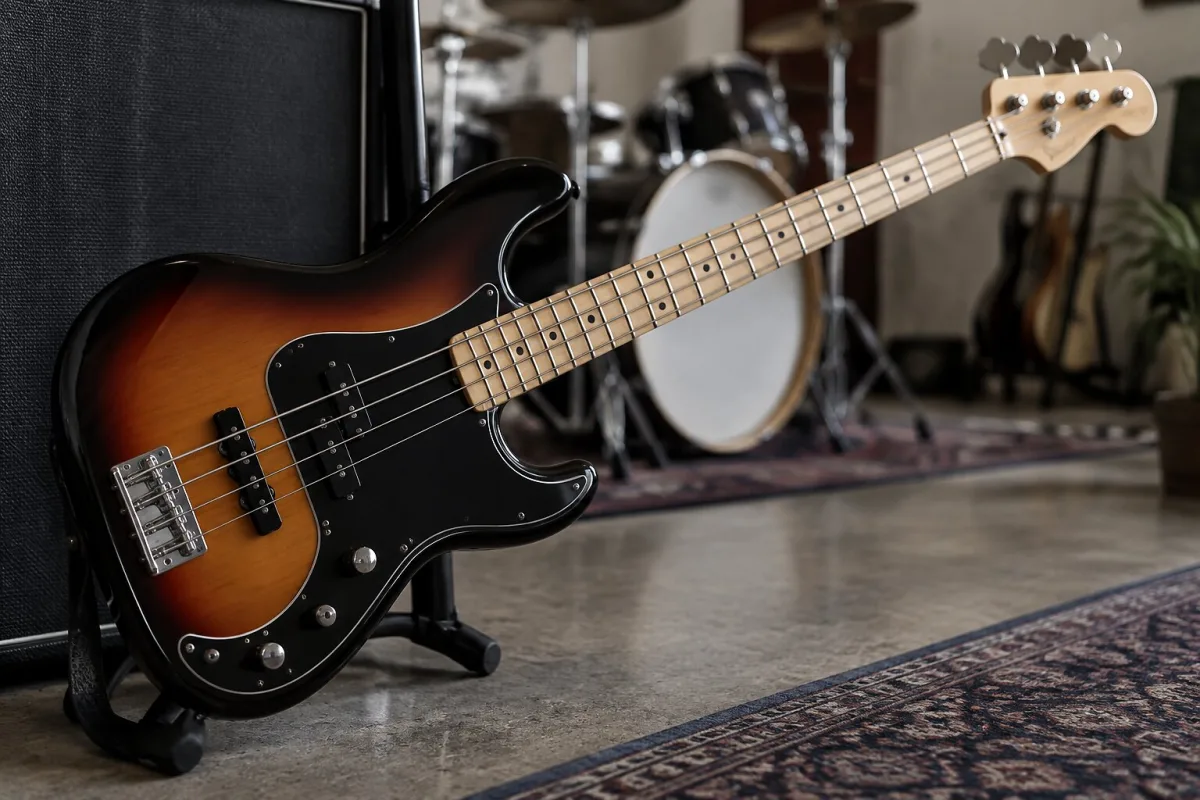
Finding the best Precision Bass for your money means cutting through the hype and focusing on what actually matters: tone that inspires you, playability that feels natural, and build quality that lasts. Whether you're stepping up from a cheaper entry model or building your first serious instrument, this guide walks you through the models that deliver professional results without forcing you to sell a kidney.
The Best Budget Precision Bass: Fender Player Precision Bass (Mexican-Made)
The Fender Player Precision Bass is the entry point for serious players. At around £450–500, it delivers the split-coil tone, 34-inch scale and build quality that made the P Bass legendary. You get solid ash body, a modern-profile maple neck, quality frets and functional hardware. The electronics are passive—simple volume and tone—so there's nothing to go wrong.
The Player series is Fender's Mexican line tuned for working musicians, not brand prestige. Yes, you could buy a cheaper unbranded P Bass for £200, but that instrument will make you work harder to sound professional. The Player Precision rewards good technique and responds to your playing. Many touring musicians carry Player basses as backups or main instruments because they deliver results without fuss.
The Best Mid-Range Option: Fender American Professional II Precision Bass
Jump to the American Professional II line (£1,000–1,100) and you're entering serious craftsmanship territory. The difference is real: premium hardware, finer fret work, more careful quality control, and a neck finish that feels buttery smooth. The pickup is the upgraded American Professional design—more articulate and responsive than the standard split-coil.
This is the bass that working studio and touring musicians buy when they want the best value for professional work. It's not the most expensive option on offer, but it delivers professional results that justify the investment. If you're recording your own music or playing paid gigs regularly, this tier makes financial sense.
The Best Vintage Character: Fender American Original '60s Precision Bass
If you want that vintage Motown P Bass vibe—the tone from the recordings you grew up loving—the American Original '60s model hits the sweet spot. It features a period-correct body shape, vintage-style hardware, and a neck profile that feels like genuine 1960s P Bass ergonomics. At around £1,200–1,300, it costs more than the Professional II, but you're paying for authentic vintage character.
This bass sounds slightly different from modern basses: a touch rounder, a touch warmer. Many players and engineers prefer this sound for soul, funk and classic rock recordings. If you've heard that tone on decades of hit records and want to own it yourself, the Original '60s is the way there without paying true vintage market prices.
The Best Value for Versatility: Fender Player Series PJ Bass
Want the P Bass tone but occasionally need extra brightness and flexibility? The Fender Player PJ combines a Precision-style split-coil pickup with a Jazz Bass bridge pickup. This adds tonal options: blend toward the P for classic tone, blend toward the J for brightness, or use both for a hybrid sound.
The PJ format costs around £500–550, only slightly more than a pure P Bass, and opens doors if you play multiple genres. Metal bassists love this setup: run pure P tone for thickness, add the J pickup for cutting attack. Session players appreciate having more tonal flexibility without carrying two basses.
The Best Short-Scale Option: Fender Player Precision Bass (Short Scale)
Small hands? Playing standing for long periods and tired of reaching? The short-scale Precision Bass (30 inches) shaves 4 inches off the scale length, making every fret more accessible and reducing string tension. At around £500, it costs as much as the long-scale Player, but solves physical accessibility challenges.
The trade-off: short-scale basses produce a slightly rounder, less articulate fundamental. In a mix, you might need to roll in slightly more tone control or EQ to match the clarity of a long-scale bass. For fingerstyle playing and comfort, though, short-scale is a genuine solution if long-scale feels unplayable.
The Best Active Option: Fender American Professional II Precision Bass (Active Preamp)
Some Professional II models include a preamp with active tone controls and a battery box. At around £1,100–1,200, it costs a touch more, but adds three-band EQ and a boost circuit. If you record with heavy bass lines that need precise shaping, active EQ saves moves in the mix.
The drawback: batteries need replacing, active circuits can pick up noise in some rigs, and you've added complexity. Many professionals still prefer passive simplicity. Test both before investing; you might find passive tone control is all you need.
The Best Vintage Bargain: Used American-Made P Bass (1990s–2000s)
Hunt through classified ads and reverb listings for a used American-made Precision Bass from the 1990s or 2000s. Many of these were built to standards as high as modern instruments and can be found for £600–900—less than a brand-new American Professional II.
You're taking a small risk: the instrument might need a fresh setup, possibly new frets if they're heavily worn. But a good used American bass might reward you with better build quality and character than a new budget model at similar price. Verify the neck is straight, the hardware isn't corroded, and the frets are playable before committing. A deal is only good if the bass actually plays.
What You Should Never Cheap Out On
The pickup design matters—make sure it's a genuine split-coil, not a simplified knockoff. The fret work matters—buzzing frets and uneven action will frustrate you constantly. The hardware matters—tuning machines should be smooth, bridges should be stable. Strings matter—cheap strings sound cheap, feel rough and go dead quickly.
You can save money on body finish (satin instead of gloss), on hardware bling (simple bridges work better than ornate ones), and on brand prestige. But the fundamentals—pickup, frets, tuning stability—are where quality counts.
Making Your Choice: A Practical Decision Tree
First: set a realistic budget. Second: decide whether you want long-scale or short-scale. Third: choose between passive or active electronics. Fourth: prioritize whether you want new reliability or used value. Fifth: play several basses in your price range and trust your ears.
Don't spend more than you can afford, and don't hesitate to spend enough to get quality that's going to inspire you. The bass you afford to keep is the bass worth buying.
Conclusion
The best Precision Bass for the money depends on your budget and priorities. At £450–500, the Player series delivers professional results. At £1,000–1,100, American Professional II basses offer genuine craftsmanship and studio-grade tone. At used prices, American-made basses from two decades ago might offer better value than brand-new budget models. Whatever you choose, focus on playability, tone and build quality rather than chasing the latest model or highest price. You'll be holding this bass for years; make sure it deserves to be there.




Comments