


Stereo Direct Box article
The Complete Guide to Stereo Direct Box
A stereo direct box captures clean bass signal and preserves stereo effects. Essential for studio recording, live sound and broadcast when using stereo bass rigs or effects.
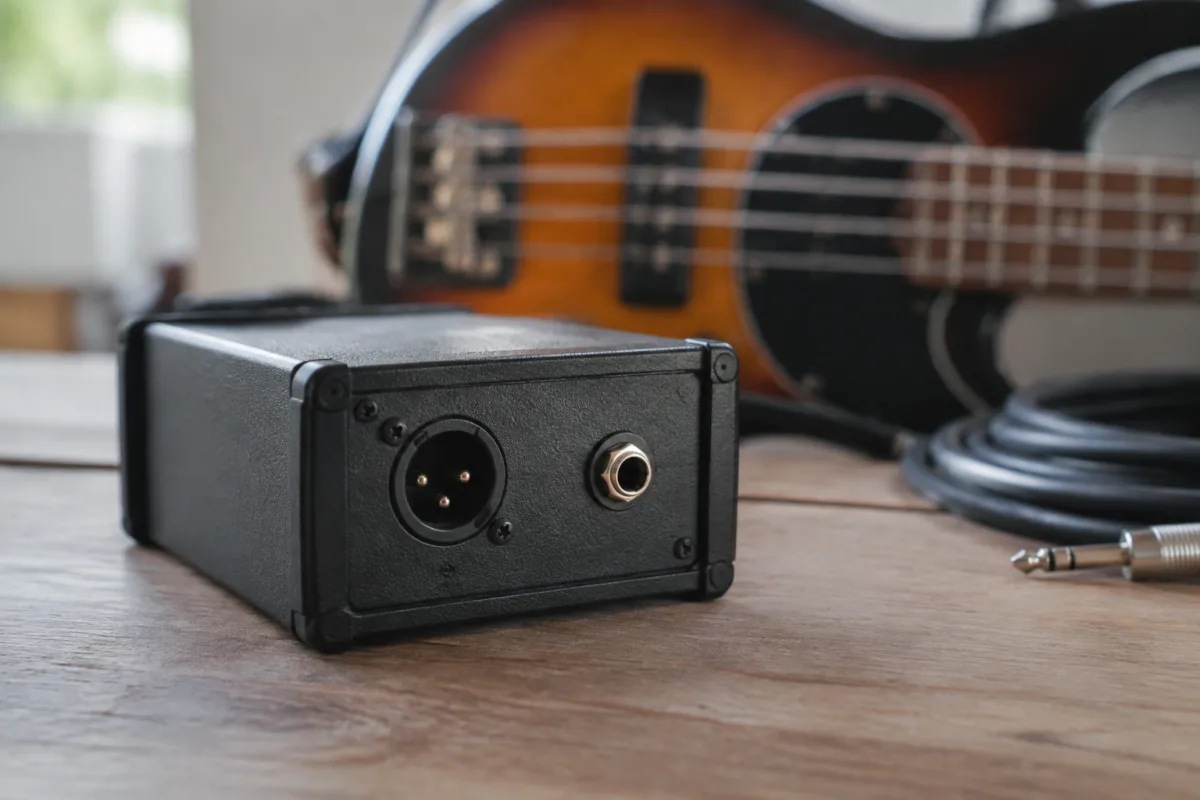
A stereo direct box bridges the gap between your bass guitar and the mixing console, capturing a clean, isolated signal without colouring the tone with amplifier colour. Whether you're recording bass in a studio or miking the amp on stage, understanding how this device works is essential for getting the best bass sound.
What Is a Stereo Direct Box?
This device takes balanced or unbalanced audio signals — typically from a bass guitar amplifier's output — and converts them to a microphone-level balanced signal (XLR) that can be patched directly into a mixing console or audio interface. Unlike a single-channel (mono) direct box, this stereo model preserves the full stereo image from effects, amp rigs or synthesizer outputs.
Such devices are common in professional bass recording where engineers want both a direct bass signal (for pristine tone) and an amp microphone (for character), or when capturing stereo effects from a bass rig. This equipment lets you send left and right channels independently to separate console inputs, keeping the stereo image intact.
How a Stereo Direct Box Works
The unit contains passive transformers and/or active electronics that accomplish three key tasks. First, it converts high-impedance instrument signals (typically 100kΩ and above from an amp output or line-level gear) to low-impedance XLR-balanced signals (around 50Ω) suitable for long cable runs without high-frequency loss. Second, it isolates the input from the output, breaking ground loops that cause hum and buzz. Third, it maintains separation between left and right channels so both signals reach the console independently.
Most units include a three-position input selector (high-impedance instrument, high-impedance line-level, or low-impedance microphone), a ground-lift switch to eliminate hum, and sometimes a pad switch that reduces signal level when dealing with very hot outputs. Professional models also offer phantom power bypass, so the microphone current doesn't interfere with your bass signal.
When to Use This Equipment
Studio Recording
In a recording studio, many producers take a direct feed from the bass amp whilst simultaneously miking the speaker cabinet. The direct feed goes to one channel, the mic to another; the engineer then blends them during mixing. This equipment lets you capture a full stereo mix (if your amp has stereo effects or a stereo output stage) and send each side separately to the console. This gives you maximum control and clarity in the final mix.
Live Sound
On stage, this device sends a bass signal to the front-of-house mixing console whilst the bassist continues playing through their own monitor rig. This way the audience and the mixing engineer hear a clean, consistent bass tone regardless of stage acoustics or monitor speaker placement. Such equipment is useful when the bassist uses stereo effects or runs dual amplifiers.
Broadcasting & Live Streaming
When broadcasting a live band or streaming a performance, capturing the bass via this equipment ensures a professional, isolated bass track that won't be affected by stage hum, acoustic reflections or microphone proximity. This stereo capability preserves any width or effects processing the bassist has dialled in.
Key Features to Look For
| Feature | Why It Matters |
|---|---|
| Transformer-Coupled Input | Passive isolation without active circuitry; quieter and more reliable in tour situations |
| Ground-Lift Switch | Eliminates hum by breaking the ground loop between amp and console |
| Pad Switch (−15dB to −20dB) | Reduces signal level cleanly without distortion when dealing with very hot amp outputs |
| XLR Balanced Outputs | Long cable runs (50m+) without high-frequency loss or noise |
| Stereo L/R Separation | Keeps left and right channels independent; essential for stereo bass rigs or effects |
| Rugged Metal Housing | Withstands touring and daily use; reliable night after night |
Stereo vs. Mono Models
A mono direct box has a single input and output; all signal information is routed through one channel. The stereo version has two inputs and two outputs (left and right), preserving stereo width. If your bass rig is mono or you're happy with the bass reaching the console in mono, a mono unit is simpler and often cheaper. But if you run stereo effects, a stereo amp rig, or a synthesizer bass with stereo processing, the stereo model keeps both channels separate and lets the engineer control each side independently.
Top Models & Manufacturers
Reputable manufacturers include Radial, Jensen, ART, Behringer and Focusrite. The Radial StereoTwo is industry-standard for touring and studio use, offering transformer-isolated inputs, a ground-lift switch, and a phase reverse button for troubleshooting phase issues between the direct feed and the microphone. The Jensen Stereo is passive, transformer-based and beloved in professional studios for its transparent, clean sound. The ART STX offers active circuitry and a compact footprint for tight stage setups.
For budget-conscious users, Behringer makes affordable models that handle the job reliably, though without the premium build quality of higher-end units. Whichever you choose, ensure it matches your impedance requirements (typically high-impedance instrument inputs) and has switchable ground-lift and pad functions to handle different amp outputs and cable environments.
Installation Tips
Connect your bass amplifier's line output (never the speaker output — that carries speaker-level current and will damage the unit) to the input. Connect the XLR outputs to your mixing console's mic inputs or audio interface. Use proper shielded XLR cables and keep them away from AC power cables to minimise interference. If you hear hum, toggle the ground-lift switch — nine times out of ten, that solves it immediately. If working with both a direct feed and a microphone on the amp cabinet, phase-align them in the console so they don't cancel each other out in the mix.
Conclusion
This equipment is an essential piece of pro audio for anyone recording bass or running a stereo bass rig on stage. It captures a clean, isolated signal free from amp colouration, isolates ground loops, and in stereo form preserves the full width of your effects and rig setup. Whether in the studio or on tour, a quality unit is a one-time investment that will serve you for years and deliver professional results every time.


Comments