


Stereo Direct Box article
Stereo Direct Box for Beginners: A Complete Guide
Confused by stereo direct boxes? This beginner-friendly guide explains exactly what they do, why sound engineers use them, and when you might need one for live sound or recording.
Understanding a Stereo Direct Box: A Beginner's Introduction
If you've heard musicians or sound engineers mention a "stereo direct box" and had no idea what they were talking about, you're not alone. A stereo direct box sounds technical and complicated, but the concept is genuinely simple. This guide walks you through what a stereo direct box does, why it matters, and when you might need one. By the end, you'll understand this piece of audio equipment and feel confident knowing whether it's relevant to your situation.
What Does a Stereo Direct Box Actually Do?
A stereo direct box is a small electronic device that does one job: it converts an audio signal from one format to another. Specifically, it takes a high-level stereo audio signal (like the output from a keyboard or an audio mixer) and converts it into a low-level microphone signal that a mixing console can understand.
That sounds abstract, so here's the practical version: if you're plugging audio equipment (like a keyboard or DJ mixer) into a professional mixing console at a venue, the console expects to receive microphone-level signals. A stereo direct box sits between your equipment and the console and does the translation, so everything works smoothly.
Why You Might Need a Stereo Direct Box
You need a stereo direct box if you're a keyboard player, DJ, or electronic musician who plays through professional sound systems. If you're just plugging a guitar into an amplifier in your bedroom, you never need a stereo direct box. If you're playing in a venue with a sound engineer and a professional mixing console, and you're using electronic equipment (synthesizers, drum machines, DJ equipment), a stereo direct box is likely part of the setup.
Home recording studios sometimes use stereo direct boxes too, especially when recording keyboards or other stereo electronic instruments directly into the mixing desk. If you're running a podcast or streaming live music, and you need to feed audio from multiple sources to a mixing console, stereo direct boxes simplify that process.
How Does a Stereo Direct Box Work?
Inside a stereo direct box is a transformer (a passive electronic component) that steps down the voltage of an audio signal. When audio travels from an electronic instrument, it comes out at a high level. When it reaches a microphone preamp on a mixing console, that preamp expects a much lower level. The transformer in the stereo direct box reduces the signal to the right level for the console to process correctly.
Don't worry if transformers sound scary. All you need to know is that a stereo direct box takes your equipment's audio output and adjusts it so a professional sound system understands it. That's the whole job, and it's genuinely simple.
Stereo Direct Box vs. Mono Direct Box
A stereo direct box handles two audio channels (left and right), preserving the stereo image of your music. A mono direct box handles only one channel. If you're running a synthesizer, sampler, or keyboard that outputs stereo (which most modern electronic instruments do), you want a stereo direct box to preserve that full stereo sound.
If your equipment outputs only mono (single channel), a mono direct box is adequate and usually cheaper. When in doubt, get a stereo direct box—it works with mono equipment too, so it's the safer choice.
Connections and Cable Patterns
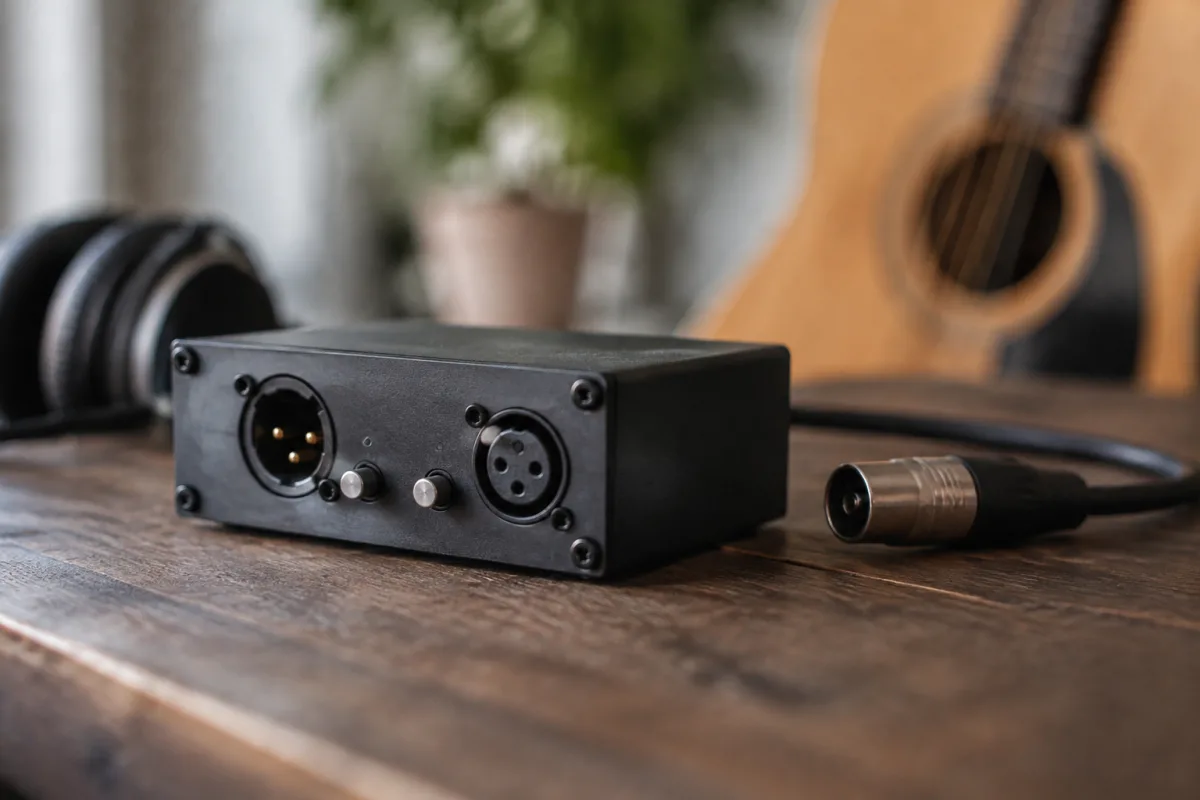
A typical stereo direct box has audio inputs on one end (usually RCA or XLR) coming from your keyboard or mixer, and XLR outputs on the other end going to the mixing console. Some stereo direct boxes also have a ground lift switch (a small toggle that can reduce hum) and a pad button (which reduces level further if needed).
Don't overthink these features if you're a beginner. The basic function is the same: signal goes in, gets converted, and comes out ready for the mixer. Ground lift and pad are helpful tools that sound engineers adjust if the signal doesn't sound quite right, but you don't need to understand them to use a stereo direct box.
Passive vs. Active Stereo Direct Boxes
A passive stereo direct box uses only a transformer—no batteries or power required. An active stereo direct box uses amplifier circuitry and requires batteries or power from a USB or XLR cable. Both work well. Passive boxes are simpler and never run out of battery. Active boxes offer better impedance matching in some situations and extra features like high-pass filters.
For a beginner, a passive stereo direct box is perfectly adequate and usually cheaper. Start with passive, and if you encounter specific issues (like unwanted hum or weird frequency response), ask an experienced sound engineer whether an active box would help.
When Do Beginners Actually Need a Stereo Direct Box?
If you're just learning music and practising at home, you don't need a stereo direct box. If you're playing small local gigs at venues with proper sound systems, the sound engineer might provide a stereo direct box or tell you to bring one. If you're buying your first mixing console for home recording, you might want one on hand for future projects.
The reality is that many musicians never own a stereo direct box personally. They're provided by venues, borrowed from friends, or included in the equipment rental when necessary. So don't feel rushed to buy one immediately. If you need one, someone will tell you, or you'll figure out quickly once you start playing through professional sound systems.
Setting Up a Stereo Direct Box Correctly
Using a stereo direct box is straightforward. Connect the output of your electronic instrument (keyboard, mixer, DJ equipment) to the input of the stereo direct box. Connect the XLR outputs of the direct box to the mixing console's microphone inputs. Turn everything on. The audio signal flows through the direct box to the mixer.
If you hear hum or buzz, flip the ground lift switch. If the signal is too hot or distorts, press the pad button to reduce it. These are the only adjustments most beginners ever need. Everything else is handled by the sound engineer at a venue.
Cost and Common Brands
A basic passive stereo direct box costs £30–£80. Professional active stereo direct boxes range from £100–£300. For a beginner who rarely needs one, renting or borrowing is smarter than buying. When you start gigging regularly and know you'll need one permanently, then invest in a quality stereo direct box.
Common manufacturers include Behringer (budget), dbx (mid-range), and DI-Box (professional). Any of these will work reliably. Don't assume you need the most expensive option—a Behringer stereo direct box works just as well as a professional model for most situations.
Common Beginner Mistakes
The biggest mistake is plugging a stereo direct box backward—inputs to the mixer, outputs to your equipment. This doesn't break anything, but no audio reaches the mixer. Check your cable direction before assuming the stereo direct box is broken.
Another error: using the wrong kind of direct box. Plugging a microphone into a stereo direct box designed for line level (high-level signals) doesn't work well—the signal is too weak and sounds terrible. Match your equipment to the right kind of direct box, or ask an experienced sound engineer for guidance.
Finally, don't assume you need a stereo direct box until you actually encounter a situation where one is required. Many beginners buy one and never use it. Rent or borrow until you know you need one permanently.
Understanding Your Sound System
A stereo direct box is one small part of a larger sound system. Understanding when and why you need one comes from understanding how sound systems work—how audio flows from instruments to mixers to amplifiers to speakers. As you gain experience with live sound and recording, stereo direct boxes will make more sense, and you'll know instinctively when you need one.
For more detailed information about stereo direct boxes, how they compare to other audio equipment, and advanced setup scenarios, read our complete guide to stereo direct boxes.
Conclusion
A stereo direct box is a simple device that converts audio signals so they work with professional mixing consoles. You might never need one, or you might use one regularly once you start gigging. When the time comes, you'll understand what it does and why. For now, know that stereo direct boxes exist, they're inexpensive, and they solve a specific audio problem. Don't buy one until you know you need it—and when that day comes, you'll be prepared and confident.


Comments