


Stereo Direct Box Buying guide
Stereo Direct Box: A Complete Buyer's Guide
Choosing the right stereo direct box requires understanding impedance matching, transformer quality, and feature sets for your professional audio needs.
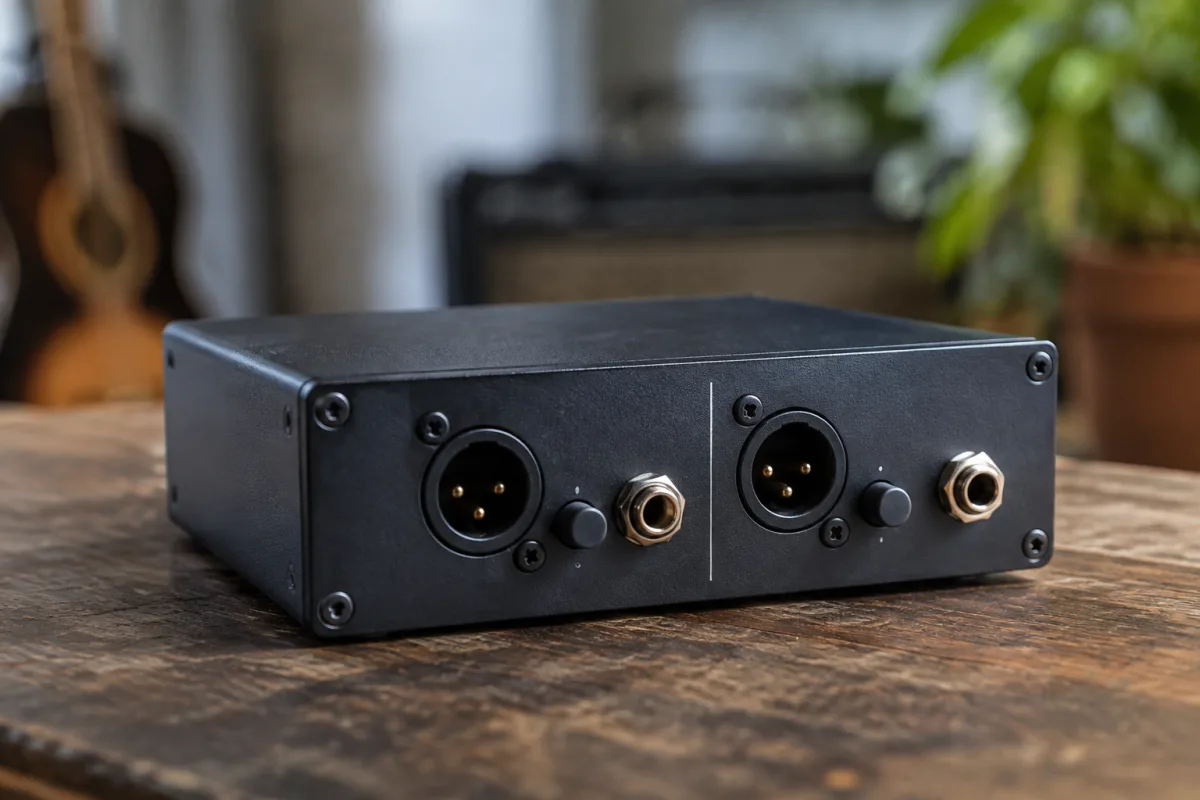
A stereo direct box is an essential tool for live sound engineers and recording professionals managing stereo signals from keyboards, electronic drums, and synthesizers. Choosing the right stereo direct box requires understanding impedance matching, transformer quality, and feature sets. This comprehensive buying guide helps you select a stereo direct box that delivers clean signal conversion and professional reliability for your setup.
What a Stereo Direct Box Does
A stereo direct box converts unbalanced, high-impedance signals from electronic instruments into balanced, low-impedance XLR signals suitable for mixing consoles and recording interfaces. Unlike mono direct boxes, a stereo direct box handles two channels simultaneously—critical for instruments that generate left and right outputs. This dual-channel capability makes stereo direct box units indispensable for professional keyboard and electronic music rigs.
Understanding Transformer vs Transformerless Designs
The most significant distinction between stereo direct box models is transformer implementation. Transformer-based stereo direct box units use passive components to balance audio, adding subtle harmonic character prized by recording engineers. Transformerless designs employ active circuitry for cleaner, more transparent conversion.
For live sound, either stereo direct box design works excellently. For recording, transformer-based stereo direct box units impart subtle warmth; transformerless stereo direct box models prioritise clinical accuracy. Your choice depends on desired sonic character and application.
Key Specifications for Stereo Direct Box Selection
When evaluating stereo direct box options, compare these essential specifications:
- Impedance matching: Quality stereo direct box units provide proper impedance transformation from 10kΩ input to 50Ω XLR output, ensuring clean signal delivery.
- Frequency response: Professional stereo direct box models maintain flat 20Hz-20kHz response, preserving full instrumental character.
- Maximum input level: Higher maximum input levels on stereo direct box models prevent distortion with hot signals. Look for +20dBu or higher.
- THD specifications: Lower Total Harmonic Distortion in stereo direct box units indicates cleaner signal conversion.
- Ground lift switch: Ground hum issues disappear with quality ground lift controls on stereo direct box units.
Input/Output Options on Stereo Direct Boxes
Professional stereo direct box models offer multiple connectivity options. Standard configurations feature:
- Stereo 1/4-inch inputs: Accept instrument cables from keyboards and electronic instruments on your stereo direct box.
- Dual XLR outputs: Send balanced signals to console channels. Premium stereo direct box units include thru-outs returning unbalanced signal to amplifiers.
- Phantom power options: Some stereo direct box units include phantom power switches for microphone inputs on dual-function models.
- Phase reverse switches: Useful troubleshooting features on quality stereo direct box designs.
- Pad switches: Attenuate extremely hot signals on stereo direct box units without signal degradation.
Price Tiers for Stereo Direct Boxes
Stereo direct box pricing reflects build quality and feature complexity:
- Budget (under £50): Basic passive stereo direct box units with minimal features. Adequate for occasional use, but reliability concerns.
- Mid-range (£50-150): Quality stereo direct box models from established manufacturers. Reliable components and proper impedance matching. Recommended for most users.
- Premium (£150-300): Professional-grade stereo direct box units with transformer conditioning and extensive features. Built for touring and recording studios.
- Ultra-premium (£300+): Boutique stereo direct box designs with hand-tuned transformers and exotic components. For discerning professionals.
Passive vs Active Stereo Direct Boxes
Passive stereo direct box designs use transformer technology without amplification, offering simple reliability and subtle tonal colouration. Active stereo direct box units use integrated circuits for amplification, requiring phantom power or batteries. Active stereo direct box models offer lower output impedance and higher maximum input levels.
For most applications, quality passive stereo direct box units outperform budget active models. Professional active stereo direct box designs excel when handling extremely hot signals or extremely long cable runs.
Build Quality Considerations
Examine construction details when choosing stereo direct box equipment:
- Chassis materials: Solid metal construction on stereo direct box units resists electromagnetic interference better than plastic alternatives.
- Connector quality: Gold-plated connectors on quality stereo direct box models resist corrosion and ensure reliable connections.
- Internal wiring: Premium stereo direct box designs use quality cable and proper grounding schemes.
- Potentiometer quality: Smooth, reliable level controls distinguish professional stereo direct box units from budget alternatives.
Common Purchasing Mistakes with Stereo Direct Boxes
Avoid these errors when selecting stereo direct box equipment:
- Assuming cheaper stereo direct box units are adequate: Poor impedance matching creates signal loss and noise. Professional stereo direct box quality matters.
- Purchasing mono direct boxes instead of stereo: Stereo instruments require proper stereo direct box models. Using two mono units wastes space and creates hum vulnerability.
- Neglecting input level specifications: Ensure your stereo direct box handles your instrument's maximum output without distortion.
- Ignoring thru-out utility: Thru-outs on professional stereo direct box models let you send signals to amplifiers while feeding the console. Valuable feature.
- Overlooking phantom power needs: Confirm your mixer provides phantom power if your stereo direct box requires it.
Stereo Direct Box Applications
Different scenarios require different stereo direct box priorities. Live sound engineers benefit most from robust passive designs. Studio recording favours transformer-based stereo direct box units adding tonal character. Touring keyboard players need reliable stereo direct box equipment with excellent build quality.
For comprehensive comparisons and technical specifications, review our complete guide to stereo direct boxes.
Making Your Stereo Direct Box Investment
A quality stereo direct box is a modest investment with significant impact on your professional audio chain. By understanding transformer types, impedance specifications, feature sets, and build quality, you'll select stereo direct box equipment perfectly suited to your application. Professional reliability and clean signal conversion justify the investment in proper stereo direct box technology.


Comments