


Amp Sim Pedal article
The Complete Guide to Amp Sim Pedal
Amplifier simulator pedals have revolutionised guitar tone capture, allowing musicians to achieve authentic amplifier tones without heavy valve amps.
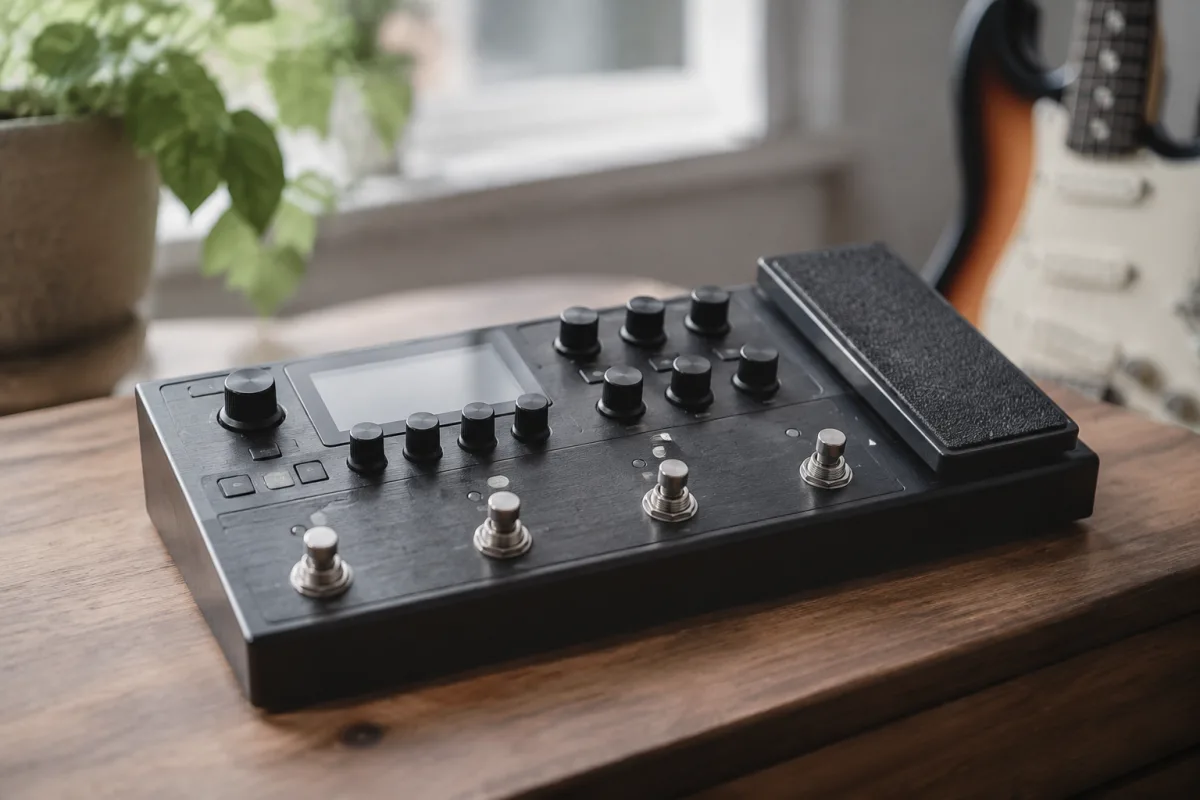
Amplifier simulator pedals have revolutionised guitar tone capture, allowing musicians to achieve authentic amplifier tones without hauling heavy valve amps to rehearsals or recording sessions. Modern amp simulators employ sophisticated digital modelling to recreate the sonic characteristics of legendary amplifiers, from vintage tube units to contemporary high-gain monsters. For bedroom players, touring musicians and studio engineers alike, this technology offers unprecedented convenience and flexibility.
What Is an Amp Simulator Pedal?
An amp simulator pedal is a digital effects unit that models the behaviour of guitar amplifiers, speaker cabinets and microphone placement. Rather than running your guitar through an actual amplifier, you plug into the simulator pedal, which then processes your signal through digital algorithms that emulate the amplifier's tone characteristics. The processed signal outputs to headphones, direct to a mixing console or to a powered speaker system. This approach captures the essence of amplifier tone in a portable, affordable package.
How Amp Simulator Pedals Work
| Processing Stage | Function | Tone Impact |
|---|---|---|
| Amp Modelling | Digital simulation of selected amplifier's circuitry | Defines core tone and breakup characteristics |
| Cabinet Simulation | Models speaker and cabinet resonances | Provides fullness and low-frequency response |
| Microphone Placement | Simulates different mic positions at amp speaker | Allows tone shaping without physical repositioning |
| Effects Emulation | Adds reverb, delay, compression and tone stacking | Enables complex tone creation and experimentation |
Advanced amp simulator pedals employ impulse response (IR) technology, capturing real amplifier tones by analysing how an actual amp responds to known input signals. This approach yields remarkably realistic tones, especially with convolution algorithms that can capture the complete acoustic behaviour of a specific amplifier and speaker combination in a specific room.
Types of Amp Simulator Pedals
Standalone amp simulator pedals range from simple single-model units to complex multi-effects processors. The Kemper Profiler allows custom profiling—creating digital models of your own specific amplifiers and cabinets. The Fractal Audio Axe-Fx III offers hundreds of amplifier and effect models with deep editing capabilities. Simpler options like the Boss ME-80 provide quality amp models in an affordable, compact format. Helix units from Line 6 balance features and affordability. Choosing between options depends on your specific needs, budget and feature requirements.
Advantages of Amp Simulator Pedals
Amp simulators offer profound practical advantages. They eliminate the need for expensive, heavy physical amplifiers—critical for touring musicians minimising stage weight. They enable silent practice and recording directly to a mixing console without disturbing neighbours or bandmates. They provide immediate access to hundreds of amplifier tones, facilitating quick tone changes during performances or recording sessions. They allow experimenting with amplifier combinations impossible to own physically. Professional studios employ amp simulator pedals for efficiency, consistency and flexibility.
Limitations to Consider
Despite their advantages, amp simulator pedals have limitations. Lack of physical amplifier feedback—the subtle vibrations and air movement from a real amp—affects playing feel for some musicians. The learning curve can overwhelm beginners; complex pedals contain overwhelming feature sets. Some players argue digital emulation cannot fully capture tube amplifier warmth and responsiveness, though modern technology has largely closed this gap. Solid-state amplifiers are generally easier to model convincingly than complex tube designs.
Amp Simulator Pedals for Different Contexts
Live performance usage requires different features than studio recording. Live players prioritise reliability, foot-accessible control and outputs to main mixing consoles. Studio engineers care more about tone accuracy and flexibility in adjusting parameters during take refinement. Bedroom players prioritise affordability and headphone compatibility. Professional touring musicians need tour-ready robustness and extensive tone libraries. Understanding your primary use case guides equipment selection.
Integration with Existing Setups
Amp simulator pedals integrate seamlessly into existing guitar rigs. You can place one before your pedalboard, running all effects through the simulation. Alternatively, position it at the end of your effects chain before output. You can use it with expression pedals for real-time tone morphing. Many amp simulator pedals include speaker outputs for driving powered monitors or traditional cabinets, allowing hybrid approaches combining digital and traditional tone sources.
Learning and Customisation
Mastering an amp simulator pedal requires patience and experimentation. Reading the manual, watching tutorial videos and studying preset settings from experienced users accelerate the learning curve. Most amp simulator pedals allow extensive customisation: adjusting gain staging, tweaking EQ, stacking effects and creating custom preset scenes. Taking time to build a personal library of refined presets yields superior results to relying solely on factory presets.
Conclusion
Amplifier simulator pedals represent one of modern music technology's most successful innovations. Whether you're a bedroom player seeking affordable tones, a recording engineer optimising studio workflow or a touring musician minimising stage complexity, amp simulator technology offers powerful advantages with minimal sonic compromise. Modern implementations deliver tone quality that satisfies even critical ears, making them indispensable tools in contemporary guitar music.


Comments