


Amp Sim Pedal article
Amp Sim Pedal for Beginners: A Complete Guide
Curious about amp sim pedals? Our beginner's guide explains what they are, how they work, and why they're essential for modern guitarists and bass players starting out.
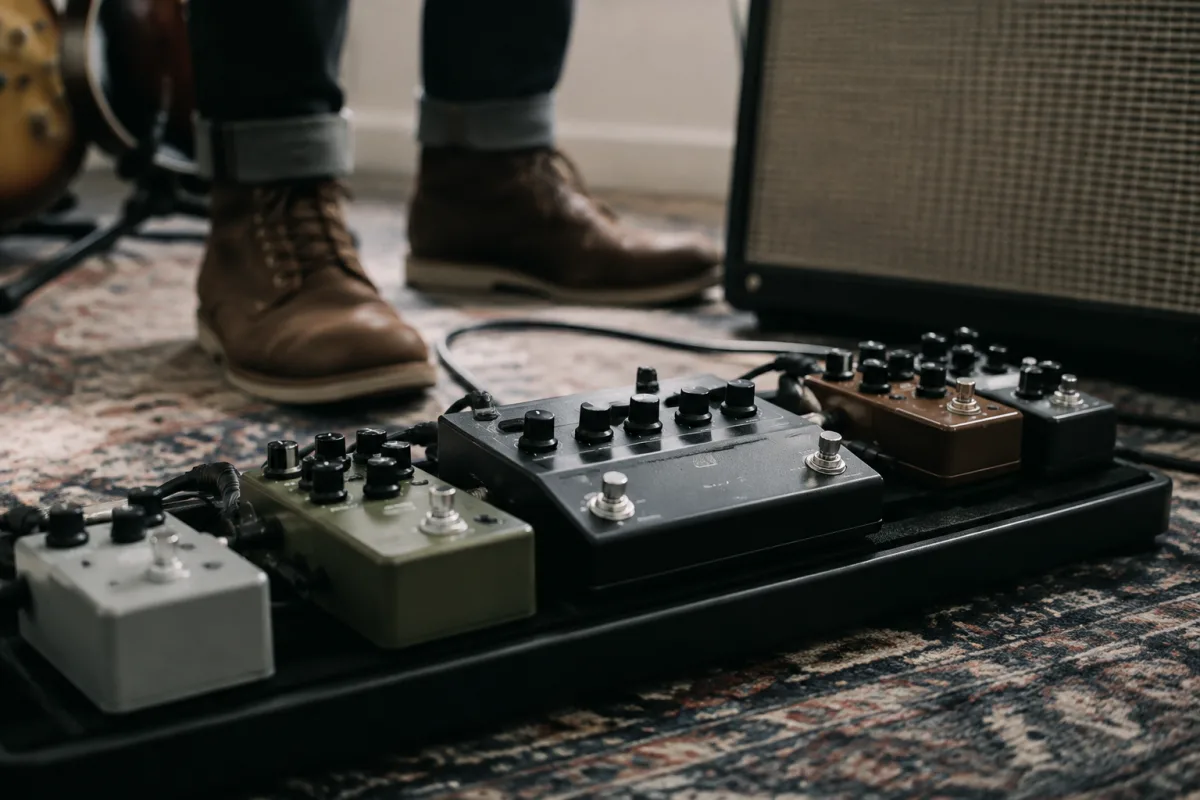
If you're new to guitar or bass, you might hear about amp sim pedals and wonder what the fuss is about. An amp sim pedal might sound complicated, but it's actually one of the most beginner-friendly tools for capturing professional-quality amp tones without the size or expense of a real amplifier. This guide demystifies amp sim pedals for beginners and shows you why they're transforming how modern musicians record and perform.
What Is an Amp Sim Pedal? The Simplest Explanation
An amp sim pedal is a device that digitally recreates the sound of guitar or bass amplifiers. Instead of running your instrument through a physical amplifier, an amp sim pedal processes your signal to simulate hundreds of different amp models, cabinets, and microphone placements. The result is that plugging into your amp sim pedal and headphones (or speakers) sounds remarkably similar to playing through real, expensive amplifiers. For beginners, this is revolutionary—you get professional tones without needing a room-sized amp or neighbours' complaints about noise.
Why Beginners Should Consider an Amp Sim Pedal
Here are the real advantages that make amp sim pedals attractive to players just starting out. First, volume control is effortless—an amp sim pedal lets you play at whisper-quiet levels while hearing a cranked-up, distorted tone. Second, variety is incredible—a single amp sim pedal contains more amp models than you could own in a lifetime. Third, portability is unbeatable; an amp sim pedal is pocket-sized compared to traditional amplifiers. Fourth, recording is simple and clean—plug an amp sim pedal directly into an audio interface or microphone input and capture high-quality recordings immediately. Finally, cost is dramatically lower than buying multiple amplifiers or high-end gear. An amp sim pedal is genuinely beginner-friendly from every practical angle.
Types of Amp Sim Pedals for Different Needs
Amp sim pedals come in different forms suited to different situations. Pedal-format amp sim pedals sit on a pedalboard alongside other effects and are perfect for gigging musicians or studio setups with existing gear. Desktop amp sim pedals (sometimes called amp sim software) run on computers and offer incredible flexibility for recording and practice. Integrated amp sim pedals are built into bigger multi-effects units and offer amp simulation alongside hundreds of other effects. As a beginner, you might start with software amp sim pedals because they're affordable and require minimal additional equipment, then graduate to dedicated hardware amp sim pedals as your needs evolve.
Essential Features to Understand in Your First Amp Sim Pedal
Don't let the number of features in an amp sim pedal overwhelm you. Here are the core things beginners need to know: Amp models are the digital recreations of famous amplifiers. Cabinet options simulate different speaker configurations. Microphone types adjust which mic sound the amp sim pedal recreates. Effects are additional processing like reverb or delay on top of the amp simulation. Tone knobs let you shape the overall character. As you grow comfortable with your amp sim pedal, you'll explore these options, but beginners often find that loading a preset and playing sounds fantastic immediately—the complexity is optional.
Getting Started with Your First Amp Sim Pedal
Using an amp sim pedal for the first time is straightforward. Connect your guitar or bass to the amp sim pedal's input. Connect the output to headphones, speakers, or an audio interface. Select a preset that matches your musical style—an amp sim pedal's factory presets are often excellent starting points. Play and adjust volume with the amp sim pedal's master control. That's it. Experimentation comes naturally after you're comfortable with basic operation. Try different amp models, adjust tone knobs, and discover which combinations suit your ear. Your amp sim pedal's manual and online tutorials provide guidance if you want to dig deeper, but nothing prevents simple, immediate enjoyment of your new tool.
Common Beginner Misconceptions About Amp Sim Pedals
Many new players worry that an amp sim pedal won't sound "real" compared to tube amplifiers. In reality, modern amp sim pedals sound remarkably authentic, and many professional recordings use them. Some beginners think an amp sim pedal requires complex setup or deep technical knowledge—it doesn't. Others believe an amp sim pedal is only for recording—absolutely false, you can gig and rehearse with one perfectly well. And many worry an amp sim pedal removes the "character" of their playing—it actually reveals your technique more clearly because you're not hiding behind amp distortion.
Building Your Amp Sim Pedal into Your Setup
As you grow comfortable with your amp sim pedal, consider how it fits into your broader gear ecosystem. An amp sim pedal works beautifully with effects pedals, though you'll want to research signal chain order. It pairs perfectly with audio interfaces for recording. It integrates seamlessly with pedalboards and live rigs. Your amp sim pedal isn't a limitation—it's a foundation that grows with your skills and ambitions. The flexibility that seems overwhelming to beginners becomes endlessly creative possibility with experience.
For in-depth technical specifications, advanced tone-shaping techniques, and professional workflows, visit the complete guide to amp sim pedals.
Your Amp Sim Pedal Opens Doors
Starting with an amp sim pedal removes traditional barriers that intimidated many beginning musicians—cost, space, and noise concerns vanish. You're left with endless tones, quiet practice, and the confidence to explore your sound without apology. As you progress, your amp sim pedal becomes even more valuable, hiding complexity behind simplicity and offering flexibility that traditional amplifiers can't match. Welcome to a new generation of guitar tone.


Comments