


Valve Amp article
Valve Amp Explained: Features, Types and Tips
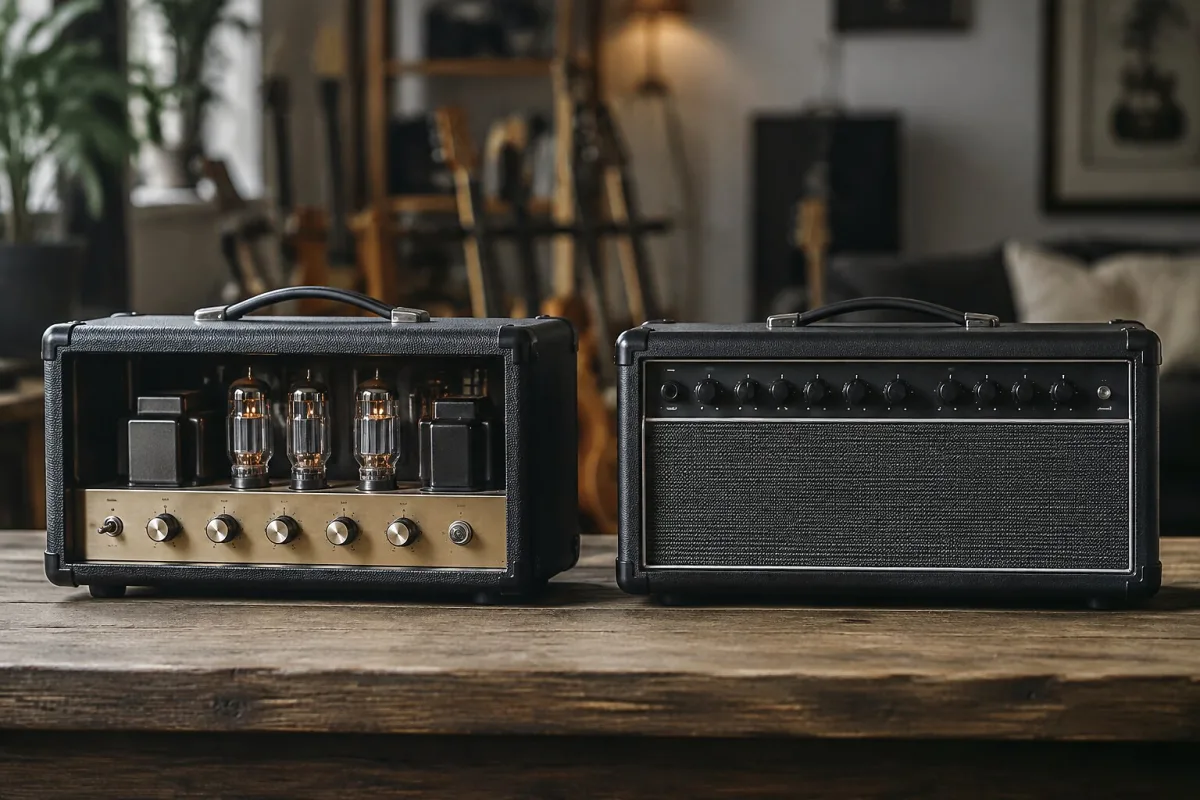
A valve amplifier—or tube amplifier, depending on where you live—does something remarkably simple: it uses heated vacuum tubes to make a guitar signal louder. That process sounds straightforward, but what happens inside matters enormously. How those tubes amplify, how the power stage responds to hard playing, how the output transformer couples to the speaker—these details shape not just the volume but the character, feel and tone of the amplifier. Understanding a valve amp means understanding the path from pickup to speaker and recognising that no single component tells the whole story.
How a Valve Amplifier Works
A valve contains a vacuum, a heated cathode, a control grid and an anode—called a plate. When heated, the cathode releases electrons. The control grid regulates the flow of those electrons toward the plate, allowing a relatively small input signal to control a much larger electrical current. That's the essence of amplification.
In a guitar valve amp, the signal follows a predictable path: input stage receives the pickup signal, the preamp increases gain and shapes frequency response, the tone circuit adjusts bass, middle and treble, a phase inverter prepares the signal for push-pull output stages, the power amp supplies voltage and current to drive the speaker, the output transformer matches the power stage to the speaker, and finally the speaker and cabinet convert electricity into sound.
Each stage matters. Preamp tubes, commonly 12AX7s, provide most of the initial gain and often determine how the amplifier drives into distortion at the earliest stage. Power tubes—commonly 6L6s, EL34s, EL84s or 6V6s—determine how the amplifier responds when driven hard and how the power stage itself breaks up and compresses. The output transformer is equally important: it matches the high-voltage, relatively high-impedance power-tube circuit to the low-impedance speaker, and it contributes directly to the amplifier's weight and tonal character.
The Sound of Valve Amplification
Valve amps are often described as "warm," "punchy," "chewy" or "saggy"—terms that capture listening impressions but not formal measurements. The distinction from solid-state amplifiers lies in how tubes transition into distortion. Many valve circuits enter clipping gradually, adding harmonics and compression progressively rather than abruptly flattening the waveform. The result feels dynamic: the amplifier responds to picking force and responds when you reduce volume or attack. That responsiveness is a signature characteristic of valve amplification.
Power-stage compression and sag—the way a valve amp's power supply and output stage soften the response under heavy demand—contribute to the perceived feel. Experienced players often describe this as the amplifier "breathing" or "moving." Critically, this behaviour depends not on valves alone but on the circuit, supply voltage, output transformer, speaker and how hard the amplifier is driven.
British Versus American Voicing
Valve amps divide into tonal families rooted in how they were designed and what tubes they use. British-voiced designs, often based on EL34 power tubes, typically feature prominent midrange and earlier power-stage breakup—they overdrive readily when pushed. American-voiced amplifiers, often using 6L6 power tubes, typically have greater clean headroom, stronger low end and brighter treble; they stay clean longer before breaking up.
These associations describe broad histories and design trends, not fixed rules. A Fender-style circuit can be made loud and clean; a Marshall-based circuit can be made to play softly. The valve type contributes, but circuit design, operating conditions, speaker choice and cabinet design all influence the final result. Treating EL34 as inherently British or 6L6 as inherently American is a useful shorthand but not a guarantee.
Class A and Class AB
These terms describe how the output stage operates. A Class A stage conducts throughout the signal cycle and is often associated with simple circuits, strong touch response and earlier compression. A Class AB stage divides conduction between complementary output devices and is common in higher-powered amps, offering greater efficiency and power than a comparable Class A design.
The distinction matters less than the circuit itself. Treating "Class A" as automatically superior or tonal gold is a common misconception—the operating point, output transformer, speaker, cabinet and how hard the amplifier is driven matter more than the class designation alone.
Power Tubes, Preamp Tubes and Impedance
Preamp tubes—12AX7s most commonly—handle the initial signal shaping and often determine preamp distortion character. Replacing a preamp tube can alter gain, noise and response, but the effect depends on the circuit and your setup. Power tubes come in several familiar types: 6L6s (clean headroom and bright treble), EL34s (pronounced midrange and earlier breakup), EL84s (lower-powered but common in compact British amps), and 6V6s (softer response and early breakup).
Critically, a valve amp must connect to a speaker or load matching the output impedance the manufacturer specifies—commonly 4, 8 or 16 ohms. Operating a valve head without an appropriate load risks damaging the output transformer and power stage. The valve amplifier also requires a proper speaker cable, not an instrument cable, between head and cabinet.
Gain, Master Volume and Distortion
A valve amp's tone emerges from gain staging. The preamp's gain control determines how hard the preamp stage is driven and contributes heavily to preamp distortion. A master volume controls the level sent to the power amp and speaker. Raising both produces a combination of preamp and power-stage overdrive. Without a master volume, substantial natural overdrive requires high sound pressure levels; with a master volume, a player can access power-stage distortion at lower external volumes, though the power amp and speaker may respond differently from a fully driven amplifier.
Bias and Service
Bias is the operating point of a power valve. Some amplifiers permit adjustment; others use cathode biasing and offer no adjustment. Replacing power tubes may require a technician to measure and set bias. Too cold a bias can produce harsh, thin distortion; too hot can shorten valve life and increase heat. Safe biasing depends on the valve, circuit and plate voltage. Never attempt internal servicing yourself—valve amplifiers contain lethal voltages even when switched off and cool.
Combo, Head and Cabinet Formats
A valve amp combo combines amplifier and speaker in one enclosure—portable but often heavy. A head is an amplifier without a speaker, requiring a correctly matched cabinet. A stack is a head with one or more cabinets, offering high volume and projection at the cost of portability. Modern valve amps increasingly include master volumes, power attenuation, effects loops, direct outputs, built-in reverb and speaker-load options, allowing players to access overdriven tones at lower volumes—though these features vary by product and don't always reproduce a fully driven power section exactly.
Why Valve Amps Still Matter
Valve amplifiers coexist today with solid-state and modeling alternatives. Solid-state amps offer lower weight, greater consistency and more features. Digital modeling provides endless tonal options. Yet valve amps remain valued because of how they feel—the responsiveness to picking dynamics, the way the amplifier compresses and breathes under load, the interaction between player and machine. For blues, classic rock, country, and many metal players, that tactile relationship with the amplifier is worth the weight, heat, maintenance and cost. A valve amplifier is not objectively better than solid-state or modeling; it's simply a different tool with a different sound and feel. Understanding how it works is the first step to choosing whether it's the right tool for you.






Comments