


Marshall Cabinets article
Marshall Cabinets for Beginners: A Complete Guide
Starting with Marshall cabinets doesn't require technical expertise. Understand fundamentals, avoid common mistakes, and make confident decisions.
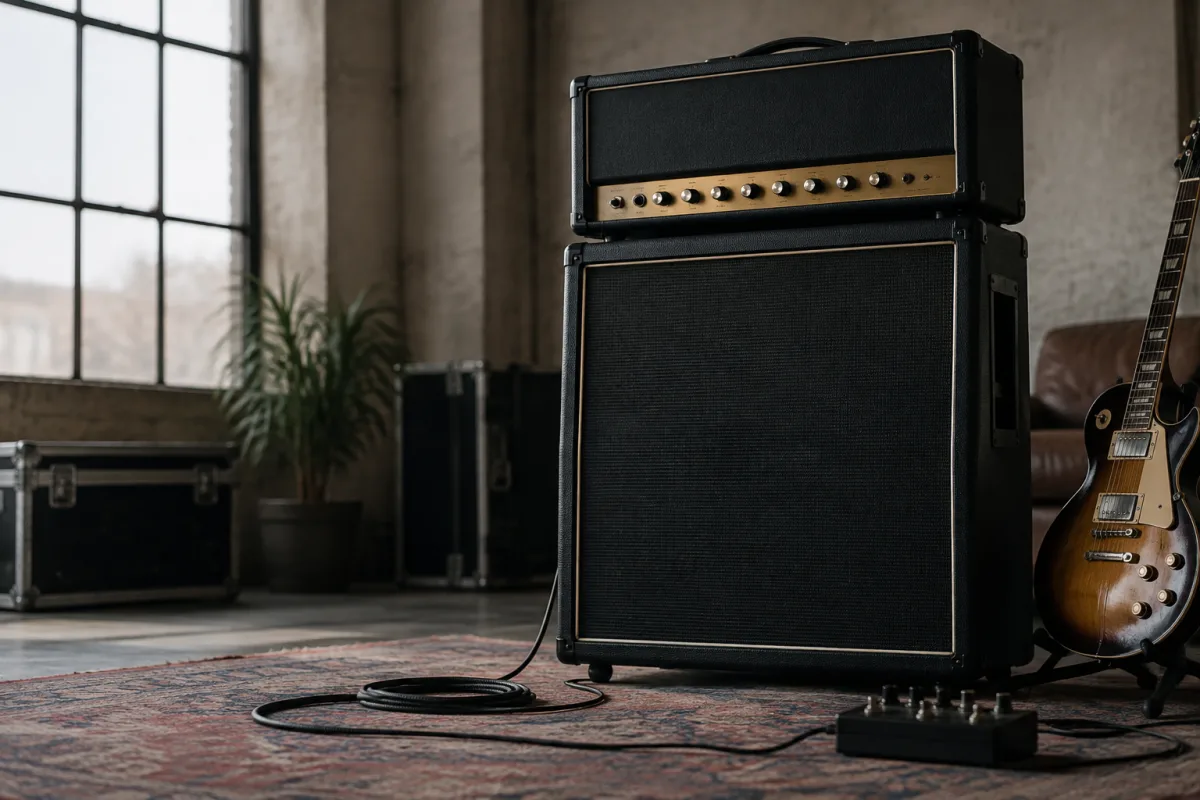
If you're just starting your journey with Marshall cabinets, take heart—the fundamentals are simpler than you might fear. A Marshall cabinet is essentially a speaker box designed to receive amplifier output and translate it into audible sound. Whether you've just acquired your first amplifier head or you're expanding your rig, understanding cabinets doesn't require engineering expertise. This guide walks you through the essentials, helping you make confident decisions and avoid common beginner pitfalls.
What a Marshall Cabinet Actually Is
A Marshall cabinet contains one or more speakers housed in a sturdy wooden enclosure. The cabinet's design shapes how your amplifier sounds—affecting tone character, frequency response, and volume projection. Unlike amplifiers (which generate electronic signal), cabinets amplify sound physically. Both components work together; neither performs ideally alone.
Think of it this way: an amplifier is like a powerful yet silent electronic circuit. A cabinet is like a musical instrument that transforms that electronics into something you hear. You need both for complete sound.
Choosing Your First Marshall Cabinet
Begin with a practical decision: how will you use this cabinet? Home recording and bedroom practice require smaller models—1x12 cabinets (single 12-inch speaker) or 2x10 (two 10-inch speakers) work perfectly. Rehearsal spaces and small venues benefit from 2x12 or 4x10 configurations. Larger live venues and touring demands 4x12 cabinets—the classic Marshall choice.
Don't overbuy cabinet size thinking future-proofing. A 4x12 cabinet is heavy, requires powerful amplifiers, and fills large spaces with overwhelming volume. A properly sized 1x12 cabinet in your bedroom sounds better than an undersized 4x12 struggling for control.
Understanding Impedance—Simpler Than You Think
Impedance is the technical measure of electrical resistance. Your amplifier head has an impedance rating (typically 8 ohms, 16 ohms, or 4 ohms). Your Marshall cabinet has an impedance rating. These numbers must match correctly or your amplifier won't perform optimally—and can sustain damage if completely mismatched.
Here's the beginner-friendly rule: buy an amplifier head and cabinet from the same era and manufacturer. Marshall designs their heads and cabinets to work together perfectly. Beginners needn't wrestle with impedance calculations; matching brand and generation solves this entirely.
Your First Setup: The Essentials
You'll need:
- Marshall amplifier head (or any tube/solid-state head)
- Marshall cabinet matching your head's impedance
- Speaker cable (professional-grade, not instrument cable)
- Cabinet stands or floor placement strategy
- Secure cabinet mounting to prevent tip-overs
Connect your amplifier head to the cabinet using a speaker cable—not an instrument cable. This distinction matters. Speaker cables handle high-powered signals; instrument cables cannot and will fail, sometimes damage your gear. Spend £10-20 on a proper speaker cable.
Positioning Your Cabinet for Best Results
Cabinet placement dramatically affects your listening experience. Position the cabinet at ear level when standing. This alignment lets you hear the cabinet's true character rather than bass buildup from floor proximity. If floor placement is necessary, angle the cabinet slightly upward toward your ears.
Beginner mistake: hiding cabinets behind equipment or equipment racks. Marshall cabinets are tuned for forward projection. Position them openly, angled toward your performance or listening area.
Leave space around the cabinet. Air circulation prevents overheating in your amplifier head. Dense placement creates unnecessary heat buildup.
Common First-Timer Mistakes
Mismatching impedance causes confusion and frustration. Avoid this entirely by purchasing head and cabinet as a matched pair or from someone knowledgeable about specifications.
Using instrument cables instead of speaker cables damages gear and degrades sound catastrophically. This single mistake costs more in repairs and frustration than purchasing quality cables upfront.
Expecting perfect tone immediately leads to disappointment. Marshall cabinets require adjustment time—your ears need time to acclimate. Live with a cabinet for a week before tweaking amplifier controls.
Placing cabinets in corners thinking they'll project better actually creates muddy bass. Open placement sounds cleaner and more controlled.
Learning Your Cabinet's Character
Different Marshall cabinet configurations have distinct sonic personalities. A 1x12 cabinet is punchy and focused. A 2x12 cabinet offers balanced response. A 4x12 cabinet delivers classic Marshall roar with powerful presence. Each sounds genuinely different, and none is objectively "correct"—they suit different contexts.
Spend time listening to your cabinet in different configurations. Stand in front of it. Stand to the side. Listen from different distances. You'll discover how positioning and distance affect your perception of tone. This experimentation teaches more than reading specifications.
Protecting Your Cabinet Investment
Marshall cabinets are durable. Basic care extends their lifespan dramatically. Avoid spilled liquids, which damage speakers and wiring. Keep the cabinet away from extreme heat and cold when unused. Use speaker covers in dusty environments.
If you need to transport your cabinet, secure it properly to prevent tip-overs and internal speaker damage. Professional speakers require professional handling respect.
Growing Your Cabinet Knowledge
After a few months with your Marshall cabinet, you'll understand its capabilities deeply. This experience guides future decisions—whether you need a second cabinet, different speaker configuration, or specialized models for particular tones.
Connect with local musicians using Marshall cabinets. They've navigated beginner questions and gladly share experience. Online communities dedicated to Marshall gear offer extensive knowledge from decades of users.
Your Beginning Matters
Marshall cabinets have earned legendary status through consistent performance and reliability. You've chosen gear trusted by professionals and beginners alike. Connect your cabinet properly, position it thoughtfully, and allow your understanding to develop naturally through listening and playing.
For deeper understanding of Marshall cabinet models, specifications, and technical details, explore the complete guide to Marshall cabinets, which covers the full product range and advanced configuration options.
Your Marshall cabinet marks the beginning of more sophisticated amplification. Enjoy the learning process, ask questions confidently, and remember that legendary guitarists started exactly where you are now.


Comments