


Marshall Cabinets Buying guide
Marshall Cabinets: A Complete Buyer's Guide
Choosing Marshall cabinets means balancing power requirements, space constraints, and budget against the need for genuine road-worthy tone.
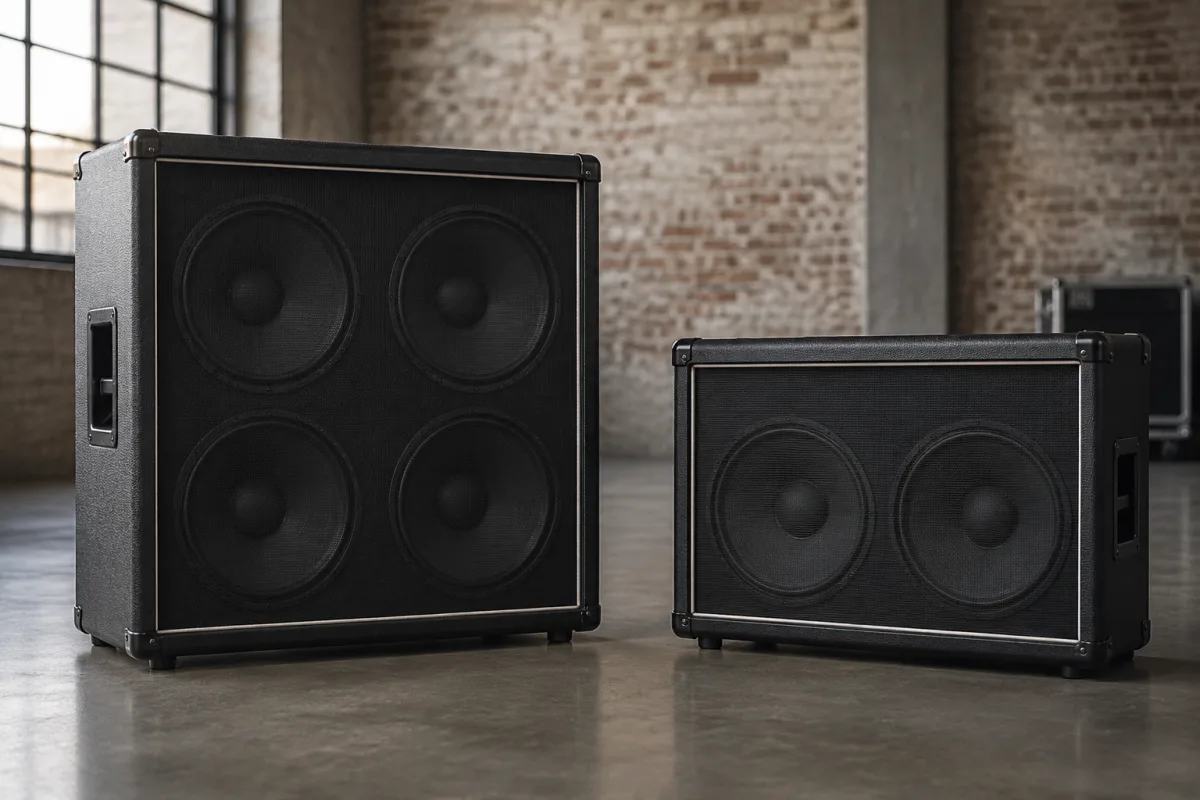
Choosing Marshall cabinets means balancing power requirements, space constraints, and budget against the need for genuine road-worthy tone. Purchasing the wrong configuration can mean either hauling excessive weight for bedroom playing or owning a cabinet that can't handle venue demands. Understanding what separates a smart purchase from an impractical one requires knowing what actually matters in a Marshall cabinet.
Marshall Cabinet Types and Price Tiers
Marshall cabinets exist in several distinct categories, each serving different purposes and price points. Entry-level 1×12 cabinets—typically £200-350—suit bedroom players and small venues perfectly. These house a single 12-inch speaker and weigh around 30-40 pounds. They're portable enough for car transport and produce surprisingly robust tone. The trade-off is volume ceiling: a 1×12 maxes out around 100-120dB, adequate for bedrooms and small clubs but insufficient for larger venues.
Standard 2×12 configurations, priced £350-500, represent the most versatile choice for gigging musicians. Two 12-inch speakers deliver fuller tone than 1×12, with better midrange definition and clearer articulation. Weight sits around 50-60 pounds, still manageable for one person with reasonable fitness. Volume output reaches 110-125dB comfortably. Most working musicians who handle regular gigging choose 2×12 Marshall cabinets.
4×12 cabinets—Marshall's iconic stack format—range from £400-700 depending on speaker quality and construction. These house four 12-inch speakers and weigh 80-100 pounds typically. Volume capacity exceeds 120dB easily, making them suitable for large venues and recording studios. The trade-off is obvious: one person cannot reliably transport a 4×12 alone, and space requirements are substantial. They're essential for venues over 500 capacity and studio recording.
1×15 cabinets, less common but highly specialised, offer different sonic character. The single 15-inch speaker provides deeper bass response, appealing to bass guitarists and certain lead players preferring pronounced low-end emphasis. Expect £300-450 pricing and considerable weight—a 1×15 often exceeds 50 pounds despite housing only one speaker.
Essential Specifications When Buying Marshall Cabinets
Speaker type determines tone character fundamentally. Marshall cabinets utilise either Celestion or Seventy-80 speakers (Marshall's own line). Celestion speakers tend toward brightness and articulation; Seventy-80 speakers emphasise warmth and compressed response. Neither is objectively superior—the choice depends on whether you prefer crisp definition or smooth sustain. Higher-end Marshall cabinets often feature better-quality speakers; budget models economise here.
Impedance rating matters if pairing cabinets with specific amplifiers. Most Marshall cabinets come in 8-ohm or 16-ohm configurations. Amplifiers have specific impedance requirements, typically 4, 8, or 16 ohms. Mismatching impedance damages your amp's output transformer. Always verify your amplifier's impedance capabilities before purchasing Marshall cabinets.
Cabinet construction quality varies significantly across price tiers. Premium Marshall cabinets use finger-jointed plywood with reinforced internal bracing. Budget models employ stapled construction with minimal bracing. Superior construction prevents resonant rattling, withstands touring stress better, and maintains structural integrity after years of use. Examine the cabinet's corners and seams—quality joinery looks tight and secure.
Baffle design—the internal structure supporting speakers—affects tone dispersion and power handling. Top-tier Marshall cabinets employ engineered baffles designed by Marshall's acoustic team. Budget cabinets use simple baffle designs that prioritise manufacturing speed over acoustic precision. This translates to measurable differences in tone consistency and frequency response.
Handle quality directly impacts practicality. Quality leather or reinforced fabric handles withstand thousands of road trips. Poor handles fail or detach unexpectedly. Marshall cabinets at higher price points include genuinely robust handles; cheaper versions sometimes include handles that feel substantial but fail under real-world stress.
What to Check Before Purchasing Marshall Cabinets
Inspect the cabinet for visible damage: dents in the tolex (speaker grille cloth), cracks in the wooden frame, or separating seams. Minor cosmetic damage is acceptable if purchasing secondhand, but structural cracks require professional repair. New cabinets should arrive pristine; request replacement if defects are present.
Test every speaker connector by gently tugging it. Connectors should resist movement and feel secure. Loose connectors suggest either manufacturing defect or previous damage requiring attention before use.
If possible, test Marshall cabinets through an amplifier before purchase. Connect your amp and play across the frequency spectrum, from low rumbling bass to high treble notes. Good cabinets reproduce all frequencies cleanly without distortion or significant volume fluctuation across the spectrum. Midrange honkiness or excessive presence peaks indicate acoustic design issues.
Check the cabinet's resonance by tapping the body gently with your knuckle. The response should be solid and controlled, not resonant or ringing. Excessive resonance indicates inadequate internal bracing or speaker placement issues.
For detailed specifications and model variations, review our complete guide to Marshall cabinets for comprehensive technical data.
Common Pitfalls When Purchasing Marshall Cabinets
Don't assume all Marshall cabinets sound identical. Speaker choice, baffle design, and construction quality create measurable tonal differences between models and price tiers. Budget cabinets sound acceptable but lack the clarity and definition of higher-tier options. If tone quality matters long-term, invest accordingly.
Avoid purchasing cabinets mismatched to your amplifier. A 4×12 Marshall cabinet demands significant amplifier headroom to avoid distortion. Conversely, a tiny 1×12 cabinet cannot reproduce the bottom-end punch larger cabinets deliver. Match cabinet size to actual venue requirements and amplifier power rating.
Don't purchase based on appearance alone. Tolex cosmetics are secondary to acoustic performance. Some players prioritise specific colour schemes; this is valid, but not at the expense of actual tone quality or structural integrity.
Be cautious of counterfeit Marshall cabinets, especially when purchasing secondhand online. Genuine Marshall cabinets include consistent branding, quality tolex, and precise internal construction. Counterfeits exhibit sloppy finishing, inconsistent branding, and inferior speaker quality. Purchase from authorised retailers or reputable secondhand dealers when possible.
Size and Space Considerations
A 4×12 Marshall cabinet occupies substantial floor space. Measure your practice room or studio carefully before purchasing; a 4×12 may physically prevent accessing other equipment if space is limited. Many musicians discover too late that their chosen cabinet simply doesn't fit their space practically.
Consider transportation methods before purchasing Marshall cabinets. A 2×12 fits in most car boots if you fold rear seats. A 4×12 typically requires van rental or trailer transport for non-local moves. Gigging musicians should honestly assess whether they can handle the practical logistics of their chosen cabinet size.
For bedroom and practice studio use, 1×12 or 2×12 Marshall cabinets make logical sense. For touring and venue work, 2×12 or 4×12 configurations handle real-world demands reliably.
New vs. Secondhand Marshall Cabinets
New cabinets arrive untested; manufacturers typically include trial periods allowing return if defects emerge. Leverage this protection by testing thoroughly within the return window. Secondhand cabinets bypass warranty coverage but often cost 30-50% less. The trade-off requires thorough inspection and acceptance that existing wear cannot be addressed through manufacturer support.
When purchasing secondhand Marshall cabinets, request detailed photographs of the cabinet's condition, including interior views if possible. Ask about repairs or modifications. Most importantly, establish whether the cabinet has been used in touring conditions (potentially stressed) or bedroom-only usage (typically excellent condition).
Making Your Marshall Cabinet Purchase
A sensible Marshall cabinet purchase aligns with actual space, genuine power requirements, and honest budget. It means choosing between 1×12 practicality and 4×12 capability based on real venue requirements, not aspirational ones. It means verifying impedance compatibility with your amplifier and testing before committing substantial money.
Quality Marshall cabinets reward investment by delivering consistent tone for years, handling touring stress reliably, and maintaining resale value acceptably. Poor choices become expensive mistakes that hobble your tone and frustrate transportation logistics. Take time to choose correctly, verify specifications, and test before purchasing. Your playing experience depends on it.


Comments