


Pedalboard Isolated Power Supply article
The Complete Guide to Pedalboard Isolated Power Supply
An isolated pedalboard power supply eliminates ground loop hum and noise by isolating each pedal into its own electrical compartment, transforming signal clarity and sustain.
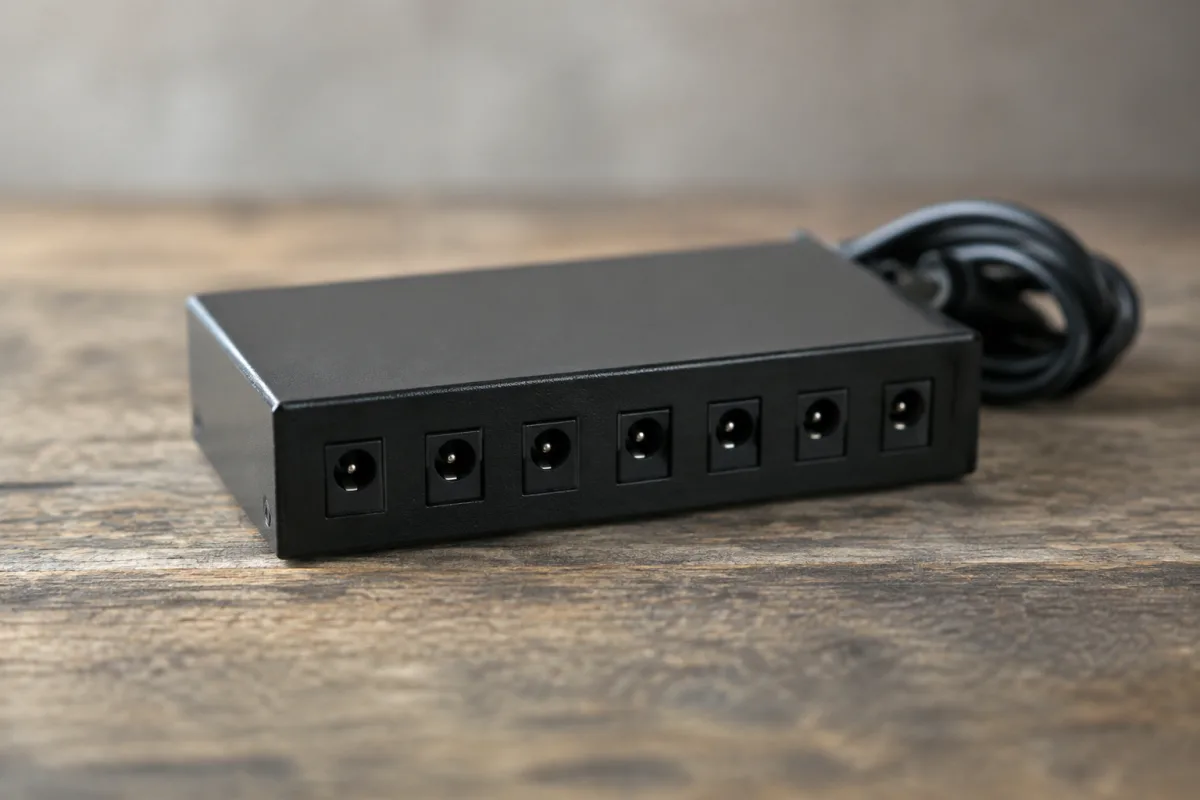
A pedalboard isolated power supply is a dedicated device that powers your guitar pedals whilst isolating each pedal into its own electrical compartment. Unlike daisy-chain cables (which run all pedals on the same ground), an isolated supply cuts the electrical noise and hum that often plague multi-pedal rigs. For anyone running more than a couple of effects pedals, an isolated power supply transforms the clarity and quietness of your signal path, often proving to be one of the most audible upgrades you can make to a pedalboard.
What Is an Isolated Power Supply?
An isolated pedalboard power supply converts AC mains power into multiple isolated DC outputs, each powering one or more pedals. Isolation means each output is electrically separate from the others—they do not share a common ground. This separation eliminates the ground loop hum that occurs when pedals share a power source, particularly with older analogue effects or pedals with noisy switching.
The isolation transformer inside the power supply creates this separation, regenerating the power from scratch for each output. The result is quieter power delivery to every pedal on your board.
The Problem: Ground Loops and Hum
When multiple pedals draw power from the same cable (daisy-chaining), they all return current through the same ground wire. This shared return path creates a ground loop—an electrical loop that can pick up interference, particularly 50 Hz mains hum in the UK or 60 Hz in North America. You hear this hum as a persistent low buzz in your signal, sometimes audible as a deep rumble underneath your tone.
The more pedals you run, the worse the hum tends to become. Some pedals (especially certain wahs, vintage fuzzes, or analogue delays) are noisier than others. An isolated power supply breaks the shared ground connection, eliminating the hum at source.
Isolation vs. Non-Isolated Power Supplies
A non-isolated power supply (often cheaper) still separates outputs so each pedal gets its own voltage regulator, but all outputs share a common ground. This helps but does not fully eliminate ground loop hum. An isolated supply takes the step further, electrically isolating each output so they share no ground connection whatsoever.
The difference is audible: an isolated supply is noticeably quieter, particularly in the 50-100 Hz range where ground loop hum lives. For a professional touring rig or a studio setup, isolation is worth the investment.
Specifications to Understand
When shopping for a pedalboard isolated power supply, these specs matter:
- Total current output (usually 500 mA to 2000 mA) — higher is better for large pedalboards
- Number of outputs (typically 4 to 10 separate isolated outlets)
- Voltage options (most 9V, some dual 9V/12V or 9V/18V)
- Polarity (centre-positive is North American standard; centre-negative is less common)
- Footprint and weight (matters if your pedalboard space is limited)
- Built-in surge protection or USB charging options (nice-to-haves on premium units)
A larger pedalboard needs higher total current. Count your pedals' mA requirements (listed on the pedal or manual) and add 20% headroom. A modest board (5-8 pedals) typically needs 1000 mA; a large board needs 1500 mA or more.
Mounting and Integration
Most pedalboard isolated power supplies mount underneath your pedalboard via Velcro, adhesive strips, or brackets. This keeps the supply out of sight and wires clean. Power in is usually a standard mains cable (IEC connector); power out is a set of cable outlets with your chosen connector type (typically 5.5mm barrel jack). Some units include right-angle connectors or short pre-made cables to minimise space under the board.
If you have a custom pedalboard built, the builder often installs the power supply during construction. If you have an existing board, adding a supply is straightforward—Velcro it underneath, connect the mains cable, and reroute your pedal power cables to the isolated outlets.
Cable Connectors and Polarity
Guitar pedals use different connectors and polarities. Most modern pedals use 5.5mm barrel jacks with centre-positive polarity (tip is positive, sleeve is ground). Some older or boutique pedals use centre-negative or proprietary connectors. Check your pedals before buying a power supply; most supplies include 5.5mm centre-positive, but you may need adapters or a supply that offers polarity-switchable outputs.
Many professional supplies include a mix of connector types or sell optional adapter cables so you can mix vintage and modern pedals on one board.
USB Charging and Extra Features
Premium isolated power supplies may include USB charging ports for phones or tablets, convenient for gigs when you need to charge between sets. Some units include LED indicators showing power status or output health. Surge protection or fuses on each output protect your pedals if something goes wrong. These features add cost but improve reliability and convenience.
Isolated Supply vs. Pedal Power Cables
Some modern pedals include isolated power sections built-in, reducing the need for a separate supply. Boss TweedyBox and Strymon pedals, for example, have lower-noise power stages. However, even with such pedals, a good isolated supply on your board provides additional isolation and cleaner power to the entire ecosystem. They work well together.
Powering Multiple Voltage Pedals
If your board mixes 9V and 12V pedals (or 9V and 18V), a dual-voltage isolated supply is invaluable. Rather than running two separate supplies or using boosters and regulators (which add complexity), a dual-voltage supply lets you plug each pedal into the correct voltage output. This is cleaner and more reliable than improvised solutions.
Cost and Budget Considerations
A quality isolated power supply for pedalboards typically costs £80–£250 depending on feature set and build quality. Budget options around £50–£80 exist but may have limited outputs or lower total current. Professional-grade supplies run £200–£400 and include features like surge protection, high current headroom, and premium construction.
For most guitarists and bassists with modest to medium pedalboards (5–12 effects), a mid-range isolated supply at £100–£150 offers excellent value and reliability.
Quiet Recording and Live Performance
In recording studios and live venues, an isolated power supply is virtually essential once you exceed two or three pedals. The noise floor of your tone improves dramatically—you hear more sustain, clearer highs, and less electronic hum underneath your signal. Session musicians and touring players consider a good isolated supply a non-negotiable piece of gear.
Troubleshooting Hum
If you install an isolated supply and still hear hum, check cable shielding (unshielded instrument cables can pick up interference), grounding loops elsewhere in your rig (loose cables touching metal), or pedal-specific issues. Sometimes a single noisy pedal can contaminate the entire signal if its power path is not clean. A good isolated supply solves 95% of power-related hum, but not all hum originates in the power supply.
Conclusion
A pedalboard isolated power supply is one of the highest-ROI upgrades for any multi-pedal rig. By isolating each pedal's power path, it eliminates ground loop hum, improves sustain and clarity, and stabilises the performance of sensitive analogue effects. Whether you are building a modest home pedalboard or a touring rig, investing in a quality isolated supply pays dividends in noise reduction and signal integrity. Combined with good cables, a solid board layout, and quality pedals, an isolated power supply helps your tone shine through without electronic noise getting in the way.


Comments