


Mic Guitar Amp article
Mic Guitar Amp for Beginners: A Complete Guide
Understanding how to properly mic a guitar amp captures authentic tone while avoiding common beginner mistakes in recording.
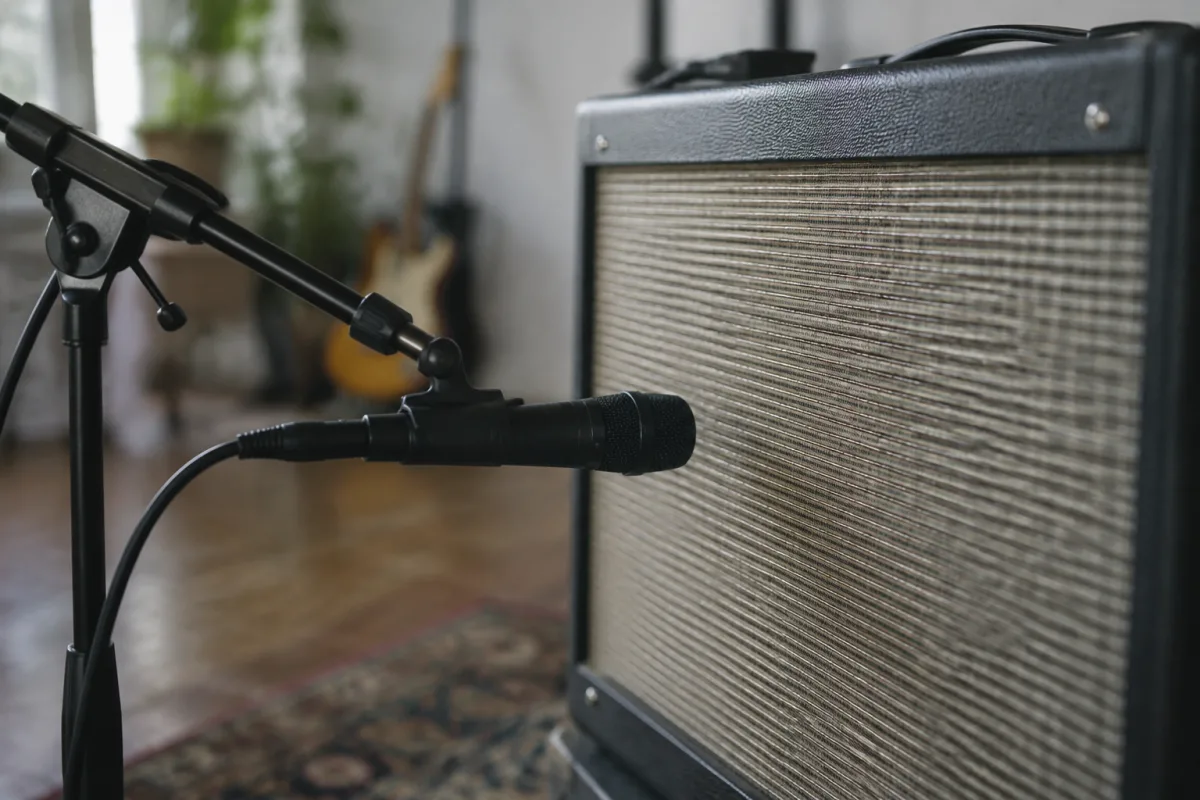
Recording your guitar is one of the most exciting projects a guitarist can undertake, and miking your mic guitar amp is the fundamental technique you'll master first. Whether recording at home or in a professional studio, understanding how to properly mic a guitar amp captures authentic tone while avoiding common beginner mistakes. This guide walks you through everything you need to know about setting up your mic guitar amp configuration and capturing professional-sounding recordings.
Why Proper Mic Guitar Amp Technique Matters
The difference between a great recording and a disappointing one often comes down to how you mic your guitar amp. A mic guitar amp setup captures the physical character of your amplifier—the subtle resonances, the speaker cone dynamics, and the room acoustics combining to create your unique tone. Direct box recording skips this crucial step, producing thin, sterile guitar sounds that lack depth and personality.
Learning to properly mic your guitar amp early in your recording journey establishes fundamental skills applicable throughout your career. Whether you eventually mic amplifiers in professional studios or record at home, understanding mic guitar amp technique never becomes obsolete.
Essential Equipment for Mic Guitar Amp Recording
Setting up a mic guitar amp recording rig doesn't require expensive gear. The essentials for miking your guitar amp include:
- Dynamic microphone: Quality dynamic mics are ideal for mic guitar amp recording. Shure SM7B, SM57, or Beta 57A models work excellently on guitar amplifiers.
- Microphone stand: Securely position your mic guitar amp setup using a sturdy stand. Stability prevents tone changes during recording.
- XLR cables: Balanced cables connect your mic guitar amp microphone to audio interface. Quality cables prevent noise in your recording.
- Audio interface: Records your mic guitar amp signal into your computer. Even budget interfaces work for home recording.
- Pop filter (optional): Protects your mic guitar amp microphone from wind noise. Less critical than with vocals but still useful.
You don't need studio-quality gear to mic your guitar amp professionally. Consistent technique matters far more than expensive equipment.
Microphone Selection for Mic Guitar Amp Work
Choosing the right microphone for your mic guitar amp setup significantly impacts tone. Dynamic microphones excel at mic guitar amp recording because they're rugged, resist feedback, and handle high sound pressure levels from loud amplifiers.
The Shure SM57 is the industry standard for mic guitar amp recording—used on countless professional recordings. It's affordable, reliable, and sounds fantastic on guitar amplifiers. The SM7B offers a smoother response preferred by some engineers for mic guitar amp work. Both work excellently when miking guitar amps.
Condenser microphones can work when mic guitar amp recording but require careful placement. They're more sensitive to background noise and room acoustics. For beginners, starting with a rugged dynamic microphone simplifies your mic guitar amp setup.
Positioning Your Mic Guitar Amp
Microphone placement is the most critical factor in successful mic guitar amp recording. Start with your microphone positioned approximately 2-4 inches directly in front of the speaker cone. This proximity captures full tone and minimizes room noise when miking your guitar amp.
Angle the microphone at approximately 45 degrees off-axis—not perfectly centered on the speaker but not at extreme angles either. This angle delivers balanced tone when miking your guitar amp, capturing speaker dynamics without excessive harshness.
The vertical position matters too. Positioning your mic guitar amp microphone at the speaker's centre height captures balanced tone. Pointing at the cone edge produces different character—experiment to find your preferred positioning when mic guitar amp recording.
Avoiding Common Mic Guitar Amp Mistakes
Beginners make predictable errors when learning to mic guitar amps:
- Placing the microphone too close: Excessive proximity when mic guitar amp recording produces thin, boomy tone lacking clarity. Maintain proper distance from the speaker.
- Pointing the microphone directly at the speaker's centre: Dead-centre placement sounds harsh when mic guitar amp recording. Angle slightly off-axis for better tone.
- Using the wrong microphone: Expensive condenser microphones aren't necessary for mic guitar amp work. Quality dynamic microphones outperform expensive condensers in this application.
- Ignoring cable quality: Poor cables introduce noise into your mic guitar amp recording. Use quality XLR cables even if they cost more initially.
- Recording at excessive levels: Clipping occurs when mic guitar amp signals are too loud. Record at levels giving plenty of headroom for processing.
Gain Structure for Mic Guitar Amp Recording
Setting proper gain prevents distortion and noise when mic guitar amp recording. Play through your guitar amplifier at performance volume. Adjust your microphone preamp gain on your audio interface so the signal peaks between -12dB and -6dB on your meter while miking the guitar amp. This headroom prevents clipping while maintaining signal quality.
If you're uncertain about gain settings while mic guitar amp recording, run lower than too high. You can increase volume during mixing, but you can't recover lost information from clipped mic guitar amp recordings.
Room Acoustics When Mic Guitar Amp Recording
The space surrounding your mic guitar amp setup affects recorded tone. Untreated rooms produce harsh reflections. Dampen room acoustics by recording in smaller spaces or positioning your mic guitar amp setup close to soft materials like carpets, curtains, or blankets.
Avoid recording directly against hard walls when miking your guitar amp. Even a few feet of distance dramatically reduces room reflections in your mic guitar amp recording. Experiment with positioning to find your optimal sound.
Monitoring While Mic Guitar Amp Recording
Use headphones to monitor your signal while miking your guitar amp. This lets you hear tone and identify problems in real-time. Listen for buzzes, hums, or distortion as you record. Adjust gain or positioning if necessary to fix problems before committing to full recordings with your mic guitar amp setup.
Multiple Mic Guitar Amp Techniques
Once comfortable with single-microphone mic guitar amp recording, explore dual-microphone techniques. Different microphones or positions can be blended during mixing. This advanced mic guitar amp approach requires more gear but produces rich, complex tones impossible with single microphones.
Post-Recording Mic Guitar Amp Processing
Your recorded mic guitar amp signal might need slight processing. High-pass filtering removes rumble below useful frequencies in your mic guitar amp recording. Gentle EQ adjustment shapes tone without changing the essential character captured when miking your guitar amp.
For comprehensive information about advanced mic guitar amp techniques, microphone models, and professional recording practices, explore our complete guide to miking guitar amps.
Your Mic Guitar Amp Journey
Proper mic guitar amp technique opens creative possibilities for recording and gigging. By understanding equipment basics, maintaining proper positioning, avoiding common mistakes, and monitoring carefully, you'll capture authentic guitar tone consistently. Your mic guitar amp skills grow with practice—each recording session teaches something new. Embrace the learning process and enjoy building your recording repertoire.


Comments