


Mic Guitar Amp Buying guide
Mic Guitar Amp: A Complete Buyer's Guide
Choosing a microphone to mic your guitar amp matters more than you think. This guide explains which microphone types work, how positioning affects tone, and how to make the right choice.
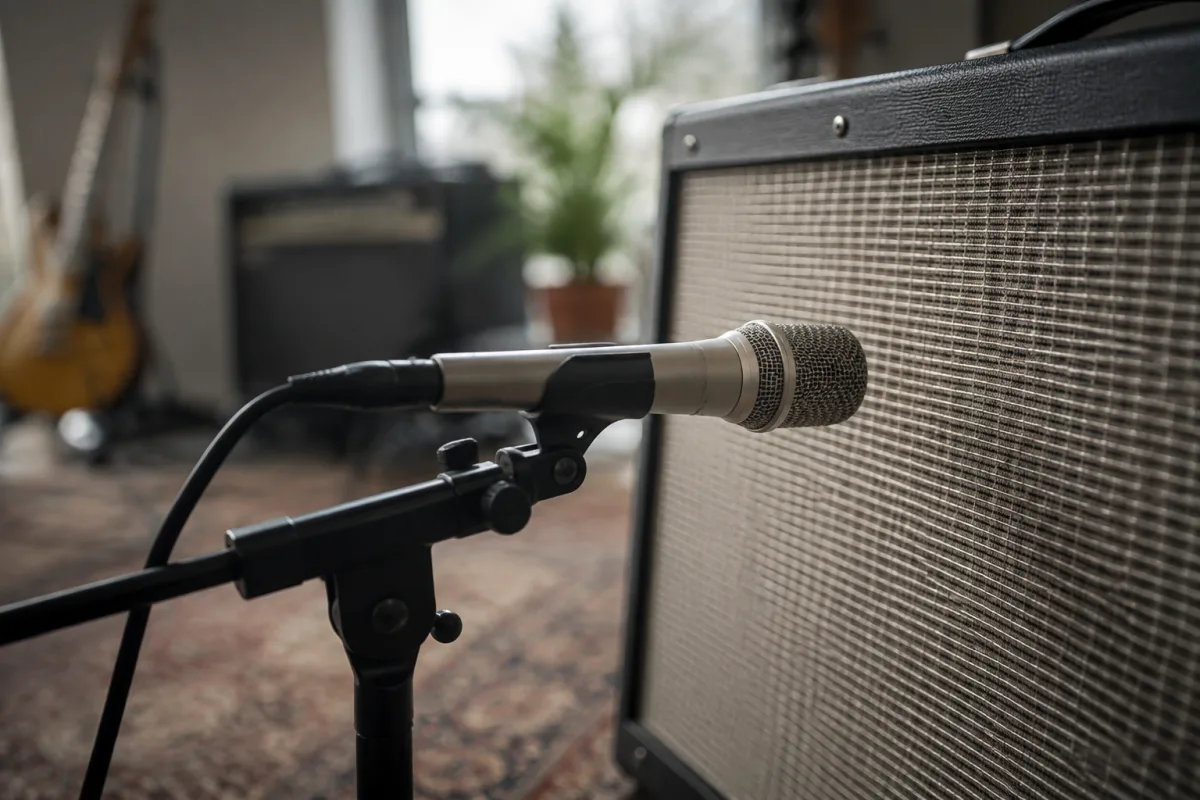
Choosing the Right Microphone for Your Guitar Amp
If you're recording guitar or performing live through sound reinforcement, you need to mic your guitar amp. But choosing the right microphone to mic guitar amp is trickier than you might think—there are better and worse choices, and the wrong mic guitar amp setup can ruin an otherwise good tone. This guide walks you through what matters when buying a microphone for guitar amp work, so you can make confident purchasing decisions and capture the sound you want.
Why Mic a Guitar Amp?
Plugging a guitar amp directly into a mixing console doesn't work well. The amp produces sound for human ears, not electrical signals for mixing desks. To capture that sound or feed it to a larger PA system, you need a mic guitar amp setup. A microphone positioned in front of the amp's speaker captures the sound and converts it to an electrical signal that a mixer understands.
Additionally, if you're playing live and the venue has a professional sound system, the sound engineer will almost certainly mic your guitar amp rather than plugging you in directly. They need control over your volume and tone in the main mix, which a mic guitar amp provides.
Mic Guitar Amp: Which Microphone Types Work
Not every microphone is suitable for mic guitar amp purposes. You need a microphone designed to handle the sound pressure and frequency range of guitar amplifiers. Dynamic microphones (which handle high sound pressure well) are the standard choice for mic guitar amp work. Condenser microphones can work but are less common for live amp miking because they're more sensitive and can be feedback-prone in stage environments.
The classic choice for mic guitar amp is a rugged dynamic microphone like the Shure SM57, which has been miking guitar amps since the 1960s. It's industry standard because it works reliably, sounds good, and survives the rigours of live touring.
Directional Characteristics: What to Look For
When choosing a mic guitar amp, pay attention to the pickup pattern (how the microphone responds to sound from different directions). A cardioid pattern is standard for mic guitar amp work—it's sensitive to sound from the front and sides but rejects sound from behind. This prevents feedback and isolates your amp from other stage noise.
Some engineers prefer supercardioid mics for very tight isolation, but cardioid is more forgiving for beginners and works well in most situations. Avoid omnidirectional microphones for live amp miking—they pick up everything and feedback easily.
Frequency Response for Guitar Amplifiers
A mic guitar amp should have a frequency response that complements guitar tone. Most dynamic microphones designed for instrument miking have a presence peak (a boost in the 2–5 kHz range) that makes guitars sound clear and defined. This is exactly what you want—it cuts through in a mix and preserves the character of your amp's tone.
Look for frequency response charts when choosing a mic guitar amp. Smooth, coloured response (where presence peaks are intentional design, not accidental artifacts) is better than wildly uneven response. Trust well-reviewed microphones designed specifically for instrument miking.
Microphone Placement When Miking an Amp
The microphone's position relative to your amp affects tone dramatically. Pointing the mic guitar amp directly at the center of the speaker cone captures bright, cutting tone with lots of high-frequency detail. Pointing it slightly off-axis (angled to one side) softens the tone and reduces harshness. Pointing at the edge of the speaker captures deeper, thicker tone.
Most engineers mic guitar amps on-axis or slightly off-axis, roughly 15–30cm away from the speaker grille. This distance balances direct speaker sound with some room ambience. At closer distances (5–10cm), the tone is tight and present. At farther distances (50cm+), the tone becomes boomier and picks up more room reflections.
Dynamic vs. Condenser Microphones for Mic Guitar Amp
Dynamic microphones are the standard choice for live mic guitar amp setups. They handle high sound pressure (loud amps are genuinely loud), are less sensitive to feedback, and are durable for touring. A quality dynamic mic guitar amp like an SM57 costs £80–£150 and lasts decades.
Condenser microphones can produce excellent recordings of guitar amps in studio settings. They're more detailed and sensitive, capturing nuances that dynamics miss. However, live use is riskier—condensers are feedback-prone and require phantom power (a feature mixing desks have, but not all equipment). For live performance, dynamic is safer. For studio recording, consider condensers if you have the infrastructure.
Budget Considerations for Mic Guitar Amp
A basic dynamic microphone suitable for mic guitar amp starts around £40–£60. These budget mics work, but sound quality is mediocre. Spending £80–£150 on a reputable brand microphone (Shure, Electro-Voice, Audio-Technica) gets you significantly better sound and durability that justifies the cost.
For touring musicians who mic guitar amps nightly, a quality microphone is a worthwhile investment. You'll use it thousands of times over years, making cost-per-use very low compared to cheaper alternatives that fail or sound poor.
The Shure SM57: The Standard Choice
The Shure SM57 is the industry standard for mic guitar amp work. It's been the choice since the 1960s, and there's good reason: it sounds excellent on guitar amps, handles any sound pressure level you throw at it, and lasts forever. If you're buying a mic guitar amp and unsure where to start, the SM57 is the safe, proven choice.
Alternatives like the Electro-Voice RE20 or the Audio-Technica AT2020 work well too, but the SM57 is ubiquitous because it's reliable and iconic. Many touring professionals own multiple SM57s because they trust them.
Accessories for Mic Guitar Amp Setup
You'll need a microphone stand (desk or boom stand, £20–£50), a cable (XLR from the mic to your mixer, £5–£20), and optionally a pop filter or mesh screen (not essential for instruments, but prevents accidental damage to the mic). Clip adapters that mount the mic directly to your amp are available but not ideal—a proper stand gives you positioning flexibility.
Budget roughly £100–£200 for the complete mic guitar amp setup (microphone, stand, cable, adapters) if you're starting from scratch. This is a one-time investment that lasts years.
Buying New vs. Used Mics for Guitar Amp
A used Shure SM57 in good condition is excellent value—you often save 20–30% and get a proven workhorse. Microphones are robust and rarely fail if handled reasonably. Check that the diaphragm isn't damaged, all connections work smoothly, and there's no crackling or sound issues before buying used.
New microphones come with warranty and peace of mind. For a professional who mics guitar amps regularly, the slight cost premium for new might justify the warranty and guaranteed condition.
Common Mistakes When Choosing Mic Guitar Amp
The biggest mistake is choosing a cheap condenser microphone for live use. Condensers feedback easily in loud stage environments and require phantom power that not all venues provide. Stick with dynamic mics for live amp miking.
Another error: positioning the microphone too far from the speaker or pointing it at the wrong angle. Tone changes dramatically with position—experiment at different distances and angles to find what sounds right for your amp and style.
Finally, don't assume an expensive microphone is automatically better for your specific use. A £40 dynamic mic might work adequately if positioned and mixed correctly. A £200 condenser might be overkill for live amp miking. Match the mic guitar amp choice to your actual needs and environment.
For more detailed information about microphones for different applications, including advanced recording techniques and professional studio setups, read our complete guide to microphones for guitar amps.
Conclusion
Choosing a microphone to mic guitar amp requires understanding what works (cardioid dynamic mics are standard), what sounds good (presence peaks and proximity effect matter), and how to position it (on-axis or slightly off-axis, 15–30cm away). The Shure SM57 is the proven industry standard, but other quality dynamics work too. Budget £80–£150 for a good microphone, add a stand and cable, and you have a setup that will serve you for years. Match your mic guitar amp choice to whether you're recording in studio or amplifying live, and you'll capture the tone your amp deserves.



Comments