


Snare Drum Head article
Snare Drum Head for Beginners: A Complete Guide
A snare drum head determines your drum's tone and how it responds to your playing. Here's how to choose, install, and maintain your first snare drum head.
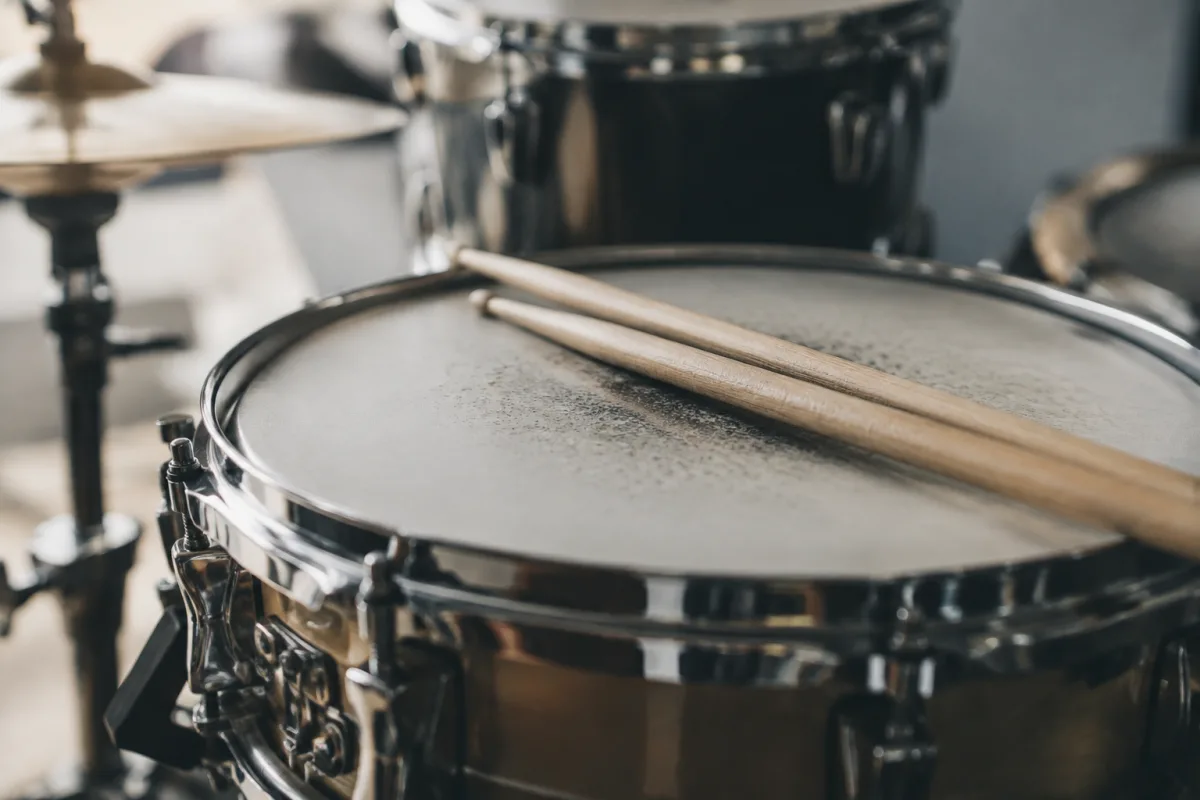
A snare drum head is the surface where your stick connects with a snare drum—and choosing the right one transforms how your drum sounds and feels. For beginners, understanding snare drum head options (material, weight, coating) prevents frustration and ensures your drum responds the way you expect.
The Two Sides of a Snare Drum
A snare drum has two heads: the top head (playing head) where you strike with sticks, and the bottom head (snare side) where the snares—thin wires or coils—rest against it. Both affect the sound, but the playing head is where most of your attention goes.
Head Materials and Characteristics
Calf (real animal skin)
Calf heads are traditional, warm-sounding, and feel incredibly responsive to the touch. They're expensive (£30–60 per head), require careful tuning and maintenance, and are sensitive to humidity changes. Professional jazz and session drummers often prefer calf for its tone. Beginners rarely start with calf unless cost is no concern.
Plastic heads
Plastic heads (typically Mylar or synthetic film) are durable, affordable (£10–20), and consistent in tone across different climate conditions. They're the standard choice for beginners, learners, and gigging drummers. Plastic heads require less maintenance than calf and come in different thicknesses and coatings.
Head Weight: Thicker vs. Thinner
Single-ply heads (thin): More responsive, brighter tone, easier to control, but less durable and more prone to damage. Better for players focused on feel and subtlety. Common thicknesses: 10 mil (standard) or 7 mil (extra thin).
Double-ply heads (thick): Thicker, more durable, darker tone, requires more force to produce good sound, less dynamic range. Better for rock and heavy-handed players. Common thickness: 10+10 mil (roughly 20 mil total).
For a complete beginner, a standard single-ply plastic head is ideal: responsive enough to feel your playing, affordable enough to replace if damaged, and forgiving of heavy-handed strikes.
Coatings: Clear vs. Coated
Clear heads: Smooth, bright, articulate. The natural Mylar shows, producing a sharp attack. Good for pop, rock, and funk where clarity matters. Slightly easier to damage because the surface is thinner.
Coated heads: A thin layer of texture (usually felt or similar material) covers the head. Slightly duller and warmer tone, easier on the hands, slightly more durable, and slightly more sensitive to humidity. Jazz and gospel players prefer coated heads. Pop and rock drummers prefer clear.
For beginners, clear plastic heads are a good choice: bright tone cuts through, affordable, and forgiving.
First Steps: Choosing Your First Snare Head
Step 1: Check your snare drum
Look up your drum's brand and model. Snare heads come in different diameters (typically 10", 12", or 14")—you need the exact size. A drum manual or the manufacturer's website tells you which size fits.
Step 2: Buy a standard head first
For your first replacement, choose: standard single-ply, plastic, clear, in the correct diameter. This is the "normal" choice for learners. Brands like Evans, Remo, and Aquarian make reliable budget options (£10–15 per head).
Step 3: Learn to install it correctly
Snare head replacement requires removing lugs, sliding the old head off, and sliding the new head on. It's straightforward—YouTube has hundreds of how-to videos. Don't overtighten lugs (finger-tight plus a quarter turn is usually right) or the head will crack.
Step 4: Tune your drum
Once the new head is installed, tighten each lug evenly, starting opposite each other to avoid warping the head. Strike the drum and listen: if you hear warping or unevenness, the head isn't tuned evenly. This takes practice—your first snare drum tuning might sound rough, but it improves quickly.
Common Beginner Mistakes
Mistake 1: Buying the wrong head size. A 14" head won't fit a 12" drum. Measure your drum or check the manual before ordering. Buying the wrong size wastes money.
Mistake 2: Overtightening the head. Beginners often crank lugs as tight as they can. This warps the head, makes tuning impossible, and can crack the head. Tighten evenly until the head is seated, then tune by ear. Finger-tight plus a quarter turn is usually right.
Mistake 3: Ignoring the bottom snare head. The snare side head (where snares rest) also needs periodic replacement. It wears out faster than the playing head because snares grind against it. Replace it when it cracks or loses tension.
Mistake 4: Expecting a new head to sound perfect immediately. A brand-new head needs a few hours of playing to settle. The tone shifts slightly as the head beds in. Don't fret if the first hour sounds strange—it normalises.
Mistake 5: Never replacing the head until it's destroyed. Worn snare heads sound dead and feel unresponsive. Changing the head every 1–2 years (depending on usage) keeps your drum sounding fresh and responsive.
Maintenance: Making Your Snare Head Last
- Use appropriate sticks: Match stick weight to your hand size and strength. Heavy sticks on thin heads causes premature wear and damage.
- Keep it dry: Moisture (sweat, humidity) weakens plastic heads over time. Wipe your sticks and hands dry before playing.
- Store properly: Keep your drum in a hard case away from extreme heat or humidity. Sudden climate changes can warp heads.
- Tune gently: Don't overtighten lugs when tuning. Gentle, even tension is better than cranking hard.
- Check tuning regularly: A head that's been tuned high gradually loses tension. Re-tune monthly to maintain consistency.
When to Replace Your Snare Drum Head
Replace when:
- The head cracks visibly.
- The drum sounds dead or dull no matter how you tune it.
- The head won't hold tension (keeps losing pitch).
- You've been using the same head for 1–2 years of regular playing.
- Sweat or damage has visibly weakened the surface.
A fresh head costs £10–20 and takes 15 minutes to install. It's one of the cheapest upgrades a drummer can make, and the improvement is immediate and noticeable.
For detailed information on snare drum head specifications, tuning techniques, and advanced selection, see our complete guide.


Comments