


Roland Electronic Drum Pads article
The Complete Guide to Roland Electronic Drum Pads
Roland electronic drum pads deliver velocity-sensitive precision, durability and creative versatility, enabling expressive percussion performance within modern production environments.
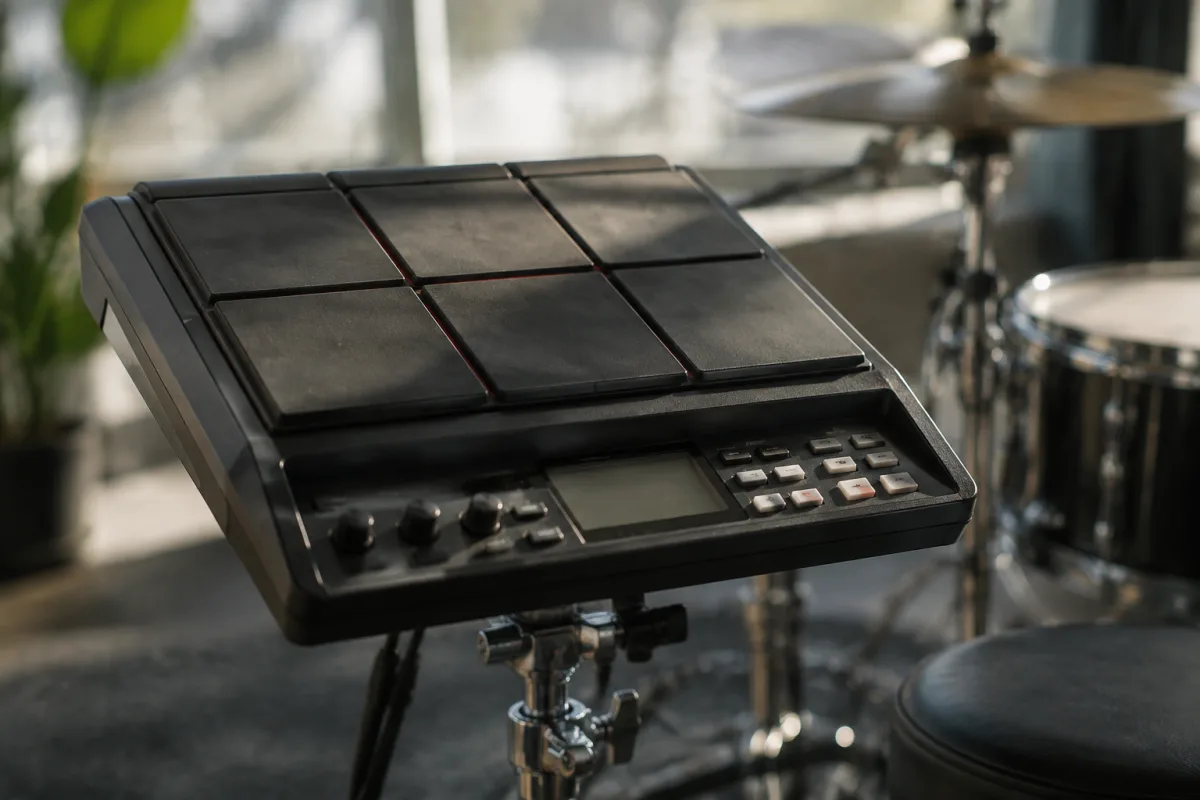
Roland Electronic Drum Pads: Precise Percussion in Modern Production
Roland electronic drum pads represent the gold standard in modern percussion triggering technology, enabling musicians, producers and sound designers to craft nuanced electronic drum performances with expressive control. Since introducing electronic percussion decades ago, Roland has refined pad sensitivity, response characteristics and integration capabilities until contemporary models deliver responsiveness approaching acoustic drumming whilst offering sonic possibilities acoustic instruments cannot achieve. Whether triggering samples in hip-hop production, layering electronic drums with live acoustic kits, or creating ambient soundscapes, Roland pads combine durability, sensitivity and creative versatility that professionals and developing producers equally value.
Understanding Electronic Drum Pad Technology
Electronic drum pads respond to strike velocity—how hard you strike the pad surface—translating impact into electronic signals that trigger sounds, samples or effects. Roland pads employ sophisticated sensing technology detecting not merely whether you've struck the pad but with what velocity, enabling expressive dynamic control. Strike a Roland pad gently and it triggers soft samples; strike with force and dynamics scale accordingly. This velocity-sensitive response recreates acoustic drumming's dynamic expressiveness within electronic systems.
Pad construction varies across Roland's range. Premium models feature responsive rubber or mesh surfaces closely resembling acoustic drum head feel. Budget alternatives employ harder plastic surfaces transmitting less authentic strike sensation. However, even entry-level Roland pads incorporate velocity sensing sufficient for meaningful expressive control, distinguishing them from basic trigger buttons that register only whether they've been struck.
The Roland SPD-SX and SPD-20 Series
The SPD-SX, Roland's flagship standalone sampling pad system, represents the apex of portable percussion production. Twelve velocity-sensitive pads accommodated across three banks provide access to 36 distinct sounds from a single compact unit. The built-in sequencer enables creating drum loops without external equipment, whilst dual audio inputs allow layering external sounds. The SPD-SX essentially functions as a complete percussion production centre, suitable for studio work, live performance and creative sound design.
The SPD-20 offers a more focused, traditionally pad-organised layout favoured by drummers transitioning from acoustic kits to electronic performance. Eight primary pads arranged in familiar kick-snare-tom patterns enable intuitive playability for classically trained percussionists. The simplified interface prioritises straightforward pad access over extensive menu navigation, appealing to performers prioritising immediate response over feature complexity.
Pad Sensitivity and Response Characteristics
Roland pads excel at capturing subtle dynamic variations. Light taps trigger quiet samples; progressively harder strikes produce louder responses across a continuous dynamic range. This graduated response proves essential for creating expressive performances—a snare hit can range from whisper-quiet brush sounds through powerful full-volume cracks depending purely on strike velocity.
Cross-talk sensitivity—the pad's ability to register strikes from adjacent pads without false triggering—represents another technical achievement. Quality Roland pads incorporate intelligent algorithms distinguishing deliberate adjacent pad strikes from vibration interference. This precision prevents accidental triggering that plagues inferior systems, enabling tightly controlled performances on crowded pad configurations.
Integration with Production Systems
Roland electronic drum pads connect seamlessly with external production equipment. MIDI output enables triggering samples or virtual instruments in DAWs, expanding creative possibilities beyond the pad's built-in sound engine. USB connectivity simplifies modern computer integration, allowing pads to function as external percussion controllers within music production software.
This flexibility transforms Roland pads into creative production tools beyond traditional drumming. Trigger synth sounds to create unconventional percussion textures. Layer electronic triggers with acoustic drum recordings. Use pads as gesture controllers for parameter automation. The technical architecture enables countless creative approaches limited primarily by imagination.
Build Quality and Durability
Roland's manufacturing heritage emphasises instrument durability. Electronic drum pads see intensive use—repeated striking, occasional accidental drops, harsh touring environments. Professional-grade Roland pads employ reinforced construction withstanding years of heavy usage. Rubber pads remain responsive even after thousands of striking cycles. Electronics incorporate sealed components resisting moisture and dust infiltration.
This construction quality justifies Roland's premium pricing. A well-maintained Roland pad system often outlasts multiple generations of inferior alternatives, making the initial investment economical over extended ownership periods. Many professional studios employ decade-old Roland pad systems still performing flawlessly alongside contemporary equipment.
Acoustic vs Electronic Drum Pad Approaches
Acoustic drummers transitioning to electronic systems often experience a learning curve. Electronic pads lack the physical resistance and acoustic feedback of acoustic drums. However, this difference proves advantageous for precision: electronic triggers respond consistently regardless of strike location on the pad surface, whilst acoustic drums respond differently depending on head strike location.
Contemporary performers frequently combine Roland electronic pads with acoustic drums, layering electronic samples alongside acoustic strikes. This hybrid approach leverages electronic pads' sonic possibilities and controllability whilst maintaining acoustic drumming's tactile feedback and naturally beautiful tone. Many touring drummers employ this combined approach exclusively.
Sound Libraries and Creative Possibilities
Roland pads grant access to extensive sound libraries ranging from realistic acoustic drum samples through synthetic percussion to processed experimental sounds. The versatility enables countless aesthetic approaches. Create boom-bap hip-hop drums from sampled breaks. Layer orchestral percussion samples over electronic textures. Design avant-garde soundscapes triggering pitched drones and ambient textures.
The available sounds transcend traditional percussion. Trigger vocal samples, bass synths or field recordings. Create glitchy electronic textures through precise triggering. Build layered compositions using pads as performance controllers. Electronic drum pads function as percussion instruments and creative production tools simultaneously.
Live Performance Applications
Electronic drum pads excel in live performance contexts. Trigger backing tracks, click tracks and sampled drum loops during performances, reducing dependence on playback equipment. Layer electronic samples over live drumming, creating hybrid sounds unavailable from acoustic kits alone. Enable entirely electronic performances in genres demanding programmed drum patterns, sequenced percussion or layered electronic textures.
The portability advantage cannot be overstated. A Roland electronic pad system weighs little compared to full acoustic drum kits yet provides equivalent sonic range through triggering. Touring musicians increasingly favour compact electronic systems enabling complex sonic arrangements from minimal stage footprint.
Common Pad Configuration Approaches
Professional sound designers often employ multiple pad zones addressing different performance needs. Primary pads handle primary percussion sounds—kicks, snares, toms. Secondary pads trigger supporting elements—crashes, cymbals, effects. Some configurations dedicate pads to parameter control—triggering effects modulation or dynamic processing. This layered approach maximises creative control whilst maintaining logical organisation.
Your Next Electronic Percussion Setup
If exploring electronic percussion, Roland pads represent genuine quality investments rewarding extended investigation and experimentation. The SPD-SX suits producers prioritising standalone functionality and sound design freedom. The SPD-20 appeals to drummers seeking pad-familiar layouts. Numerous alternative Roland models address different needs, budgets and use cases. Demoing multiple configurations reveals which architecture suits your playing style and creative priorities best.


Comments